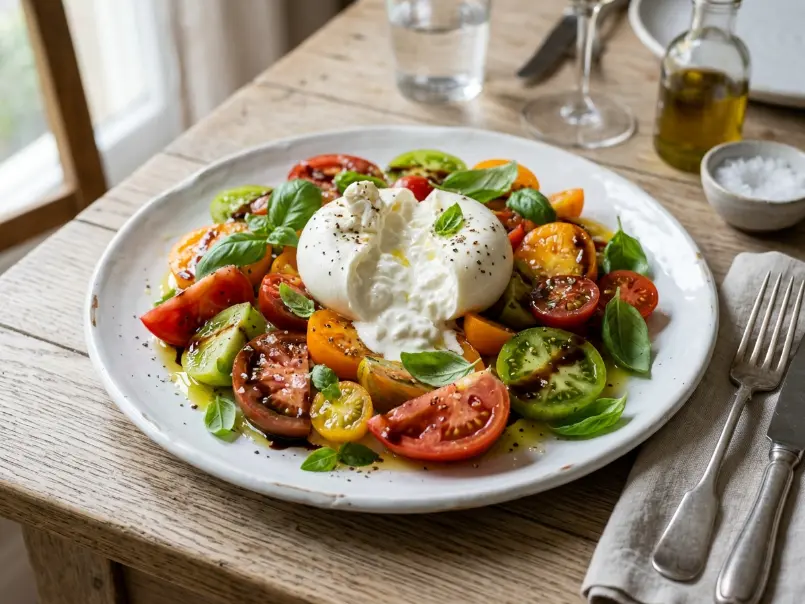

Ingredients
Equipment
Method
Temper to Room Temperature (Critical Step)
- Remove burrata from refrigerator and let sit at room temperature in its liquid for 60-90 minutes before serving. This allows the butterfats to become liquid and silky instead of solid and waxy.
- If tomatoes have been refrigerated (they shouldn't be), bring them to room temperature as well. Room temperature is essential for maximum flavor and aroma release.
Prepare the Tomatoes
- Wash heirloom tomatoes gently under cool water and pat dry.
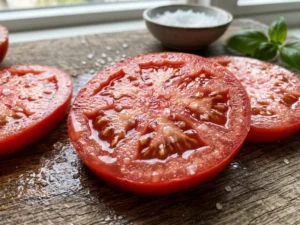
- Remove stem cores with a paring knife—cut a shallow cone around each stem and lift out.
- Slice tomatoes transversely (across the equator) into thick slabs, about ½-inch each. Thick slices maintain structural integrity.
- Arrange tomato slices in a single layer on a large plate or cutting board.
Salt the Tomatoes (Osmotic Priming)
- Sprinkle 1 teaspoon coarse sea salt evenly across all tomato slices.
- Let rest for 10-15 minutes. You'll see water beads forming on the surface as osmosis draws moisture out and concentrates the tomato's natural sugars and umami.
- After 15 minutes, gently blot surface moisture with paper towel. Do NOT rinse—the residual salt is part of the seasoning.
Assemble the Salad
- Arrange salted tomato slices on a wide, shallow serving platter, overlapping slightly and alternating colors for visual impact.
- Remove burrata from liquid using a slotted spoon. Gently pat dry with paper towel to remove packing liquid.
- Place burrata balls directly in the center of the tomato arrangement.
The Stracciatella Reveal
- Use the side of a fork or sharp knife to gently tear the burrata open (don't slice cleanly—tear it for rustic effect).
- Let the creamy stracciatella center ooze out naturally over the tomatoes. This is the visual and textural centerpiece.
Dress and Finish
- Drizzle 3 tablespoons extra virgin olive oil generously over the entire plate—tomatoes and burrata.
- Add 1-2 teaspoons aged balsamic glaze in thin drizzle lines. Use a light hand—it should sit on top, not pool.
- Tear fresh basil leaves by hand and scatter over the salad.
- Finish with flaky sea salt and freshly cracked black pepper.
Serve Immediately
- Serve immediately while burrata cream is flowing and tomatoes are at aromatic peak.
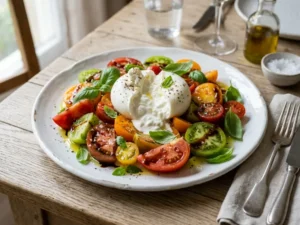
- Do not refrigerate or let sit—this salad must be eaten fresh within minutes of assembly.
Notes
The Temperature Rule is Everything: Cold burrata tastes like cheap mozzarella. Cold tomatoes taste flat and watery. Both MUST be at room temperature (68-72°F / 20-22°C) for optimal flavor. This is the single most important rule.
Why Salt the Tomatoes? Salting draws out excess water through osmosis, concentrating the tomato's natural sugars, acids, and glutamates (umami). This prevents a watery salad and intensifies flavor.
Never Rinse After Salting: Just blot the surface moisture. Rinsing washes away the salt needed for seasoning balance and reintroduces water.
Balsamic Quality Matters: Cheap, thin balsamic vinegar turns the plate into a brown puddle. Use aged balsamic vinegar (12+ years) that's naturally thick, or balsamic glaze (reduced with sugar). If you only have thin vinegar, skip it entirely.
Best Heirloom Tomatoes: Look for Cherokee Purple (dark, smoky, sweet), Brandywine (large, pink, rich), or Green Zebra (tart, striped). Farmers' markets from June-September are your best source.
This Cannot Be Meal-Prepped: Once assembled, this salad turns watery and loses its magic within hours. Components can be prepped separately up to 30 minutes ahead, but only assemble at the last moment.
Storage: There are no leftovers with this dish. Eat it fresh or don't make it.
Unpasteurized Cheese Warning: Most artisanal burrata is unpasteurized. Pregnant women, immunocompromised individuals, and young children should choose pasteurized alternatives.
Keto & Low-Carb Friendly: Only 12g net carbs per serving with high healthy fats from burrata and olive oil.
Lycopene Absorption: The olive oil increases absorption of lycopene (the antioxidant in tomatoes) by up to 3x compared to eating tomatoes plain.