
Ingredients
Equipment
Method
Preheat Oven and Prepare Pan (Essential First Steps)
- Preheat your oven to 325°F (160°C)—note that this is LOWER than most cake recipes. Chocolate burns easily at high temperatures, and the slower, gentler heat ensures even baking throughout the thick Bundt shape and prevents the edges from drying out before the center is done. Generously grease every crevice of a 10 or 12-cup Bundt pan with softened butter or nonstick baking spray (make sure to get into all the fluted ridges—this is where sticking happens). Dust the greased pan with 2 tablespoons cocoa powder (NOT flour, which would leave unattractive white streaks on a dark chocolate cake). Rotate and tap the pan to coat every surface evenly, then tap out the excess cocoa powder over the sink. Set the prepared pan aside.
Assemble Dry Ingredients with Spice Distribution
- In a large mixing bowl, whisk together 2 cups all-purpose flour, 1 1/2 teaspoons baking powder, 1/2 teaspoon baking soda, 1 teaspoon fine sea salt, 2 teaspoons ground cinnamon, 1 teaspoon ground ginger, 1/2 teaspoon ground nutmeg, and 1/4 teaspoon ground cloves. Whisk vigorously for 30-60 seconds to ensure the spices are completely and evenly distributed throughout the flour—you don't want pockets of concentrated spice or bland areas in your Chocolate Spice Cake. The whisking also aerates the dry ingredients slightly, which helps create a lighter crumb. Set this bowl aside at room temperature.
The Critical Cocoa Bloom (Flavor Release Through Heat)
- This step is what separates amateur chocolate cakes from professional-quality Chocolate Spice Cake. Measure 3/4 cup Dutch-processed cocoa powder into a medium heatproof bowl. Brew 1 cup of strong, hot coffee (or heat 1 cup water to a full rolling boil). The liquid must be very hot—at least 190°F-200°F (88°C-93°C)—for proper blooming. Pour the hot coffee directly over the cocoa powder all at once. Immediately whisk vigorously and continuously for 30-60 seconds until the mixture transforms from dry, dull powder into a smooth, glossy, paste-like consistency with no dry lumps remaining. The cocoa will release intense chocolate aromatics as the heat breaks down cell walls and dissolves volatile flavor compounds. The mixture should look like thick, shiny melted chocolate. Let this bloomed cocoa mixture cool to room temperature (about 10-15 minutes at room temp) or speed up the process by placing the bowl in the refrigerator for 5-7 minutes, stirring occasionally. The mixture should be lukewarm to cool before adding to the batter—if it's too hot, it will cook the eggs.
Cream Sugars and Build Wet Base (Emulsification Foundation)
- In a separate large mixing bowl (or the bowl of a stand mixer fitted with the paddle attachment), combine 1 3/4 cups packed dark brown sugar and 1/2 cup granulated white sugar. Use your fingers to break up any hard lumps in the brown sugar—the mixture should be uniform with no clumps. Add 1/2 cup vegetable oil and whisk vigorously by hand (or beat with the mixer on medium speed) for 1-2 minutes until the sugar-oil mixture looks slightly lighter in color and well combined. Add 3 room-temperature eggs ONE AT A TIME, whisking or beating well after each addition until fully incorporated before adding the next. This gradual addition creates a stable emulsion. After all eggs are added, add 1 cup room-temperature sour cream (or Greek yogurt) and 2 teaspoons vanilla extract. Whisk or beat on medium speed until the mixture is smooth, creamy, and uniform with no visible streaks. Finally, add the completely cooled bloomed cocoa mixture and whisk or beat until the batter is uniform in color—a deep, rich, dark brown with a glossy sheen.
The Gentle Fold (Preserving Tenderness Through Minimal Mixing)
- Add the entire bowl of dry ingredients (flour-spice mixture) to the bowl of wet ingredients all at once. Using a large rubber spatula or wooden spoon (switch to hand mixing even if you were using a stand mixer—power mixing at this stage overdevelops gluten), gently fold the dry ingredients into the wet using a lifting, turning, bottom-to-top motion. Mix JUST until you no longer see streaks or pockets of dry flour. The batter should be thick, glossy, very dark brown, and slightly lumpy—a few small lumps are completely fine and will disappear during baking. Do NOT overmix. Overmixing develops gluten strands in the flour, which will make your Chocolate Spice Cake tough, dense, and chewy instead of tender, moist, and soft. Stop mixing the moment the flour disappears. The entire folding process should take no more than 15-20 gentle strokes.
Pour, Degas, and Bake Low-and-Slow
- Pour the batter into the prepared Bundt pan, using a spatula to scrape every bit from the bowl. Smooth the top surface gently with the spatula so it's relatively level. Pick up the filled pan and tap it firmly on the counter 2-3 times to release any large trapped air bubbles that would create holes or tunnels in the baked cake. Place the pan on the center oven rack and bake at 325°F (160°C) for 45-55 minutes. Baking time varies depending on your specific pan size (10-cup vs 12-cup), pan material (dark pans bake faster), and oven calibration. Start checking at 45 minutes. The Chocolate Spice Cake is done when a wooden skewer, toothpick, or cake tester inserted into the center (the deepest part) comes out with A FEW MOIST CRUMBS clinging to it—NOT wet batter, but NOT completely clean either. The top should feel firm and spring back lightly when gently touched with a fingertip. Do NOT wait for a completely clean toothpick—chocolate cakes dry out faster than other cakes, and they continue cooking via carryover heat as they cool. Pulling the cake when it looks slightly underdone ensures maximum moisture in the final product.
The Critical Rest and Clean Release
- Remove the Chocolate Spice Cake from the oven and place the Bundt pan on a wire cooling rack. Let the cake cool IN THE PAN for exactly 15-20 minutes—set a timer. This resting period is critical. If you try to invert too soon (under 15 minutes), the cake's structure hasn't set and it will fall apart or sag. If you wait too long (over 25 minutes), the cake will cool too much, contract, and stick to the pan. After 15-20 minutes, place a large serving plate or cake stand upside-down over the top of the Bundt pan. Using both hands and holding the plate and pan together firmly, flip them over in one confident, smooth motion. Place the flipped assembly on the counter and let it sit for 10-15 seconds—gravity will help the cake release. Slowly and carefully lift the Bundt pan straight up. The cake should release cleanly in one piece, revealing the beautiful fluted ridges. If a few small pieces stick to the pan, gently remove them with a spatula and press them back into place on the cake—no one will notice once it's dusted. Let the cake cool completely on the wire rack for at least 1 hour before dusting or slicing. The cake is delicate when warm and firms up as it cools.
The Dusting (Beautiful Finishing Touch)
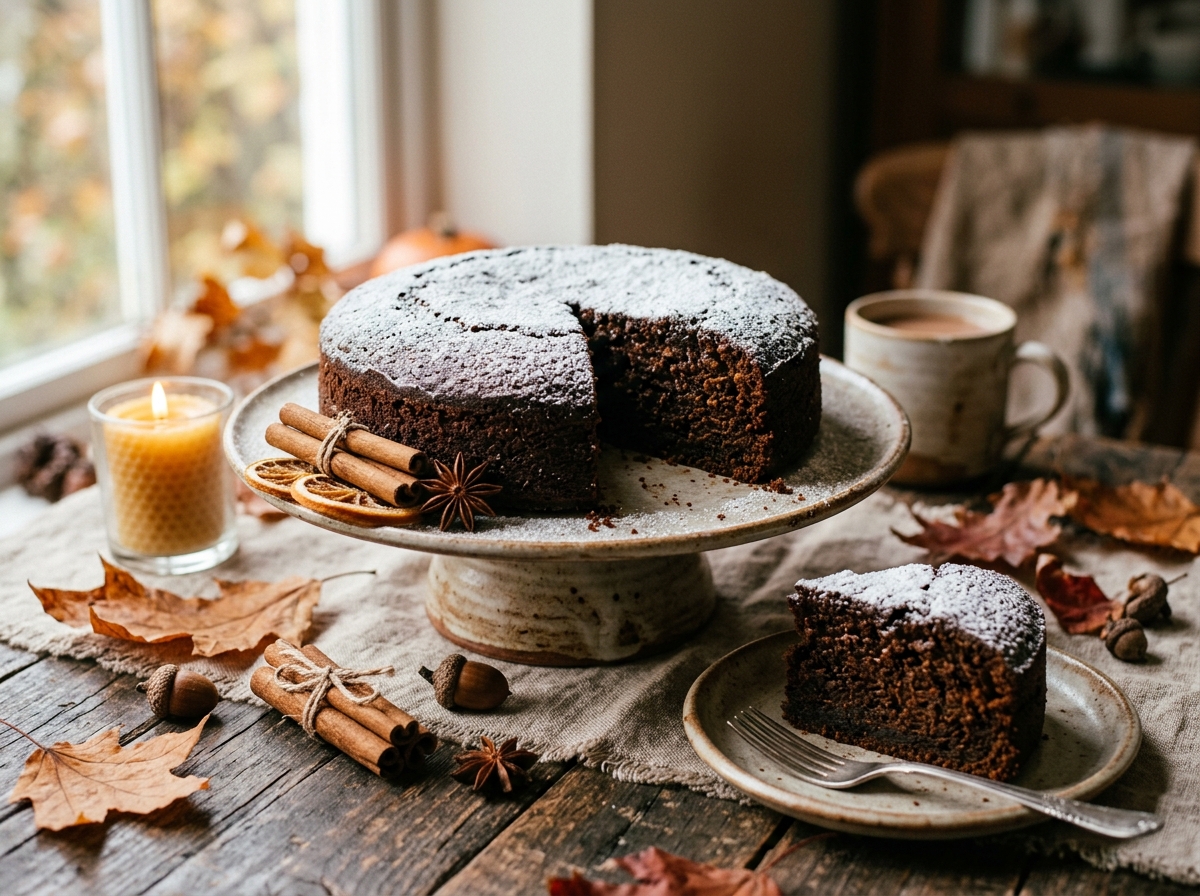
- Once the Chocolate Spice Cake is completely cool to the touch, place a fine-mesh sieve or small strainer over the top of the cake. Add 1/2 cup powdered sugar (or the cinnamon-sugar mixture: 1 tablespoon cinnamon + 3 tablespoons powdered sugar for extra warmth). Gently tap the side of the sieve or shake it back and forth to create an even, generous dusting over the entire surface of the cake. The white powdered sugar creates a stunning visual contrast against the dark chocolate cake and beautifully highlights the fluted Bundt ridges and valleys. For extra elegance, you can create a stencil pattern by placing a doily or cut-out design on top of the cake before dusting.
Serve and Store for Optimal Flavor
- Slice the Chocolate Spice Cake with a sharp serrated knife, wiping the blade clean between slices for neat, professional-looking portions. Serve at room temperature—the cake tastes best when not cold. IMPORTANT: This cake actually tastes BETTER 24 hours after baking. The hygroscopic ingredients (brown sugar, sour cream) continue to pull moisture from the air, and the spice flavors meld and deepen with the chocolate overnight. Store leftover cake tightly wrapped in plastic wrap or in an airtight container at room temperature for up to 3 days, or refrigerate for up to 1 week (bring to room temp 1 hour before serving).
Notes
Cocoa Blooming is NON-NEGOTIABLE: This step releases trapped flavor compounds in cocoa powder that remain locked away if you add cocoa dry. Hot liquid (especially coffee) breaks down cocoa's cellular structure and dissolves aromatic molecules. The flavor difference is transformative—bloomed cocoa tastes 2-3x more intense and complex than unbloomed.
Coffee Amplifies Chocolate (But You Won't Taste Coffee): Hot coffee contains similar aromatic compounds to chocolate (both are roasted seeds/beans). These compounds create flavor synergy—they reinforce and amplify each other without the cake tasting like coffee. Blind taste tests confirm: no one can identify coffee, but everyone agrees the chocolate tastes "more chocolatey." If you must skip coffee, use boiling water—cake will still be good but chocolate won't be quite as deep.
Dutch-Processed vs. Natural Cocoa: Dutch-processed (alkalized) cocoa is treated to neutralize acidity, resulting in darker color, milder flavor, and smoother texture. Natural cocoa is more acidic. For recipes using BAKING POWDER (like this one), Dutch-processed is ideal. For recipes using ONLY BAKING SODA, use natural cocoa (the acid reacts with the base for leavening). Don't substitute one for the other without adjusting leavening agents.
Brown Sugar = Moisture Insurance: Dark brown sugar contains molasses, which is hygroscopic (attracts and holds moisture from air). This keeps Chocolate Spice Cake moist for 3-5 days at room temperature. White sugar alone would cause the cake to dry out within 24 hours. The combination of brown + white sugar gives you moisture retention + structural support.
Oil vs. Butter: Oil is 100% fat; butter is only 80% fat (plus 20% water/milk solids). Fat interferes with gluten development more effectively than anything else, creating a softer, more tender crumb. Oil also stays liquid at room temperature, while butter solidifies when cool—this keeps the cake feeling moist on your tongue even when not fresh from the oven. You can substitute melted butter if you prefer, but texture will be slightly less tender.
Room Temperature Ingredients Matter: Cold eggs and cold sour cream don't emulsify properly with oil and sugar, resulting in a dense, heavy batter that bakes unevenly. Let eggs and sour cream sit at room temperature for 30-45 minutes before baking, or place eggs (still in shells) in a bowl of warm water for 5-10 minutes to take the chill off.
Low Temperature (325°F) Prevents Drying: Chocolate burns easily and dries out at high heat. The lower oven temperature (325°F instead of the typical 350°F) allows the thick Bundt cake to bake through to the center without the edges overcooking and drying out. Be patient—slower baking = moister result.
Fresh Spices Make All the Difference: Ground spices lose their volatile oils and aromatic compounds within 6 months of grinding. If your cinnamon or ginger has been in your pantry for 2+ years, it will taste like sawdust. Buy fresh spices from The Spice House or Penzeys, or grind whole spices yourself right before baking for maximum flavor.
Minimal Mixing = Tender Texture: Overmixing develops gluten, which creates a tough, chewy, bread-like texture. Mix wet and dry ingredients just until combined—a few lumps are fine. They will disappear during baking.
Pull Cake Slightly Underdone: Chocolate cakes continue baking via carryover heat as they cool. The toothpick should have moist crumbs (not wet batter, not clean). If you wait for a completely clean toothpick, the cake will be overbaked and dry.
Day 2 is Peak Flavor: The hygroscopic ingredients continue pulling moisture overnight, and the spice flavors meld with the chocolate. Patience is rewarded—this Chocolate Spice Cake is even better 24-48 hours after baking.