
Ingredients
Equipment
Method
Step 1 - Temper the Salmon
- Remove salmon fillets from refrigerator and let sit at room temperature for 15-20 minutes. This tempering step ensures even cooking—cold fish from the fridge will overcook on the outside before the center reaches temperature. While fish tempers, preheat oven to 400°F (204°C) and position rack in upper third of oven.
Step 2 - Pat Dry
- Using paper towels, pat salmon fillets completely dry on all sides, including the skin. Surface moisture prevents glaze adhesion and browning. This 30-second step is critical for proper caramelization.
Step 3 - Make the Honey Mustard Glaze
- In a small bowl, whisk together Dijon mustard, honey, lemon juice, olive oil, minced garlic, salt, and black pepper. Whisk vigorously for 20-30 seconds until smooth, glossy, and emulsified. The Dijon's natural mucilage will bind the honey and oil into a stable emulsion. Glaze should be thick enough to coat the back of a spoon. Taste and adjust—add more honey if too sharp, more lemon if too sweet.
Step 4 - Prepare Baking Sheet
- Line a rimmed baking sheet with aluminum foil and lightly brush or spray with oil. This prevents sticking and makes cleanup effortless.
Step 5 - Apply Glaze
- Place salmon fillets on prepared baking sheet skin-side down. The skin acts as a protective barrier and prevents sticking. Using a pastry brush or back of a spoon, generously coat the top and sides of each fillet with honey-mustard glaze. Make sure every surface is covered in a thick, even layer. Reserve 1 tablespoon of glaze for optional touch-up.
Step 6 - Bake to Pull-Temp
- Place baking sheet in preheated 400°F oven. Bake for 12-15 minutes, depending on thickness of fillets. Use an instant-read thermometer inserted into the thickest part of the fillet (avoiding skin). Pull salmon from oven when internal temperature reaches 135°F (57°C). Thin fillets (1 inch) may reach this in 12 minutes; thicker fillets (1.5 inches) may need 15 minutes. Salmon should look opaque around edges but still slightly translucent in center. Glaze should be bubbling.
Step 7 - Broiler Finish
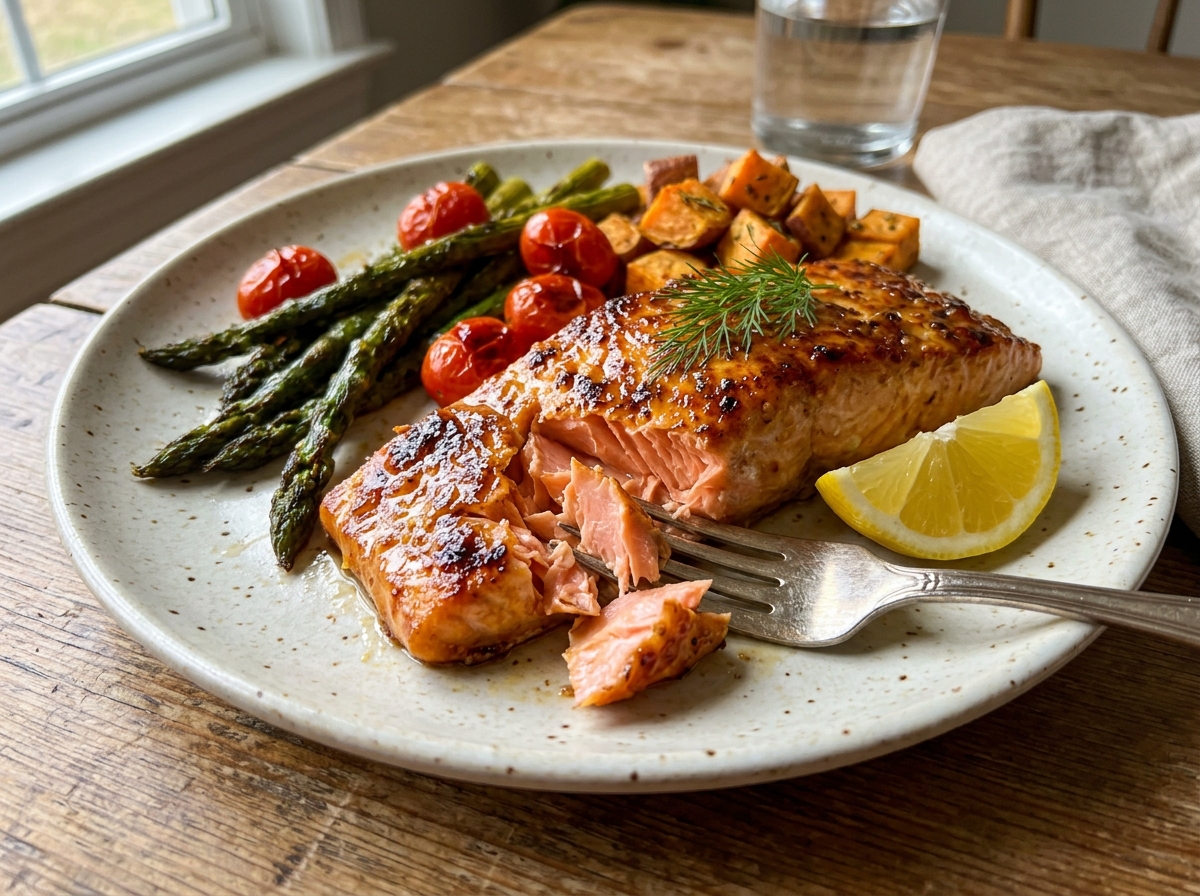
- Once salmon reaches 135°F, switch oven to broil (high) and move rack to top position (4-6 inches from heating element). Broil for 1-2 minutes, watching constantly. Glaze will bubble vigorously and darken to deep golden brown with char spots. Do not walk away—the line between caramelized and burned is thin. Remove as soon as glaze is deeply golden.
Step 8 - Rest for Carryover Cooking
- Let salmon rest on baking sheet for 3-5 minutes. Carryover heat will bring internal temperature from 135°F to 140-142°F—perfect doneness. Fish will be fully cooked, flaky, moist, and buttery with no albumin leakage. Resting also allows proteins to relax and reabsorb juices.
Step 9 - Serve
- Use a thin spatula to carefully slide under each fillet, separating it from skin (which will stick to foil). Transfer to plates. If serving with skin, it should lift off foil easily. Garnish with fresh lemon wedges, chopped dill or parsley, and optional lemon zest. Serve immediately.
Notes
The Pull-Temp Secret (CRITICAL):
The USDA recommends 145°F for fish, but this results in dry, overcooked salmon. The professional secret is to pull salmon at 135°F internal temperature. Carryover heat (residual heat in the fish) will bring it to 140-142°F during the 5-minute rest. At this temperature, salmon is fully cooked and safe, but still moist, buttery, and tender with no white albumin leakage. This is restaurant-quality doneness. Why Dijon Mustard is Non-Negotiable:
Dijon contains natural polysaccharides called mucilage—powerful emulsifiers that bind water-based honey and oil-based fish fats into a stable glaze that clings uniformly. Yellow mustard lacks these compounds and has harsh flavor. Whole-grain mustard can substitute, but Dijon gives the smoothest, most refined glaze. The Albumin Problem:
Albumin is the white, cottage-cheese-like protein that leaks from overcooked salmon. It appears when fish is exposed to high, aggressive heat that forces muscle fibers to contract violently. Gentle heat (400°F oven, not higher) and pulling at the right temperature prevents this completely. Skin-On vs Skinless:
Skin-on is recommended—it protects fish from direct heat, prevents sticking, and makes serving easier. If using skinless, reduce cooking time by 1-2 minutes and use parchment paper instead of foil. Thickness Matters:
Uniform thickness ensures even cooking. If fillets vary in thickness, check temperature on each one individually. Thin ends cook faster than thick centers. Fresh vs Frozen:
Fresh salmon is ideal. If using frozen, thaw completely in refrigerator overnight and pat extra dry—frozen salmon releases more moisture. Wild vs Farmed:
Wild-caught (King, Sockeye) has richer flavor, firmer texture, and deeper color. Farmed Atlantic is milder, softer, more affordable, and works beautifully. Both are excellent for this recipe. Glaze Consistency:
Should be thick and glossy like mayonnaise. Too thin and it slides off; too thick and it doesn't spread evenly. Add honey to thicken or lemon juice to thin. The Broiler Finish:
This 1-2 minute broil caramelizes the glaze via Maillard reaction, creating hundreds of new flavor compounds and a sticky, golden crust. Do not skip—it transforms the dish. Lemon Juice Balance:
The acid balances honey's sweetness and brightens the rich fish. Without it, the glaze tastes one-dimensional and cloying.
The USDA recommends 145°F for fish, but this results in dry, overcooked salmon. The professional secret is to pull salmon at 135°F internal temperature. Carryover heat (residual heat in the fish) will bring it to 140-142°F during the 5-minute rest. At this temperature, salmon is fully cooked and safe, but still moist, buttery, and tender with no white albumin leakage. This is restaurant-quality doneness. Why Dijon Mustard is Non-Negotiable:
Dijon contains natural polysaccharides called mucilage—powerful emulsifiers that bind water-based honey and oil-based fish fats into a stable glaze that clings uniformly. Yellow mustard lacks these compounds and has harsh flavor. Whole-grain mustard can substitute, but Dijon gives the smoothest, most refined glaze. The Albumin Problem:
Albumin is the white, cottage-cheese-like protein that leaks from overcooked salmon. It appears when fish is exposed to high, aggressive heat that forces muscle fibers to contract violently. Gentle heat (400°F oven, not higher) and pulling at the right temperature prevents this completely. Skin-On vs Skinless:
Skin-on is recommended—it protects fish from direct heat, prevents sticking, and makes serving easier. If using skinless, reduce cooking time by 1-2 minutes and use parchment paper instead of foil. Thickness Matters:
Uniform thickness ensures even cooking. If fillets vary in thickness, check temperature on each one individually. Thin ends cook faster than thick centers. Fresh vs Frozen:
Fresh salmon is ideal. If using frozen, thaw completely in refrigerator overnight and pat extra dry—frozen salmon releases more moisture. Wild vs Farmed:
Wild-caught (King, Sockeye) has richer flavor, firmer texture, and deeper color. Farmed Atlantic is milder, softer, more affordable, and works beautifully. Both are excellent for this recipe. Glaze Consistency:
Should be thick and glossy like mayonnaise. Too thin and it slides off; too thick and it doesn't spread evenly. Add honey to thicken or lemon juice to thin. The Broiler Finish:
This 1-2 minute broil caramelizes the glaze via Maillard reaction, creating hundreds of new flavor compounds and a sticky, golden crust. Do not skip—it transforms the dish. Lemon Juice Balance:
The acid balances honey's sweetness and brightens the rich fish. Without it, the glaze tastes one-dimensional and cloying.