
Ingredients
Equipment
Method
Step 1: Prepare Oven and Meringue Base
- Preheat your oven to 250°F (120°C). Line a large baking sheet with parchment paper and draw a 9-inch circle on the back as a guide. Wipe the inside of a stand mixer bowl and whisk attachment with a paper towel dampened with white vinegar to remove any grease—plastic or oil residue will prevent the meringue from whipping properly. Add 180g (6 large) room-temperature egg whites to the clean bowl.
Step 2: Whip to Soft Peaks and Add Sugar Slowly
- Using a stand mixer fitted with the whisk attachment, whip egg whites on medium speed until frothy and opaque with soft peaks (2-3 minutes). Begin adding the superfine sugar one tablespoon at a time while the mixer continues running. Wait about 30 seconds between each addition to allow the sugar to dissolve fully. This slow addition prevents weeping (syrup leaking) during baking. Once all sugar is added, increase speed to medium-high and whip for 5-7 minutes until the meringue is very thick, glossy, and holds stiff peaks. Test by lifting the whisk—the peak should stand straight up with only a slight curl at the tip. The meringue should feel completely smooth between your fingers (no sugar granules).
Step 3: Stabilize with Acid and Cornstarch
- Sift 1 tablespoon cornstarch over the stiff meringue. Add 1 teaspoon white vinegar and 1 teaspoon vanilla extract. Using a large spatula, gently fold these ingredients into the meringue with only 8-10 strokes. The vinegar makes the proteins more elastic (preventing cracks), while the cornstarch absorbs moisture to create the marshmallowy center. Do not overmix—fold just until combined.
Step 4: Shape and Bake the Meringue
- Spoon the meringue onto the parchment-lined baking sheet, using the 9-inch circle as a guide. Shape into a thick disc with a slight crater in the center (for holding fruit and cream later). Create decorative swirls or peaks around the edges. Place in the preheated oven on the center rack and immediately reduce temperature to 225°F (110°C). Bake for 1 hour 30 minutes. Do NOT open the oven door during baking.
Step 5: Cool Slowly Inside the Oven (Prevent Cracks)
- When baking time is complete, turn off the oven. Prop the oven door open slightly with a wooden spoon and let the Peach Melba Pavlova cool completely inside the oven for at least 1 hour (or until the oven is cool to the touch). This slow cooling prevents thermal shock and minimizes cracking.
Step 6: Poach the Peaches (Osmosis Science)
- While the pavlova bakes and cools, prepare the peaches. Bring 4 cups water and 1 cup sugar to a gentle simmer in a large saucepan (add vanilla bean if using). Score an "X" on the bottom of each peach and blanch in boiling water for 30 seconds, then transfer to an ice bath to loosen skins. Peel and slice peaches into thick wedges. Gently lower slices into the simmering sugar syrup. Poach for 2-3 minutes per side until just tender but still holding shape. Remove with a slotted spoon and let cool. The sugar syrup prevents mushiness through osmosis.
Step 7: Make the Raspberry Coulis
- In a small saucepan, combine 12 oz raspberries, 1/4 cup sugar, and 1 tbsp lemon juice. Cook over medium heat for 8-10 minutes until raspberries break down and sauce thickens slightly. Press mixture through a fine-mesh sieve to remove seeds for a silky coulis. Let cool completely.
Step 8: Whip Cream and Assemble
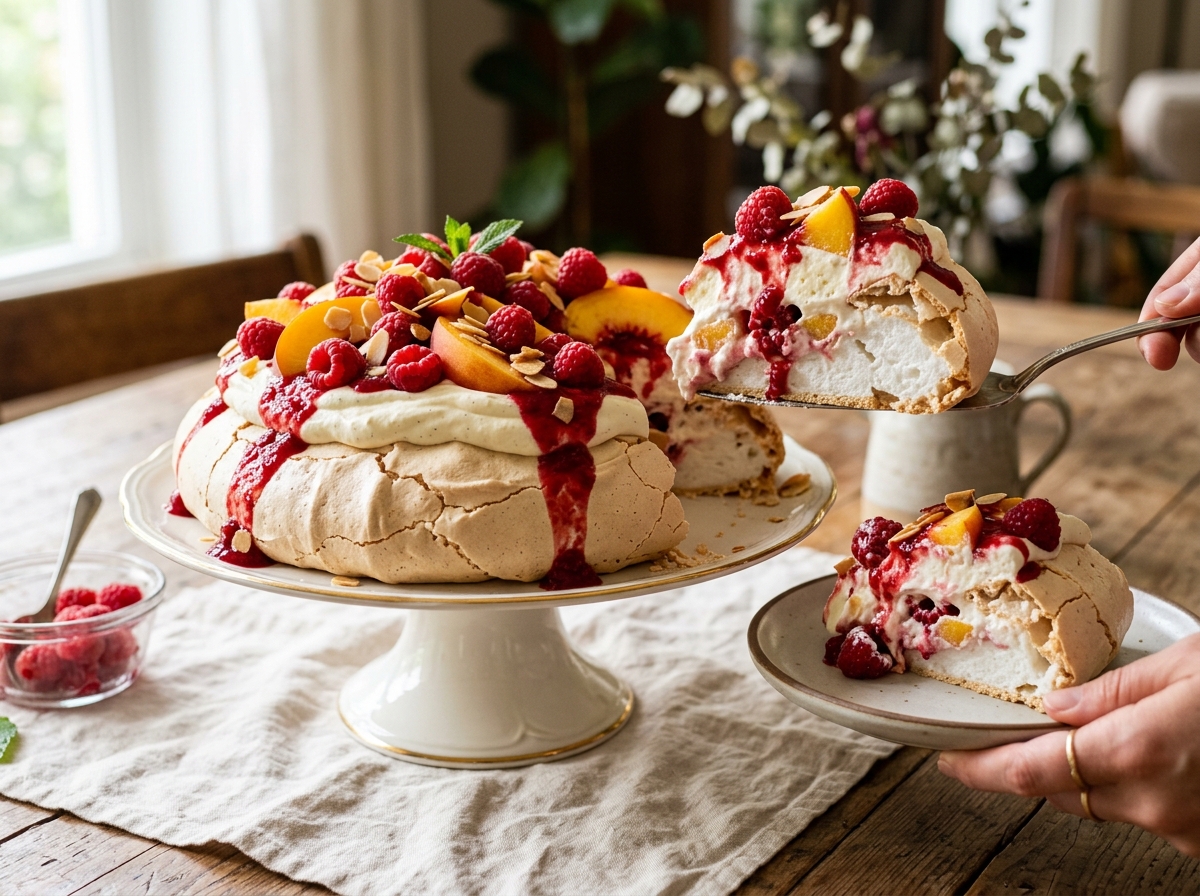
- In a chilled bowl, whip 1 1/2 cups cold heavy cream with 2 tbsp powdered sugar until soft peaks form. Carefully transfer the cooled meringue shell to a serving platter. Fill the crater with whipped cream. Arrange poached peach slices and fresh raspberries over the cream. Drizzle raspberry coulis generously over the fruit and down the sides. Serve immediately.
Notes
Acid Stabilization is Key: White vinegar (or lemon juice) lowers the pH of the meringue, making egg white proteins more elastic and preventing cracks. It also creates the signature marshmallowy center.
Superfine Sugar Dissolves Faster: Regular granulated sugar can leave grit and cause weeping. If unavailable, pulse regular sugar in a food processor for 10-15 seconds.
Cooling in the Oven is Non-Negotiable: Removing the pavlova from a hot oven causes thermal shock and severe cracking. Always cool slowly inside the turned-off oven.
Meringue Hates Humidity: Bake on dry days (<50% humidity). If it's rainy, the meringue will absorb moisture from the air and become sticky instead of crisp.
Poached Peaches via Osmosis: Poaching in sugar syrup (not water) prevents the peaches from turning mushy. The syrup balances osmotic pressure so the fruit holds its shape.
Assembly Timing: Assemble the Peach Melba Pavlova immediately before serving. The meringue shell will soften and weep if it sits with the whipped cream and fruit for too long.
Storage: Unfilled meringue shells can be stored airtight at room temperature for 2-3 days. Assembled pavlova must be refrigerated and eaten within 24 hours (texture suffers after that).