
Ingredients
Equipment
Method
Macerate the Strawberries (The Liquid Gold)
- Hull the fresh strawberries and slice them into quarters or thick 1/4-inch slices. Do not slice too thin or they will turn mushy. Place the sliced berries in a medium bowl and toss with 1/4 cup granulated sugar and 1 teaspoon fresh lemon juice. The sugar will immediately begin to dissolve. Cover loosely and let the strawberries macerate at cool room temperature for 45 to 60 minutes. During this time, osmosis will draw water out of the berry cells, creating a glossy, ruby-red syrup that pools at the bottom of the bowl. The berries should soften slightly but still hold their shape. This syrup is essential—it soaks into the biscuit and carries all the bright fruity aromatics. If rushed, 30 minutes minimum will work, but 45 is ideal.
Prepare the Biscuit Dough (Cold Butter Cut)
- Preheat your oven to 425°F (220°C). Line a baking sheet with parchment paper. In a large mixing bowl, whisk together the flour, sugar, baking powder, and salt until evenly combined. Add the cold, cubed unsalted butter. Using a pastry blender, two forks, or your fingertips, cut the butter into the flour mixture until it resembles coarse sand with visible pea-sized butter chunks scattered throughout. These butter pieces are critical—they will melt during baking and create steam pockets that make the biscuit flaky. If the butter starts to soften or smear, refrigerate the bowl for 5 minutes before proceeding.
Mix the Biscuit Dough (Minimal Gluten Development)
- Make a well in the center of the flour-butter mixture. Pour in all the cold buttermilk at once. Using a fork or your hands, gently stir and fold just until the dough comes together into a shaggy, rough mass. The dough should look uneven with some dry bits—this is correct. Do not knead or overmix, or gluten will overdevelop and the biscuits will be tough instead of tender.
Shape and Cut the Biscuits
- Turn the shaggy dough out onto a lightly floured surface. Gently pat it into a rough rectangle about 1 inch thick. Fold the dough in half, pat down again to about 1 inch thick, and repeat this fold one more time. This creates layers without overworking the gluten. Pat the final dough to about 3/4-inch thickness. Dip a 2.5 to 3-inch round biscuit cutter (or the rim of a drinking glass) in flour and press straight down into the dough without twisting. Twisting seals the edges and prevents the biscuits from rising properly. Gather scraps gently, pat down once more, and cut additional biscuits. You should get 6 large biscuits.
Bake the Biscuits
- Place the biscuits on the prepared baking sheet, with sides just barely touching (this helps them rise taller by providing support). Brush the tops lightly with buttermilk or heavy cream for a golden finish. Bake in the preheated 425°F (220°C) oven for 15 to 18 minutes, until the tops are golden brown and the biscuits have risen tall and fluffy. Remove from the oven and let cool on a wire rack for 5 minutes before splitting.
Make the Stabilized Whipped Cream (The Peak Whipping)
- While the biscuits bake, prepare the whipped cream. Place your mixing bowl and beaters in the freezer for 10 minutes to chill thoroughly. Pour the cold heavy whipping cream into the chilled bowl. If you want extra stability (especially important in warm weather), whisk in 1 tablespoon cornstarch before you start whipping. Beat the cream on medium speed until it begins to thicken. Add the powdered sugar and vanilla extract. Increase the speed to medium-high and whip until stiff peaks form—the cream should hold a firm, glossy shape on the whisk without looking grainy or curdled. Do not overwhip or the cream will turn buttery and break. Cover and refrigerate until ready to assemble.
Assemble the Strawberry Shortcakes (Just Before Serving)
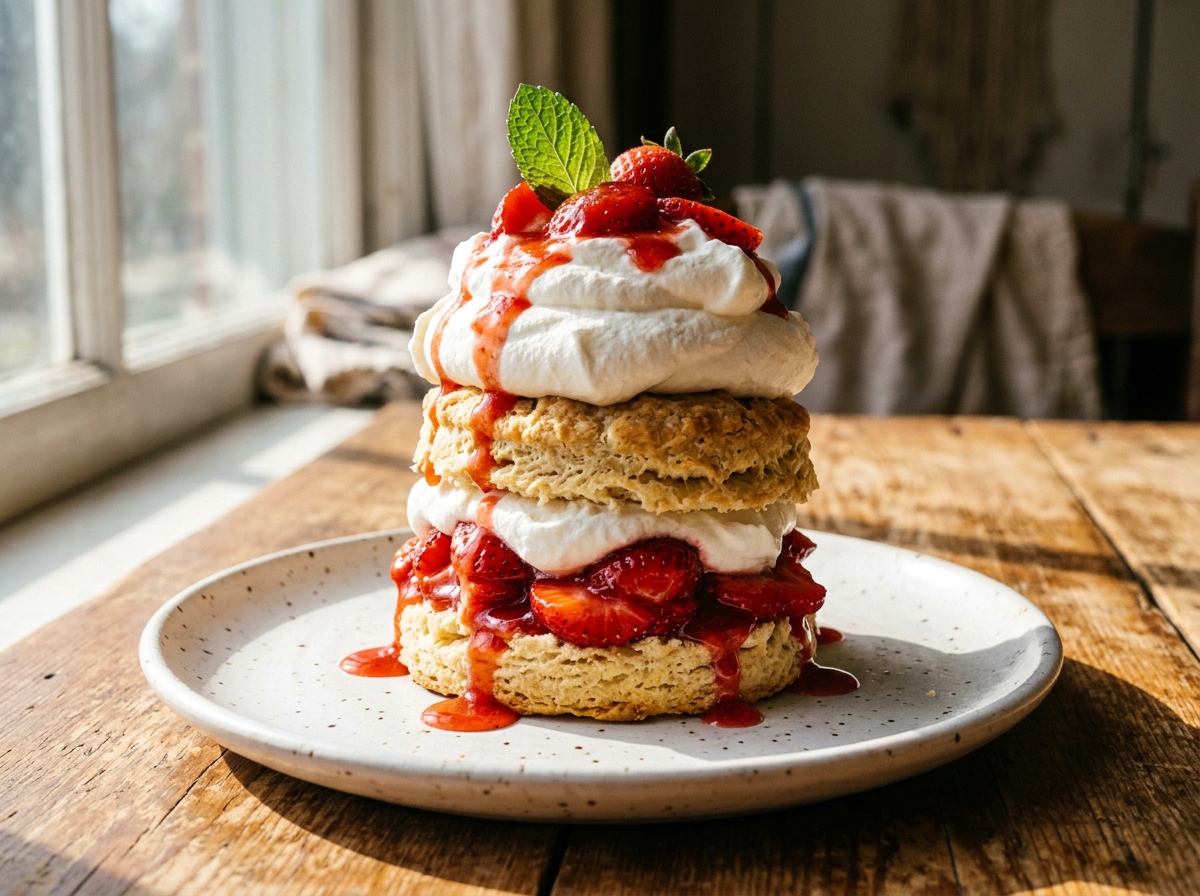
- This step is critical: assemble each shortcake just before serving to prevent soggy biscuits. Split each biscuit in half horizontally using a serrated knife or your hands. Place the bottom half on a serving plate. Spoon a generous amount of macerated strawberries and their glossy syrup onto the biscuit base. Add a large dollop of stabilized whipped cream. Place the top half of the biscuit gently over the cream at a slight angle so the layers are visible. Add more berries, syrup, and whipped cream on top, letting the syrup drip down the sides naturally. Garnish with a whole strawberry or mint leaf if desired. Serve immediately while the biscuit is tender, the berries are juicy, and the cream is cold and billowy.
Notes
White Lily Flour for Ultimate Tenderness: White Lily all-purpose flour has lower protein (about 9%) compared to standard brands (11-12%), which means less gluten development and a more tender, "short" biscuit. If unavailable, substitute with 3/4 all-purpose flour + 1/4 cake flour.
Cold Butter is Non-Negotiable: The butter must be cold from the refrigerator—not room temperature, not frozen. Cold butter creates steam during baking, which produces the flaky layers that define a great strawberry shortcake biscuit.
Don't Twist the Biscuit Cutter: Press straight down and lift straight up. Twisting seals the edges and prevents proper rise, resulting in lopsided or flat biscuits.
Maceration Creates the Magic: Letting sliced strawberries sit with sugar triggers osmosis—water leaves the berry cells and creates a naturally sweet, glossy syrup. This is what makes strawberry shortcake different from just "biscuits and berries." 45-60 minutes is the sweet spot for perfect texture and syrup.
Stabilizing Whipped Cream for Warm Weather: Adding 1 tablespoon cornstarch to the cream before whipping gives it structure that survives heat and time. Alternatively, fold in 2-3 tablespoons softened cream cheese for stability and a subtle tangy flavor.
Assemble Fresh, Not Ahead: Store components separately and assemble individual servings just before serving. Pre-assembled shortcakes will turn soggy as the syrup soaks into the biscuit.
Buttermilk Substitute: If you don't have buttermilk, make a quick substitute: combine 3/4 cup whole milk with 1 tablespoon lemon juice or white vinegar. Let sit for 5 minutes to curdle before using.
Biscuit Leftovers: Store baked biscuits in an airtight container at room temperature for up to 2 days, or freeze for up to 2 months. Reheat in a 350°F oven for 5 minutes before serving.