
Ingredients
Equipment
Method
Make the 24-Hour Cold Ferment Dough (Day 1)
- In a small bowl, combine 1 1/4 cups warm water (105°F-110°F / 40°C-43°C), 1 teaspoon active dry yeast, and 1 teaspoon granulated sugar. Stir gently and let sit undisturbed for 5-10 minutes until the mixture becomes foamy and bubbly on top. This is called proofing—it confirms your yeast is alive and active. In a large mixing bowl, whisk together 3 1/2 cups bread flour and 2 teaspoons fine sea salt until evenly distributed. Make a well in the center of the flour mixture and pour in the proofed yeast mixture and 2 tablespoons olive oil. Stir with a wooden spoon or sturdy spatula until a shaggy, rough dough forms and no dry flour remains at the bottom of the bowl. Turn the dough out onto a lightly floured work surface. Knead by hand for 8-10 minutes, pushing the dough away with the heel of your hand, folding it back, rotating 90 degrees, and repeating. The dough should become smooth, elastic, and slightly tacky but not sticky. You are developing the gluten network that will trap CO2 bubbles during fermentation and create the chewy, leopard-spotted crust that defines The BEST BBQ Chicken Pizza. Shape the kneaded dough into a smooth, tight ball. Lightly oil a large bowl with olive oil, place the dough ball inside, and turn it to coat all surfaces with oil (this prevents drying). Cover the bowl tightly with plastic wrap or a damp kitchen towel. Refrigerate for 24 to 72 hours. This cold, slow fermentation allows yeast to work gradually, producing complex organic acids (lactic and acetic acid) that add tangy flavor, improve digestibility, and create professional-level crust texture with beautiful air pockets and leoparding.
Bring Dough to Room Temperature (Day 2 - 45-60 Minutes Before Baking)
- Remove the dough from the refrigerator 45-60 minutes before you plan to bake The BEST BBQ Chicken Pizza. The dough should have roughly doubled in size and feel puffy and airy. Gently punch down the dough to release large gas bubbles, then divide it in half using a bench scraper or sharp knife. You will make two 12-inch pizzas. Shape each half into a smooth, tight ball by tucking the edges underneath and pinching them together at the bottom. Place the dough balls on a lightly floured work surface, leaving several inches of space between them. Cover loosely with a clean kitchen towel and let rest at room temperature for the full 45-60 minutes. This rest period (called "bench rest") allows the cold gluten to relax and warm up, making the dough much easier to stretch without tearing or snapping back.
Preheat Oven and Pizza Stone to Maximum Heat (45-60 Minutes)
- While the dough is resting at room temperature, place your pizza stone or baking steel on the middle or upper-middle oven rack. Preheat your oven to the highest temperature it will reach—ideally 500°F-550°F (260°C-288°C). If your oven has a convection setting, use it. Let the stone preheat inside the oven for a full 45-60 minutes. This extended preheat is absolutely critical. A properly heated stone absorbs and radiates intense, even heat that crisps the bottom crust, creates the leopard-spotted char bubbles, and bakes The BEST BBQ Chicken Pizza in just 10-12 minutes. If you skip or shorten this preheat, your pizza will bake unevenly with a pale, soft bottom crust. If you don't have a pizza stone, use an inverted heavy-duty baking sheet preheated the same way—it won't be quite as effective but is far better than a cold pan.
Hand-Stretch the Dough (Preserve Air Pockets for Leoparding)
- Generously dust your work surface and your hands with flour. Take one rested dough ball and place it on the floured surface. Using your fingertips (not your palms), gently press the dough into a flat disk starting from the center and working outward in a circular motion, leaving a 1/2-inch border around the edge slightly thicker for the crust rim. Do NOT use a rolling pin—rolling compresses all the CO2 gas bubbles you spent 24 hours developing, resulting in a flat, dense crust with no leoparding. Once you have a rough 6-inch disk, pick up the dough and drape it over your knuckles (make loose fists with both hands). Let gravity gently stretch the dough as you rotate it in a circle, moving your hands apart slightly as you turn. The dough will naturally stretch outward. Continue rotating and gently stretching until you have a 12-inch round with a slightly thicker raised edge. If the dough tears, simply pinch it back together. If it keeps snapping back and resisting, let it rest for another 5 minutes and try again—the gluten needs more time to relax. The final stretched dough should be thin in the center (about 1/4 inch) with a puffy 1/2-inch border.
Transfer Dough and Apply Sauce (Thin Layer, Reserved Drizzle Strategy)
- Generously dust a pizza peel (or the back of a large rimless baking sheet) with cornmeal. The cornmeal acts like tiny ball bearings, allowing the pizza to slide easily onto the hot stone. Carefully transfer your hand-stretched dough onto the prepared peel. Give it a gentle shake to make sure it moves freely—if it sticks, lift the edge and sprinkle more cornmeal underneath. In a small bowl, combine 1/3 cup BBQ sauce with 1/2 tablespoon olive oil or water and stir to thin it slightly. This lowers the sugar concentration at the surface and reduces the risk of burning during high-heat baking. Using the back of a spoon or a silicone brush, spread the thinned BBQ sauce in a very thin, even layer over the dough, leaving a 1/2-inch border for the crust. Do NOT over-sauce. BBQ sauce is thick, sweet, and concentrated—too much will pool in the center, steam the dough, prevent crisping, and burn black under 500°F+ heat. You want just enough to add flavor without overwhelming the pizza. CRITICAL: Reserve the remaining 1/3 cup BBQ sauce in a small bowl for drizzling after baking. This fresh drizzle is what gives The BEST BBQ Chicken Pizza its bright, tangy finish and beautiful presentation without the risk of burnt sugar.
Layer Cheese, Chicken, and Red Onion (Building Smoky Complexity)
- Combine the shredded mozzarella and shredded smoked Gouda in a bowl and toss to mix evenly (about 70% mozzarella, 30% Gouda ratio). Sprinkle the cheese blend evenly over the sauced dough, leaving the 1/2-inch border clean. Distribute slightly more cheese near the edges to help seal and crisp the crust. Use about 1 1/4 cups total cheese per pizza—enough to cover the sauce but not piled so thick that it stays greasy and doesn't brown. Pat the shredded cooked chicken dry with paper towels to remove any excess moisture (this prevents the crust from steaming and getting soggy). Distribute the chicken evenly over the cheese layer—about 3/4 cup per pizza. If using rotisserie chicken, use the breast meat and avoid the skin (which gets rubbery on pizza). If you have leftover smoked chicken or grilled chicken thighs, even better—the smoky char reinforces the BBQ flavor profile. Scatter the thinly sliced red onion over the chicken. Red onions add sharp bite and slight bitterness that cuts through the sweetness of the BBQ sauce. They will soften and char slightly in the oven, adding depth and complexity to The BEST BBQ Chicken Pizza.
Bake at Maximum Heat (10-12 Minutes to Leoparding Perfection)
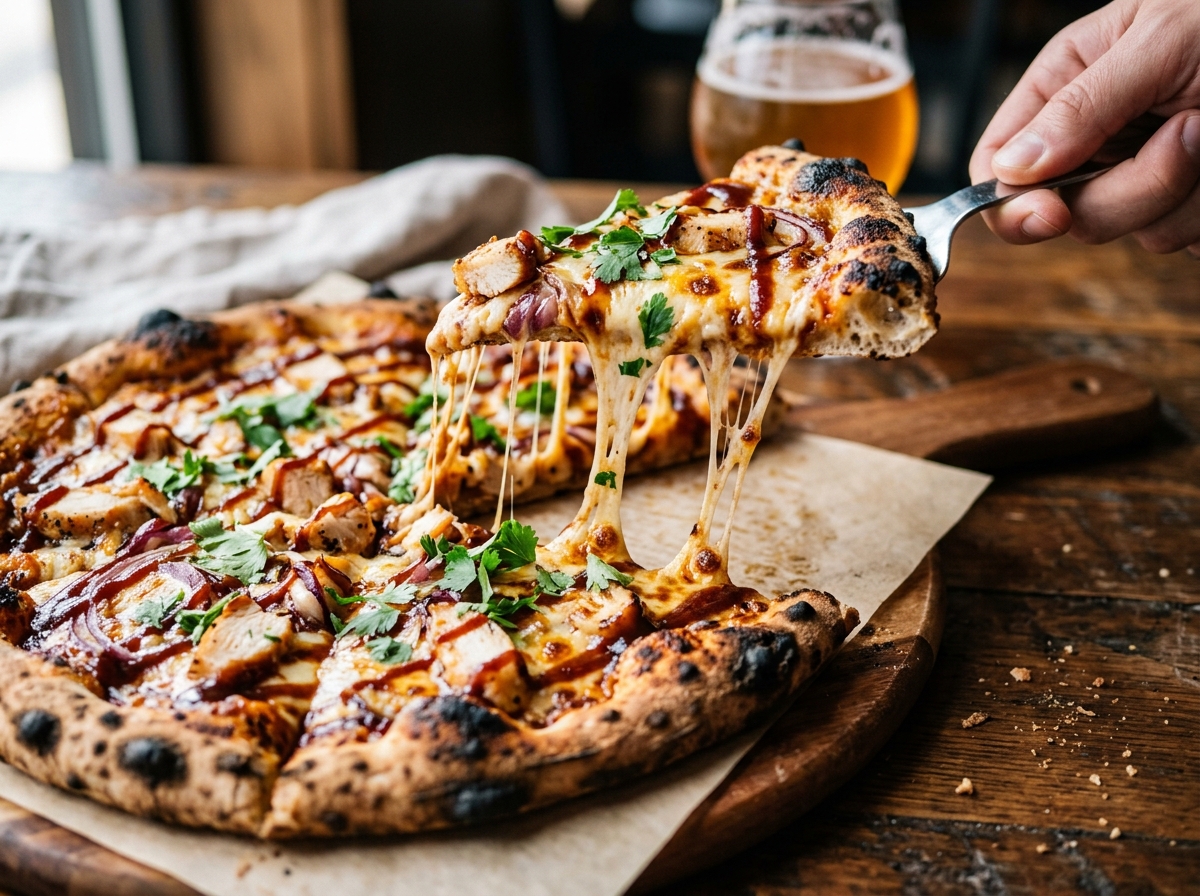
- Give the pizza peel one final shake to confirm the pizza slides freely. If it sticks anywhere, lift that section and add a pinch more cornmeal. Open the oven door and position the peel at the back edge of the preheated pizza stone. With a quick, confident forward-and-back jerking motion, slide the pizza off the peel onto the stone. It should slide cleanly. Immediately close the oven door to maintain heat. Bake at maximum temperature (500°F-550°F / 260°C-288°C) for 10-12 minutes. Watch for these visual cues of doneness: (1) The crust should be deep golden brown with dark, charred leopard spots (blistered bubbles), (2) The cheese should be fully melted, bubbling vigorously, and starting to brown in spots, (3) The crust edges should be puffed, crisp, and slightly charred. If the top is browning too quickly but the bottom crust is still pale, move the pizza to a lower oven rack for the last 2-3 minutes. If you have a pizza peel, use it to lift and check the bottom—it should be golden brown and crisp, not pale or floppy. When done, use the peel (or a large spatula) to carefully remove the pizza from the oven and transfer it to a large cutting board.
Finish with Fresh Cilantro and BBQ Drizzle (The Signature Move)
- Immediately drizzle the reserved 1/3 cup fresh BBQ sauce over the hot pizza in a zigzag or spiral pattern using a spoon or squeeze bottle. This fresh sauce adds a bright, tangy punch of BBQ flavor without any burnt sugar bitterness, and it creates the glossy, photogenic finish that makes The BEST BBQ Chicken Pizza so visually striking. Scatter 1/4 cup roughly chopped fresh cilantro generously over the entire pizza. The residual heat from the pizza will warm the cilantro and release its aromatic oils without burning the delicate leaves (cilantro turns black and bitter if baked in a 500°F+ oven). If you're serving cilantro skeptics, leave it on the side or garnish only half the pizza. Let the pizza rest on the cutting board for 2-3 minutes to allow the cheese to set slightly and stop bubbling—this makes slicing cleaner and prevents cheese from sliding off. Slice into 8 equal wedges using a sharp pizza wheel or chef's knife. Serve immediately while the crust is still crackling-crisp and the cheese is molten and stretchy.
Notes
24-Hour Cold Fermentation is Essential: This is what separates homemade pizza from The BEST BBQ Chicken Pizza. Slow, cold fermentation develops complex flavor (tangy, slightly sour notes), improves digestibility, and creates the gas bubbles that puff and char into leopard spots. If you're short on time, you can use the dough after 12 hours, but 24-72 hours is ideal.
Bread Flour for Chew and Structure: King Arthur Bread Flour has 12.7% protein vs. 10-11% in all-purpose flour. Higher protein = more gluten development = chewier, sturdier crust that supports toppings without getting soggy. All-purpose flour will work in a pinch but gives a softer, less structured crust.
Mozzarella + Smoked Gouda Blend is Key: Plain mozzarella is too mild for BBQ pizza. Smoked Gouda (or smoked cheddar) adds the smoky depth that echoes the BBQ sauce and chicken. The 70/30 ratio melts beautifully and tastes complex. Always shred from a block—pre-shredded cheese has cellulose coating that prevents proper melting and browning.
Why BBQ Sauce Burns (And How to Prevent It): BBQ sauce contains 15-30% sugar, which caramelizes at 320°F and burns above 350°F. At 500°F+ oven temps, it burns easily and turns bitter. Solutions: (1) Use a thin layer, (2) Thin sauce with olive oil, (3) Reserve half for drizzling after baking.
Hand-Stretch, Never Roll: Rolling pins compress CO2 bubbles and create flat, dense crust. Hand-stretching preserves air pockets that expand in the oven, creating the puffy, leopard-spotted crust that defines great pizza.
Pizza Stone Preheat is Non-Negotiable: 45-60 minutes at max temp. A cold or under-preheated stone will not crisp the bottom crust properly. The stone must be saturated with heat to radiate intense, even energy.
Cilantro After Baking, Never Before: Cilantro burns instantly at 500°F+ and turns black, bitter, and unappetizing. Always add it fresh after the pizza comes out of the oven.
Use Rotisserie or Smoked Chicken: Pre-cooked, seasoned chicken is best. Avoid bland boiled chicken or raw chicken (which won't cook through in 10-12 minutes). Pat chicken dry to prevent soggy crust.
Cornmeal on the Peel: This is the secret to easy pizza transfer. Cornmeal creates a rolling layer between dough and peel. Flour can work but tends to burn and stick.
Leftover Dough Storage: After the 24-hour ferment, dough can be frozen in individual balls (wrapped tightly in plastic and foil) for up to 3 months. Thaw overnight in the fridge and bring to room temp before stretching.