
Ingredients
Equipment
Method
The Polishing Rinse (Critical Starch Removal for Fluffiness)
- Measure 2 cups long-grain white basmati rice and place it in a large fine-mesh strainer or directly in a large bowl. Run cold tap water over the rice while vigorously agitating it with your fingers, swishing and rubbing the grains together. The water will immediately turn cloudy and milky white—this is the surface starch (amylopectin) being released from the rice grains. Drain the rice completely. Repeat this rinsing process AT LEAST FIVE TIMES—this is non-negotiable for fluffy, separate grains in Zesty Cilantro Lime Rice. With each successive rinse, the water will become progressively clearer. By the fifth rinse, the water should run mostly clear instead of opaque milky white. This surface starch removal is what prevents gummy, sticky, clumpy rice. After the final rinse, drain the rice thoroughly in the strainer and let it sit for 2-3 minutes to drip dry so excess water doesn't throw off your rice-to-water ratio.
The Toasted Grain (Oil-Coating Technology for Grain Separation)
- Heat a heavy-bottomed pot or saucepan (at least 3-quart capacity with a tight-fitting lid) over medium heat. Add 2 tablespoons vegetable oil (or 1 tablespoon butter + 1 tablespoon oil for richer flavor). When the oil is shimmering and hot but not smoking, add the rinsed and drained rice all at once. Stir gently with a wooden spoon or silicone spatula to coat every single grain with the hot oil. Continue to sauté the rice, stirring occasionally, for 2-3 minutes until the grains turn slightly translucent around the edges and you hear a gentle toasting, crackling sound. Some grains may start to turn very faintly golden at the edges. This critical oil-toasting step accomplishes two essential things: (1) It coats each individual grain with a thin hydrophobic (water-repelling) layer of fat that prevents grains from sticking to each other during cooking, and (2) It lightly toasts the rice, adding a subtle nutty depth to the final Zesty Cilantro Lime Rice. This is pilaf-style technique and is the difference between restaurant-quality fluffy rice and home-cooked clumpy rice. If adding optional minced garlic, add it during the last 30 seconds of toasting until fragrant.
The Absorption Method (Hands-Off Perfect Cooking)
- Add 3 cups of water to the pot with the toasted rice. Add 1 teaspoon fine sea salt and 1-2 dried bay leaves. Stir ONCE—only once—to distribute the salt and submerge the bay leaves, then never stir again during cooking. Increase the heat to high and bring the water to a full, vigorous, rolling boil. The moment the water reaches a full boil, IMMEDIATELY reduce the heat to the absolute lowest setting your stove has (the smallest burner on the lowest flame or heat setting), cover the pot tightly with the lid, and set a timer for exactly 15 MINUTES. CRITICAL: Do NOT lift the lid during this time. Do NOT stir the rice. Do NOT peek to check on it. The rice is cooking via the absorption method—the grains are absorbing the water and steaming themselves in the trapped moisture. Any interruption releases essential steam and disrupts even cooking, resulting in unevenly cooked Zesty Cilantro Lime Rice with some grains mushy and others undercooked. Trust the process and leave it completely alone. After the 15-minute timer goes off, turn off the heat completely but LEAVE THE LID ON. Let the covered pot sit undisturbed off the heat for another 5 MINUTES. This resting period allows the rice to finish steaming gently with residual heat and allows the grains to firm up slightly. The result will be perfectly tender grains with a slight "al dente" bite—firm enough to hold their shape when tossed with acidic lime juice without turning mushy.
The Cold-Zest Finish (Preserving Bright Green Color and Fresh Flavor)
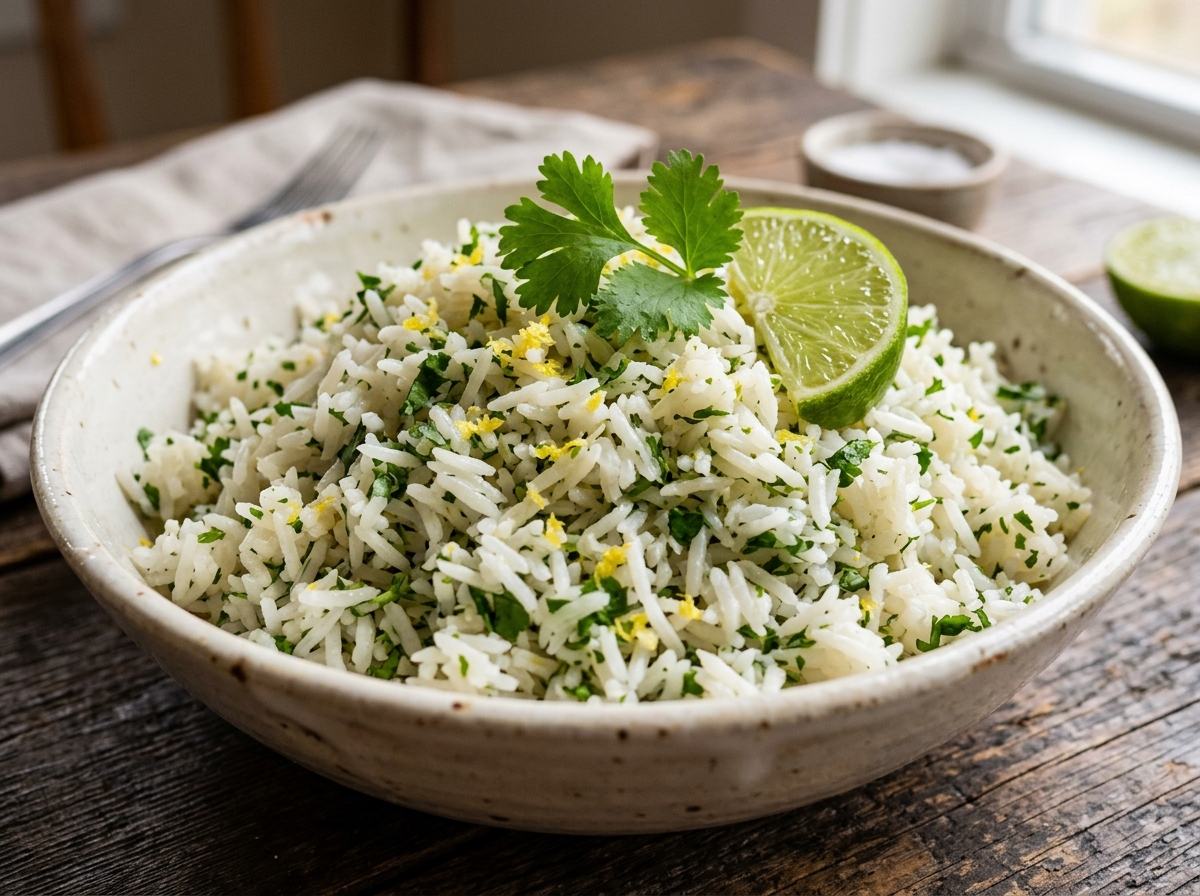
- After the 5-minute rest, remove the lid from the pot. The rice should look fluffy with visible steam holes on the surface and smell aromatic from the bay leaves. Remove and discard the bay leaves—they have done their aromatic work. Using a fork (NOT a spoon, which compresses grains), gently fluff the rice by inserting the fork and lifting upward in a turning motion to release trapped steam and separate the grains. Do this all over the surface of the rice. Let the rice sit UNCOVERED for another 3-5 minutes to cool slightly and release more steam—the rice should still be warm but no longer piping hot or aggressively steaming. While the rice cools, prepare the finishing ingredients: Zest 2 fresh organic limes using a microplane or fine grater to get about 1 tablespoon of bright green zest—only the outer green layer, avoiding the bitter white pith underneath. Juice the same 2 limes plus 1 additional lime to get 3 tablespoons of fresh lime juice (about 45ml). Finely chop 1/2 cup packed fresh cilantro leaves and tender stems—discard any thick, woody stems. When the rice has cooled to warm temperature (no longer steaming heavily—this is critical for keeping cilantro bright green instead of turning it brown through chlorophyll oxidation), drizzle the lime juice evenly over the rice, then sprinkle the lime zest and chopped cilantro on top. Using the fork, gently fold and toss everything together using lifting motions from the bottom of the pot, distributing the lime juice, zest, and cilantro evenly throughout the Zesty Cilantro Lime Rice. The rice should transform into a vibrant green-and-yellow-flecked, aromatic masterpiece. Taste and adjust seasoning—add a pinch more salt if needed, or an extra squeeze of lime juice if you want more zing.
Serve Immediately or Hold Warm
- Transfer the Zesty Cilantro Lime Rice to a serving bowl and serve immediately while warm. If you need to hold it for a short time before serving, keep it covered in a warm (not hot) place for no more than 1-2 hours. For food safety, do NOT leave cooked rice at room temperature longer than 2 hours total—Bacillus cereus spores can develop and cause food poisoning. If meal-prepping, cook plain rice and store separately in the refrigerator, then add fresh lime, zest, and cilantro just before reheating and serving for maximum brightness and vibrant green color.
Notes
The 5-Rinse Rule is Non-Negotiable: Rice grains are coated in surface starch (amylopectin) that turns sticky and gummy when cooked. Each rinse removes a layer. By the fifth rinse, water should run mostly clear. This is the #1 secret to fluffy, separate grains in Zesty Cilantro Lime Rice. Don't skip or shorten this step.
Oil-Coating Prevents Sticking: Sautéing rinsed rice in oil before adding water coats each grain with a hydrophobic fat barrier that prevents grains from sticking to each other. This pilaf-style technique is what creates restaurant-quality texture. Don't skip the toasting step.
Basmati's Natural Aroma: Basmati rice contains 2-acetyl-1-pyrroline, a natural aromatic compound that smells nutty and popcorn-like. Bay leaves complement this aroma beautifully. This is why basmati is preferred over jasmine or other long-grain rice for Zesty Cilantro Lime Rice.
Why Jasmine Rice Works Too: Jasmine rice (Thai long-grain) has slightly lower amylose content (18-20% vs. basmati's 21-24%), so it's a bit softer and stickier, but still works well. The rice-to-water ratio and cooking method are the same. Rinse it the same way.
Rice-to-Water Ratio: For basmati and jasmine rice, use 1:1.5 ratio (2 cups rice to 3 cups water). For other long-grain white rice, you may need to adjust slightly. Too much water = mushy rice; too little = undercooked, hard grains.
Never Stir While Cooking: Stirring breaks grains, releases more starch, and creates a mushy, porridge-like texture. Stir ONCE at the beginning to distribute salt, then leave it completely alone until done. Only fluff gently with a fork after cooking.
Add Lime AFTER Cooking, Not During: Acid (lime juice) interferes with starch gelatinization if added during cooking. It also makes rice taste bitter and chalky. Always add lime juice and zest after rice is cooked and slightly cooled for bright, fresh flavor without bitterness.
Chlorophyll Protection (Green Color): Chlorophyll in cilantro oxidizes and turns brown when exposed to heat. Let rice cool for 5 minutes after cooking (still warm but not steaming hot) before folding in cilantro. This keeps the cilantro bright green instead of dull olive-brown.
Bay Leaf Secret: Bay leaves add aromatic depth that complements basmati's natural popcorn aroma. This is a trick used by high-end Mexican restaurants. Don't skip if you have them, but rice will still be delicious without.
Fresh Limes + Zest Essential: Bottled lime juice lacks the aromatic oils in fresh lime zest and tastes flat/artificial. For true "zesty" flavor, you need both fresh lime juice AND zest. Use organic limes if possible since you're eating the peel.
Dried Cilantro is Useless: Dried cilantro has zero flavor or aroma—it tastes like hay. Only fresh cilantro works for Zesty Cilantro Lime Rice. No substitutions.
Bacillus Cereus Food Safety: Cooked rice left at room temperature can develop spores that cause food poisoning. Refrigerate leftovers within 2 hours. Reheat to steaming hot (165°F). Never leave cooked rice out overnight.
Best Fresh, But Can Meal Prep: Zesty Cilantro Lime Rice is best served fresh—cilantro wilts and browns overnight. For meal prep, cook plain rice and refrigerate separately, then fold in fresh lime and cilantro just before reheating and serving.