
Ingredients
Equipment
Method
Spiralize the Zucchini
- Wash zucchini and pat dry. Trim both ends with straight, even cuts. Do NOT peel—the skin provides structural fiber and color.
- Secure spiralizer to countertop. Use the 3mm blade for spaghetti-style noodles.
- Press zucchini against blade and rotate with even, consistent pressure.
- Spiralize all 4 zucchini. Transfer to a large mixing bowl.
Salt Cure (Hypertonic Moisture Extraction)
- Sprinkle 1 tablespoon coarse kosher salt evenly over all the noodles.
- Toss gently with hands to distribute salt across every strand.
- Spread noodles in a single layer over a clean kitchen towel or multiple layers of paper towels.
- Let rest at room temperature for 20–30 minutes. You will see water beads forming and towels darkening.
Evacuate Moisture
- After 30 minutes, gather noodles in small handfuls and squeeze gently over the sink. Press firmly but do not wring.
- Transfer pressed noodles to a clean, dry bowl.
- Taste a strand—should be lightly and pleasantly salty. If too salty, rinse briefly under cold water and pat dry.
Make the Cold-Pulsed Pesto
- Add garlic to food processor. Pulse 5–6 times to mince finely.
- Add toasted pine nuts. Pulse 6–8 times until roughly chopped.
- Add packed fresh basil leaves and 1 small ice cube (this is critical—prevents basil oxidation and color loss).
- Pulse 20–25 times in 1-second bursts. Stop and scrape down sides.
- Add fresh lemon juice. Pulse 5 more times.
- With processor on low, slowly drizzle olive oil through feed tube until emulsified and smooth.
- Add freshly grated parmesan. Pulse 3–4 times to incorporate.
- Taste and adjust: more salt, pepper, or lemon juice as needed. Pesto should be neon-green, glossy, and aromatic.
Flash Sear the Zucchini Noodles
- Heat a large heavy-bottomed skillet or cast-iron pan over HIGH heat for 2 minutes until screaming hot.
- Add 1 tablespoon olive oil and swirl to coat. It should shimmer immediately.
- Add pressed, dry zucchini noodles. Toss constantly with tongs.
- Cook for EXACTLY 60–90 seconds. Maximum. The goal is warming, not cooking.
- REMOVE PAN FROM HEAT immediately. Do not add pesto while on the burner.
Toss with Pesto and Serve
- With pan off heat, add fresh pesto to warm noodles.
- Toss quickly and thoroughly with tongs until every strand is coated.
- Transfer immediately to a wide serving bowl.
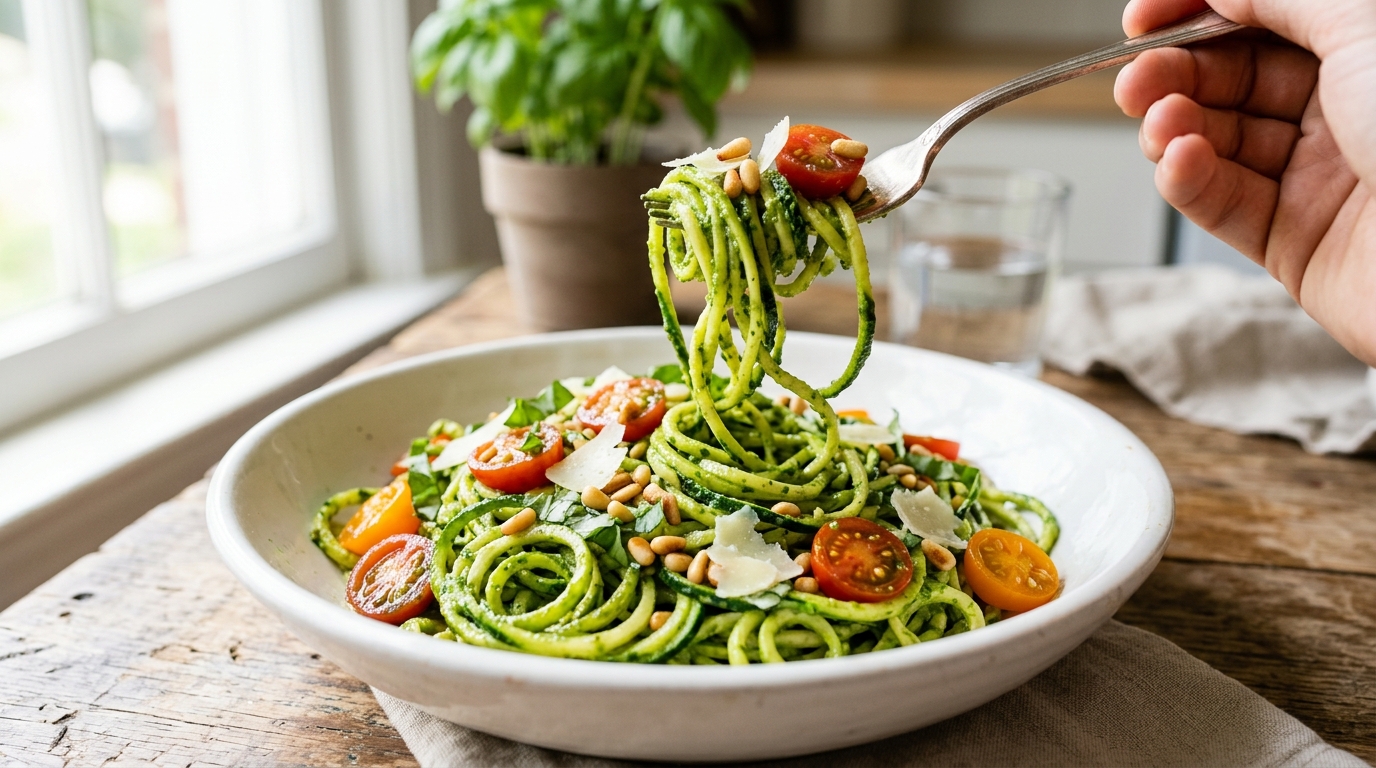
- Garnish with halved cherry tomatoes, toasted pine nuts, shaved parmesan, fresh basil, and cracked black pepper.
- Serve immediately—Zucchini Noodle Pesto does not sit well.
Notes
The Salt Cure is Non-Negotiable: Skipping this step is the #1 reason zoodles turn watery. The hypertonic salt environment draws excess moisture from zucchini cells before cooking, preventing the noodles from steaming in their own liquid.
60-Second Cook Time Maximum: Zucchini noodles go from perfectly al dente to mushy in seconds. Set a timer. 60–90 seconds total cooking time. Never more.
Ice Cube in Pesto: This is the secret to vibrant neon-green pesto that does not brown. The ice cools the blade temperature, preventing enzymatic oxidation of basil chlorophyll. Do not skip it.
Pulse, Never Blend: Use short 1-second pulse bursts only. Continuous high-speed blending generates friction heat that browns the basil within minutes.
Add Pesto Off-Heat: Always remove the pan from the burner before adding pesto. High heat destroys chlorophyll and turns green pesto brown and bitter.
Freshly Grated Parmesan Only: Pre-shredded or pre-grated parmesan contains anti-caking agents (cellulose) that prevent smooth emulsification. Always grate from a block.
Never Peel Zucchini: The skin provides structural fiber that keeps noodles firm during the flash sear. It also provides the vivid green color.
Small-Medium Zucchini Only: Large zucchinis have developed seed chambers that add excess water and structural weakness. Choose 6–8 inch zucchini.
Store Components Separately: Assembled Zucchini Noodle Pesto cannot be stored—noodles continue releasing water and the dish turns watery within 1–2 hours. Store pesto and zoodles separately; assemble fresh.
Vegan Version: Substitute freshly grated parmesan with 2–3 tablespoons nutritional yeast for a dairy-free, vegan-friendly pesto.
Nut-Free Version: Replace pine nuts with toasted pumpkin seeds (pepitas) for a nut-free alternative with similar buttery flavor.