
Ingredients
Equipment
Method
Step 1 - Chill Everything (Foundation of Flakiness)
- Place mixing bowl, pastry cutter, and even flour in refrigerator for 15 minutes. Cut cold butter into ½-inch cubes OR grate using large holes of box grater (grating creates smaller, more evenly distributed pieces for better lamination). Return grated butter to refrigerator while preparing dry ingredients. Temperature control is everything for flaky layers
Step 2 - Mix Dry Ingredients
- In chilled mixing bowl, whisk together 2½ cups flour, 1 tablespoon baking powder, ½ teaspoon baking soda, 1 teaspoon salt, and 1 teaspoon sugar (if using). Sugar is optional—it promotes browning through Maillard reaction and balances buttermilk tanginess.
Step 3 - The Butter Grating (Creating Fat Pockets
- Remove grated butter from refrigerator. Add to flour mixture. Using pastry cutter or fingertips (work quickly to avoid warming butter), cut butter into flour until mixture resembles coarse crumbs with pea-sized butter pieces still visible. Do NOT overwork—you want distinct chunks of butter, not uniform sandy texture. These chunks create steam pockets that form layers. If butter starts to soften, refrigerate bowl for 5 minutes.
Step 4 - The Buttermilk Well (Gentle Hydration)
- Make well in center of flour-butter mixture. Pour 1 cup cold buttermilk into well all at once. Using fork or hands, stir gently from center outward, gradually incorporating flour into buttermilk. Mix just until dough comes together. It will be shaggy, sticky, and uneven—this is correct. Do NOT knead or stir until smooth. Overmixing develops gluten, making biscuits tough instead of tender.
Step 5 - The Letter Fold (Lamination for Layers)
- Turn shaggy dough onto lightly floured surface. Gently pat into rough rectangle about ¾ inch thick. Fold like a letter: fold bottom third up over center, then fold top third down over that. You now have 3 layers. Rotate dough 90 degrees (quarter turn). Pat back into rectangle and repeat letter fold. Rotate 90 degrees again. Repeat process 4-5 times total. Each fold multiplies layers exponentially: 1 fold = 3 layers, 2 folds = 9 layers, 3 folds = 27 layers, 4 folds = 81 layers, 5 folds = 243 layers. Be gentle—fold, don't compress. Goal is to create layers, not knead dough.
Step 6 - The Final Pat and Rest
- After final fold, gently pat dough into rectangle or circle about ¾ to 1 inch thick. Use hands to press gently—don't roll aggressively. Let dough rest 5 minutes to allow gluten to relax, making cutting easier and preventing shrinkage.
Step 7 - The Vertical Cut (Preserving Layers)
- Using 2½-inch biscuit cutter dipped in flour, press straight down through dough in one firm motion. DO NOT TWIST the cutter—twisting seals edges and prevents layers from separating during baking. Lift cutter straight up. Place cut biscuit on parchment-lined baking sheet. Repeat, cutting biscuits as close together as possible to minimize scraps. Gather scraps gently, press together (don't re-fold), and cut additional biscuits. Place biscuits so they're just touching or within ½ inch of each other—this encourages upward rise instead of outward spread.
Step 8 - The Freeze Flash (Optional but Powerful)
- For maximum rise, place entire baking sheet of unbaked biscuits in freezer for 10 minutes before baking. This ensures butter is ice-cold when it hits oven, maximizing steam expansion. This step is optional but makes noticeable difference in height
Step 9 - Bake Hot and Fast
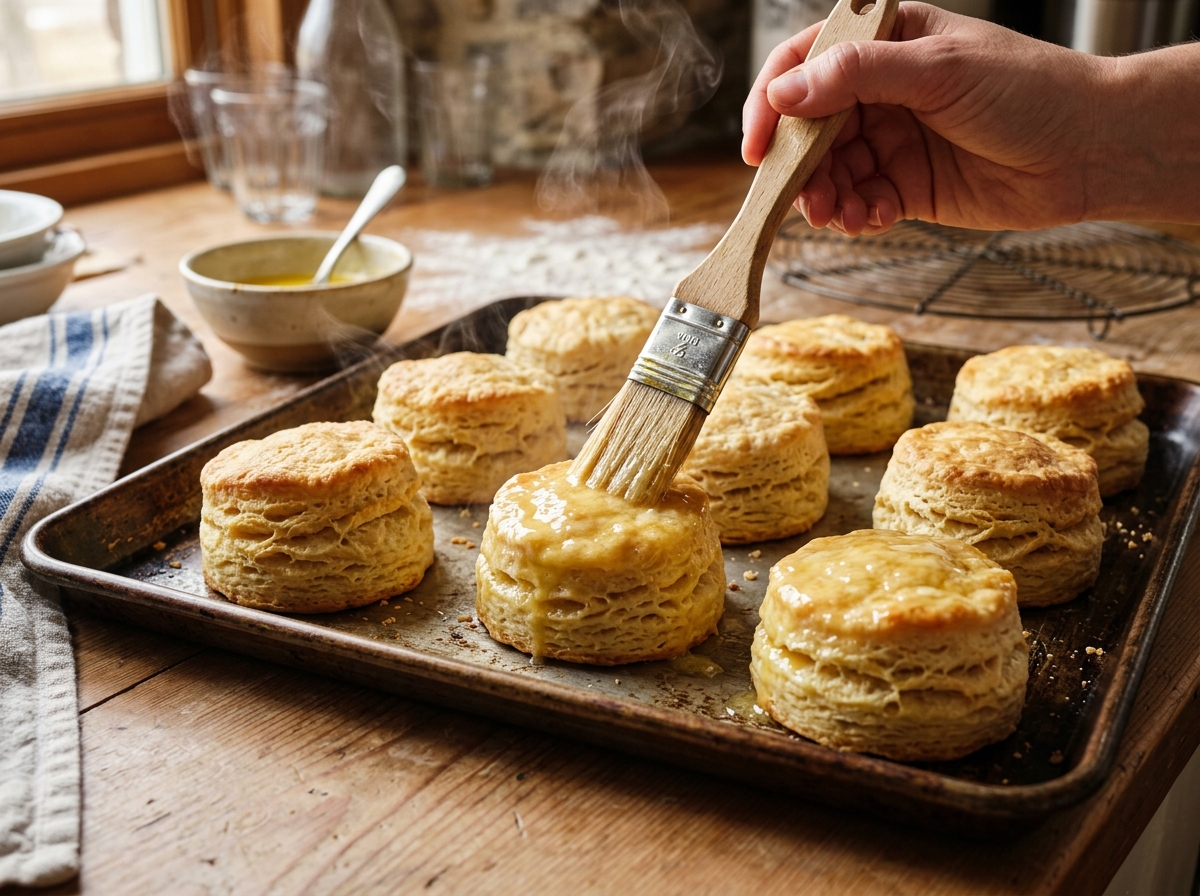
- Preheat oven to 450°F (232°C) for at least 15 minutes—ovens lie about temperature. Brush tops of biscuits with melted butter to promote browning. Bake 12-15 minutes, or until tops are deeply golden brown. Biscuits should have risen dramatically with visible layers separating at sides. Don't underbake—pale biscuits are doughy inside. You want deep golden color on top and slightly darker edges. Remove from oven and brush with more melted butter while still hot. Butter will soak into crust, creating glossy, flavorful finish.
Step 10 - The Pull-Apart Test
- Let biscuits cool 2-3 minutes, just enough to handle. Pull one apart horizontally. Layers should separate easily, revealing fluffy, steaming interior with thin sheets of buttery dough. This is result of cold butter, gentle handling, lamination, and high heat working together. Serve immediately with butter, honey, jam, or gravy.
Notes
**Critical Temperature Guidelines:** - Butter temp before incorporation: 35°F-40°F (refrigerator cold) - Buttermilk temp: 35°F-40°F (cold from fridge) - Oven preheat: 450°F for minimum 15 minutes - Baking temp: 450°F (232°C) - high heat essential - Internal temp when done: 200°F (93°C) center - Optional freeze flash: 10 minutes before baking **Flour Selection Guide:** - Best: White Lily Flour (8-9% protein, soft winter wheat) - Alternative: King Arthur Pastry Flour - Can use: All-purpose flour (results slightly less tender) - Avoid: Bread flour (too much gluten, tough biscuits) - Self-rising flour option: Use 2½ cups self-rising, omit baking powder, baking soda, and salt **The Science of Flakiness:** - Cold butter has water trapped inside - When water boils in hot oven, turns to steam - Steam occupies 1,600x more volume than liquid water - Explosive expansion pushes flour layers apart - Fat melts and coats separated layers - Result: Hundreds of thin, buttery layers - Formula: Cold Fat + High Heat = Steam Expansion (Layers) **Lamination Explained:** - Each letter fold creates 3 layers - 4 folds = 81 layers total - 5 folds = 243 layers total - More folds = more layers = flakier biscuits - Don't exceed 5 folds (diminishing returns) - Be gentle—fold, don't compress **Critical Success Factors:** - Everything must be COLD (butter, buttermilk, bowl, flour) - Don't overwork dough (creates gluten = tough biscuits) - Don't twist biscuit cutter (seals edges, prevents rise) - Preheat oven fully (insufficient heat = flat biscuits) - Don't skip lamination (no folds = no layers) - Use whole buttermilk, not low-fat - Place biscuits close together for tall rise - Brush off excess flour from work surface **Storage & Reheating:** - Room temp: Same day only, in airtight container - Refrigerator: 2-3 days, airtight container - Freezer (unbaked): 2 months, freeze on sheet then transfer to bag - Freezer (baked): 2 months, fully cooled - Reheat: Oven at 350°F, 5-7 min (room temp) or 8-10 min (refrigerated) - Keep soft: Wrap in foil when reheating to trap steam - Bake from frozen: Add 3-5 minutes to baking time **Common Mistakes to Avoid:** - Warm butter (melts before steam forms = no layers) - Overworking dough (gluten development = tough) - Twisting cutter (seals edges = prevents rise) - Under-preheating oven (insufficient heat = flat) - Skipping lamination (no folds = no flaky layers) - Low-fat buttermilk (less tender, less flavor) - Spacing biscuits apart (spread wide instead of rise tall) - Over-flouring surface (throws off liquid ratio) **Variations:** - Cheddar: Add ½ cup shredded sharp cheddar to flour mixture - Herb: Add 2 tbsp chopped fresh herbs (chives, rosemary, thyme) - Garlic: Add 1 tsp garlic powder to dry ingredients - Sweet: Increase sugar to 2 tbsp, serve with jam - Drop biscuits: Skip lamination, drop dough by spoonfuls (faster, less flaky)