
Ingredients
Equipment
Method
Build the Lean Dough
- In the bowl of a stand mixer fitted with the dough hook, combine bread flour, warmed milk (100–110°F), granulated sugar, instant yeast, and 3 whole eggs. Do NOT add butter or salt yet.
- Mix on low speed for 2 minutes until ingredients come together into a shaggy dough.
- Increase to medium speed and knead for 8–10 minutes until dough is smooth, elastic, and slightly tacky.
- Perform the windowpane test: Stretch a small piece of dough thin enough to see light through it without tearing. If it tears, knead 2 more minutes.
Add Salt and Develop Gluten
- Once windowpane test passes, add fine sea salt.
- Knead on medium speed for 1 minute to incorporate salt fully.
- Dough should be smooth, pulling away from bowl sides, at 75–78°F internal temperature.
Incorporate Butter Gradually
- Cut cold unsalted butter into tablespoon-sized cubes.
- With mixer running on medium-low, add 1 cube of butter at a time, waiting until fully incorporated before adding the next. This takes 10–15 minutes.
- Dough will look broken and greasy at first—this is normal. Keep kneading. It will come back together into a smooth, glossy, soft mass.
- By the end, dough should be silky, slightly sticky, with a soft sheen.
First Rise
- Scrape dough into a lightly greased bowl. Cover tightly with plastic wrap.
- Let rise at room temperature (75–78°F) for 1–2 hours until doubled in size.
Overnight Cold Retardation
- Punch down dough gently to release gas.
- Cover bowl tightly with plastic wrap and refrigerate overnight (12–16 hours).
- Cold fermentation develops flavor and firms up butter for easier shaping.
Shape the Buns
- Remove cold dough from refrigerator. Turn out onto lightly floured surface.
- Use bench scraper to divide into 8 equal pieces (110–120 g each).
- Shape each piece: Flatten slightly, fold edges to center, pinch to seal. Flip seam-side down.
- Cup hand over dough and roll in circular motions to create a smooth, tight ball with no wrinkles on top.
- Place shaped buns seam-side down on parchment or Silpat-lined baking sheet, spaced 3 inches apart.
Second Rise (Proofing)
- Cover buns loosely with plastic wrap or clean towel.
- Proof at room temperature (75–78°F) for 1.5–2 hours until puffy and nearly doubled.
- Press gently with fingertip—dough should spring back slowly, leaving a faint indentation.
Apply Egg Wash
- Preheat oven to 375°F (190°C). Position rack in center.
- Whisk together 1 egg and 1 tablespoon water until smooth.
- Gently brush each proofed bun with a thin, even layer of egg wash using a soft pastry brush.
- Immediately sprinkle sesame seeds over tops while egg wash is wet.
Bake with Steam
- Place baking sheet in preheated oven.
- Immediately toss 3–4 ice cubes onto oven floor or into a preheated metal pan on bottom rack. Quickly close door. (Steam creates oven spring.)
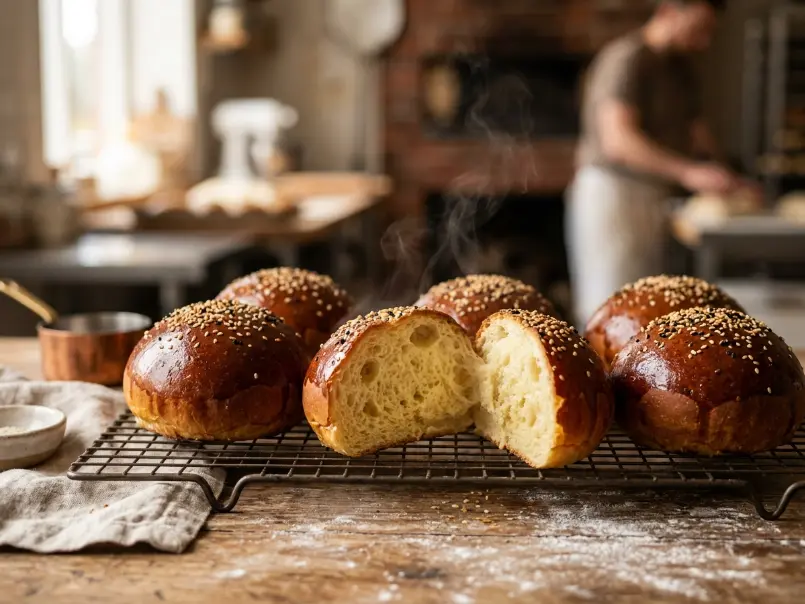
- Bake 18–22 minutes until tops are deep, glossy mahogany-gold and internal temp reaches 190–195°F.
Cool and Serve
- Remove from oven and immediately transfer buns to a wire cooling rack.
- Let cool at least 20 minutes before slicing. Cutting hot bread makes the crumb gummy.
- Slice horizontally and use for gourmet burgers.
Notes
Delayed Butter Incorporation is Critical: Do NOT add butter at the beginning. Fat coats flour proteins and prevents gluten formation. Build a strong gluten network first (8–10 min kneading), then add butter slowly.
Use Bread Flour Only: All-purpose flour has too little protein. The buns will be dense and flat. Only bread flour (12.5–13.5% protein) provides the structure needed for enriched dough.
Cold Butter, Not Melted: Use cold, firm butter cut into cubes. Melted butter separates from the dough and creates a greasy, broken texture.
Overnight Refrigeration is Non-Negotiable: Cold retardation firms the butter for easier shaping and develops complex flavor through slow fermentation. Room-temperature brioche dough is sticky and unmanageable.
Proofing Temperature Matters: Proof at 75–78°F maximum. Warmer temperatures melt the butter inside the dough, causing greasiness and uneven rise.
Egg Wash is Essential: The egg wash creates the glossy, mahogany crust through Maillard reaction. Without it, buns will be pale and dull.
Windowpane Test is Your Guide: The dough must pass the windowpane test before adding butter. This ensures gluten is fully developed.
Do Not Over-Proof: Over-proofed buns collapse in the oven. Proof only until nearly doubled and the dough springs back slowly when pressed.
Weighing is Essential: Use a kitchen scale to weigh flour and divide dough portions. Volume measurements (cups) are inconsistent and lead to dry or sticky dough.
Freezing for Later: Baked buns freeze beautifully for up to 3 months. Wrap individually in plastic, then in a freezer bag. Thaw at room temp and toast lightly to refresh.
Dough Too Sticky? Brioche dough is naturally soft and slightly sticky. Do not add extra flour. If it remains soupy after 15 minutes of kneading with butter, refrigerate 30 minutes to firm up.