
Ingredients
Equipment
Method
Trim the Brisket (The Aerodynamic Trim)
- Remove the whole packer brisket from refrigeration and place it on a large cutting board, fat side up. Using a sharp boning knife or fillet knife, trim the fat cap down to an even 1/4-inch thickness across the entire top surface. Any thicker and the fat won't render fully; any thinner and you lose the protective moisture barrier that keeps the lean flat from drying out. Flip the brisket over and remove all silver skin (the tough, shiny membrane on the bottom)—it doesn't render and stays chewy. Also trim away any hard, waxy fat pockets between the point and the flat. The goal is a smooth, aerodynamic shape with even thickness and no sharp edges that will dry out. Save fat trimmings to render into beef tallow for cooking.
Apply the Dalmatian Rub
- In a bowl, mix together coarse kosher salt and coarse cracked black pepper (this is the traditional Texas Dalmatian rub). If using optional garlic powder, onion powder, or smoked paprika, add them now. For better rub adhesion, you can apply a thin layer of yellow mustard or Worcestershire sauce to the entire brisket surface first—this adds no flavor after 12 hours of smoke but helps the rub stick. Coat the entire brisket liberally with the rub mixture, pressing it into the meat so it adheres well. Don't be shy—this is a large piece of meat and the bark will concentrate all that seasoning into a flavorful crust. Let the rubbed brisket sit at room temperature for 30-60 minutes while you prepare your smoker. This takes the chill off the meat and helps it cook more evenly.
Prepare the Smoker (Blue Smoke Phase)
- Preheat your offset smoker or pellet grill to a steady 225°F-250°F (107°C-121°C). Add Post Oak, Hickory, or Oak wood for smoke. You want thin, blue smoke—nearly invisible wisps that smell sweet and clean, not thick white billows that taste acrid and bitter. Thick white smoke means the wood is smoldering instead of burning cleanly. Adjust airflow (dampers/vents) until the smoke clears to a faint blue haze. Ensure you have enough wood fuel for 10-12 hours of steady smoking.
Smoke the Brisket (The First 6 Hours – Bark Development)
- Place the trimmed and rubbed Slow-Smoked Beef Brisket on the smoker grate fat side up (this allows rendering fat to baste the meat as it melts). Insert a leave-in digital probe thermometer into the thickest part of the flat (the lean section), making sure the probe doesn't touch fat or the point. Close the lid and do NOT open it for at least 2 hours. This is the most critical phase for smoke absorption—the cold meat surface will aggressively pull in smoke flavor. After 2 hours, you can lightly spritz the surface with apple cider vinegar, water, or beef broth every 60-90 minutes to keep it moist and help build bark. Do not over-spritz or open the lid unnecessarily—every opening loses heat and extends cook time. The brisket will develop a dark, mahogany bark during this phase as the Maillard reaction and caramelization occur on the dry surface.
The Stall (160°F / 71°C – Do Not Panic)
- Around hour 5-6, your Slow-Smoked Beef Brisket will hit "The Stall"—the internal temperature will plateau around 150°F-165°F (65°C-74°C) and refuse to climb for 2-4 hours. This is evaporative cooling in action: moisture evaporating from the meat surface absorbs heat energy, creating thermal equilibrium. Do NOT raise the smoker temperature. Do NOT panic. This is where bark develops and collagen begins breaking down into gelatin. You have two choices: (1) Ride it out unwrapped for maximum bark (takes 3-4 extra hours), or (2) Use the Texas Crutch—wrap in butcher paper when internal temp hits 165°F-170°F and bark is set.
Wrap in Butcher Paper (The Texas Crutch – At 165°F-170°F)
- When the internal temperature reaches 165°F-170°F (74°C-77°C) and the bark is dark, firm, and set to the touch, remove the brisket from the smoker. Lay out a 4-foot section of pink butcher paper on your work surface. Place the brisket in the center and wrap tightly, folding the edges to create a sealed package (like wrapping a present). The butcher paper traps some moisture and heat, pushing through the stall faster, while still allowing the bark to breathe and stay firm. NEVER use aluminum foil—it steams the bark and makes it soft and mushy. Return the wrapped brisket to the smoker and continue cooking.
Cook to Probe Tenderness (200°F-205°F / 93°C-96°C)
- Continue smoking the wrapped brisket until the internal temperature in the thickest part of the flat reaches 200°F-205°F (93°C-96°C). But temperature alone is not enough—you need probe tenderness. Insert the thermometer probe into multiple spots on the brisket. It should slide in and out like soft butter with almost zero resistance. If it feels firm or catches on muscle fibers, keep cooking even if the temp is already at 205°F. Some briskets need to go to 208°F-210°F to become fully probe-tender. This entire smoking process will take 10-14 hours total depending on brisket size, smoker temperature stability, and how long the stall lasts.
The Long Rest (The Secret Most People Skip)
- When the Slow-Smoked Beef Brisket reaches 200°F-205°F and is fully probe-tender, remove it from the smoker. DO NOT slice it immediately. Keep it wrapped in the butcher paper and wrap the entire bundle in old beach towels or a thick blanket. Place it in an insulated cooler (like an Igloo or Yeti) and close the lid. Let it rest for 2-4 hours. During this rest, the internal temperature will slowly drop but residual heat continues breaking down collagen. More importantly, muscle fibers relax and reabsorb moisture. If you slice immediately, juices pour out and the meat tastes dry. A properly rested brisket stays juicy, slices cleanly, and tastes exponentially better. You can safely hold a wrapped brisket in a cooler for up to 6 hours with no quality loss.
Slice Against the Grain (Two Different Directions)
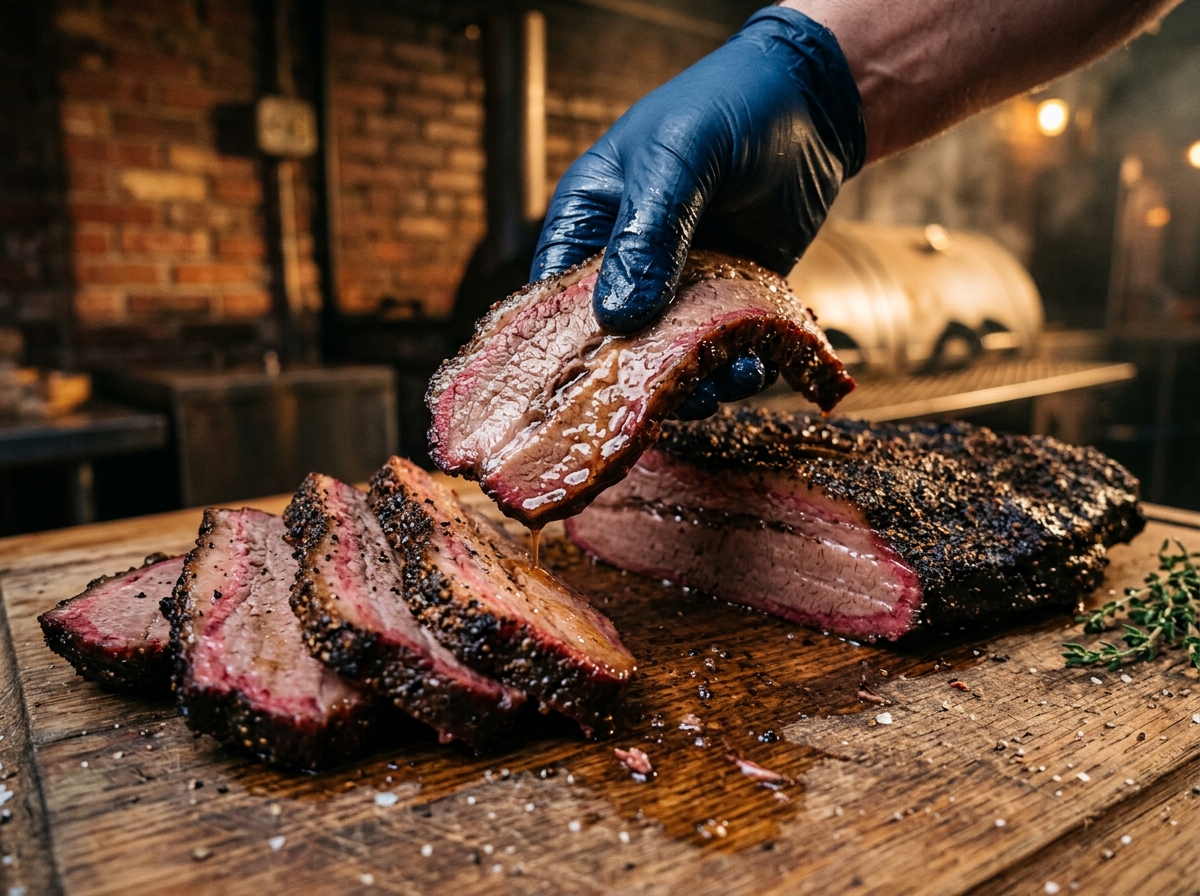
- Unwrap the Slow-Smoked Beef Brisket and place it on a large cutting board. Notice that the flat (lean side) and the point (fatty, marbled side) have different grain directions. Separate the point from the flat by cutting along the natural fat seam between them. Slice the flat against the grain into pencil-thick slices (about 1/4 inch thick). The grain in the flat usually runs lengthwise. Rotate and slice the point against its grain (which runs at roughly 90 degrees to the flat) into thicker slices or cubes. The point is juicier and fattier—often called "burnt ends" when cubed and tossed in BBQ sauce. A properly cooked brisket will have a visible pink smoke ring just under the bark, glisten with rendered fat and gelatin, and release juices when gently pressed.
Serve Immediately
- Arrange sliced Slow-Smoked Beef Brisket on a platter or butcher paper. Serve with classic sides like coleslaw, pickles, white bread, BBQ beans, and optional BBQ sauce on the side (though a properly smoked brisket needs no sauce). Leftover brisket makes incredible tacos, sandwiches, hash, and can be frozen for up to 3 months.
Notes
USDA Grading Matters: Use USDA Prime (best marbling, most forgiving) or USDA Choice. Avoid Select grade—it's too lean and will dry out during the 12+ hour smoke. Full packer brisket includes both the lean flat and fatty point.
The Stall is Science, Not a Problem: The temperature plateau at 150°F-165°F is evaporative cooling. Don't fight it—this is when bark develops. Wrap in butcher paper at 165°F-170°F to push through faster while preserving bark texture.
Butcher Paper vs. Foil: Pink butcher paper is breathable and preserves bark crunch. Aluminum foil traps steam and makes bark soft and mushy (like pot roast texture). Texas pitmasters always use butcher paper.
Probe Tenderness is the True Test: Temperature (200°F-205°F) is important, but the thermometer probe must slide in and out like soft butter with zero resistance. If it catches, keep cooking.
The 2-4 Hour Rest is NOT Optional: This is the most overlooked step. Resting in a cooler allows juices to redistribute and fibers to relax. Slicing immediately = dry brisket.
Trim the Fat Cap to 1/4 Inch: Too thick and it won't render; too thin and the meat dries out. Remove all silver skin completely—it stays tough no matter how long you cook.
Don't Over-Spritz: Light spritzing every 60-90 minutes helps bark and moisture, but overdoing it washes off the rub and extends cook time.
Wood Choice: Post Oak is traditional Texas; Hickory is stronger and more common in the South. Avoid mesquite for 12-hour smokes—too intense and can turn bitter.
Internal Temp Variation: Different parts of the brisket cook at different rates. Always probe the flat (the lean part) for temperature—it's the part most likely to dry out.
Slicing Against the Grain is Critical: Even perfectly cooked brisket will be chewy if sliced with the grain. The flat and point have different grain directions—slice each accordingly.