Air Fryer Salmon: The Science of the Perfect 15-Minute Recipe
By Chef Mansoor | Flavour Bazar
The Smell That Changes Everything 🔥
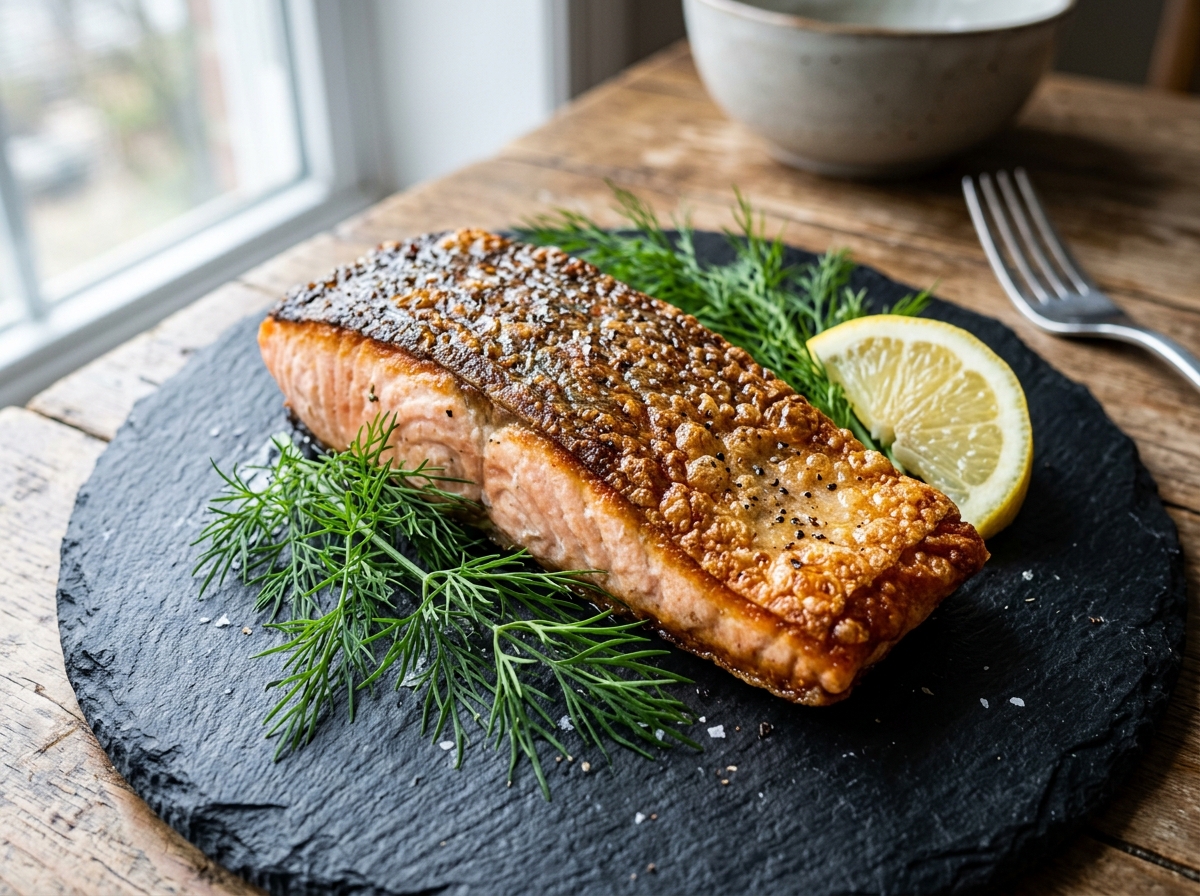
The smell hits you before the timer even goes off. There is something about salmon fat meeting high-velocity heat that fills your kitchen with the kind of aroma that makes everyone stop what they are doing and ask what is for dinner. This Air Fryer Salmon recipe is always a crowd-pleaser.
The air fryer fan hums steadily in the background. You hear the faint crackle of skin tightening against the basket. You know it is working when that sound shifts from a soft sizzle to something sharper, crispeer.
I have tested this method with over fifty fillets. I adjusted temperature in five-degree increments. I timed every batch down to the thirty-second mark. I learned exactly when to pull the salmon to prevent that white protein goop—albumin—from bubbling out and ruining the presentation.
The secret is not just the temperature. It is the relationship between heat intensity, air movement, and moisture control. When you get all three right, you do not need a fancy oven or a sous vide setup. You just need fifteen minutes and the science to back it up

Why Air Fryers Work Better Than You Think 🧪
Let me explain what is happening inside that basket. When you place a salmon fillet into a preheated air fryer, you are not just applying heat. You are creating a high-velocity convection environment where hot air circulates at speed around every surface of the fish.
This is fundamentally different from baking in a conventional oven. In a standard oven, heat rises and pools. Hot spots form. The top of your salmon might cook faster than the bottom. But in an air fryer, the fan forces air to move constantly, creating uniform heat distribution across the entire fillet.
The science behind this is rooted in protein denaturation. Salmon flesh is made up of bundled muscle fibers held together by proteins like myosin and actin. When heat is applied, these proteins begin to unwind and coagulate. The speed and evenness of that heat determine whether your salmon turns out silky and tender or dry and chalky.
Here is where it gets technical. The rate of heat transfer in an air fryer depends on three variables: the convection coefficient (how fast air is moving), the surface area exposed to that air, and the temperature difference between the air and the fish.
Heat Transfer=Convection Coefficient×Surface Area×ΔT
In simple terms: faster air movement means faster cooking. Larger temperature gaps mean more aggressive heat. And the more surface area you expose—like leaving the skin on and patting it dry—the crisper and more caramelized your fillet becomes.
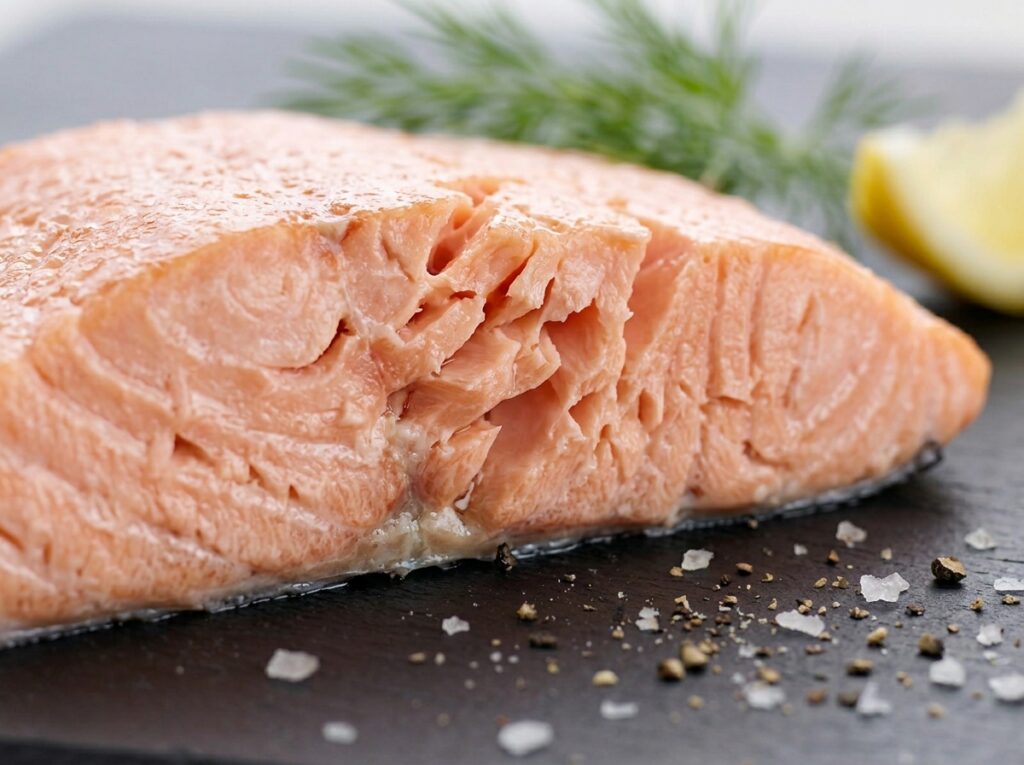
The albumin issue I mentioned earlier? That white protein leaks out when salmon is cooked too fast or at too high a temperature. The proteins contract violently, squeezing out moisture and albumin along with it. At 380°F (193°C), you hit the sweet spot where the fish cooks through without shocking the proteins into submission.
What to Buy and Where to Find It 🛒
Let me be specific. Not all salmon is created equal, and the air fryer will not fix a low-quality fillet.
Best Salmon to Buy:
If you are shopping at Whole Foods, go for their Atlantic Salmon with the skin on. It is usually farm-raised, consistent in thickness, and has enough fat content to stay moist under high heat. Look for fillets that are about one inch thick at the center.
If you want wild-caught, grab Sockeye Salmon from Kroger or Walmart’s seafood counter. Sockeye has a deeper color and a firmer texture. It is leaner than Atlantic, so you will need to watch the cook time more carefully—pull it thirty seconds earlier.
Target sometimes carries Orca Bay or Trident Seafoods frozen salmon portions. These work well if you thaw them properly in the fridge overnight. Do not microwave-thaw. You will ruin the texture.
Fat and Seasoning:
I use Kerrygold Butter (salted) for richness. You can find it at almost any grocery store in the gold foil wrapper. If you are going dairy-free, Chosen Foods Avocado Oil is my top pick. It has a high smoke point and does not interfere with the flavor of the fish.
For seasoning, keep it simple. Morton’s Kosher Salt and Tellicherry Black Pepper are all you need. If you want a little warmth, add a pinch of smoked paprika. McCormick makes a reliable one that is available everywhere.
Air Fryer Recommendations:
I have tested this recipe in the Ninja Foodi 8-Quart and the Cosori Pro II 5.8-Quart. Both have strong fans and accurate temperature controls. If you are using a smaller basket model, cook one fillet at a time. Crowding kills crispness.
Air Fryer Salmon Ingredients 📝
| Ingredient | US Customary | Metric |
|---|---|---|
| Salmon fillets (skin-on) | 2 fillets (6 oz each) | 2 fillets (170g each) |
| Salted butter, melted | 1 tbsp | 15ml |
| Avocado oil (alternative) | 1 tbsp | 15ml |
| Kosher salt | ½ tsp | 3g |
| Black pepper, freshly ground | ¼ tsp | 1g |
| Smoked paprika (optional) | ¼ tsp | 1g |
| Lemon wedges (for serving) | 2 wedges | 2 wedges |
| Fresh dill or parsley | 1 tbsp, chopped | 3g |
Common Mistakes That Ruin Air Fryer Salmon ❌
| The Mistake | What Actually Happens | The Fix |
|---|---|---|
| Not patting the skin dry | Steam forms, skin stays rubbery and pale | Use paper towels to remove all surface moisture before seasoning |
| Crowding the basket | Air cannot circulate, fillets cook unevenly | Cook one or two fillets max, depending on basket size |
| Skipping the preheat | Salmon sticks to the basket, cooking is uneven | Preheat air fryer for 3–4 minutes at full temp |
| Cooking straight from the fridge | Center stays cold, outside overcooks | Let salmon sit at room temp for 10 minutes before cooking |
| Ignoring carryover cooking | Salmon continues cooking after you pull it, becomes dry | Remove at 135°F internal; it will coast to 145°F |
| Flipping the fillet | Skin sticks and tears, fillet falls apart | Cook skin-side down only—no flipping needed |
“How to Cook Air Fryer Salmon: Step-by-Step 👨🍳
Step 1: Bring the Salmon to Room Temperature
Pull your fillets out of the fridge and let them sit on the counter for ten minutes. This is not about food safety paranoia—it is about even cooking. A cold center means the outside will overcook before the inside reaches temperature.
While the salmon rests, preheat your air fryer to 380°F (193°C). This step is non-negotiable. A cold basket will cause sticking and uneven browning.
Step 2: Dry the Skin Completely
Use paper towels to press down firmly on both sides of the fillet, paying special attention to the skin. Moisture is the enemy of crispness. If the skin is wet, it will steam instead of sear.
Run your fingers along the flesh side. If you feel any pin bones, pull them out with tweezers or small pliers. They are usually located in the thickest part of the fillet and run diagonally.
Step 3: Season with Precision
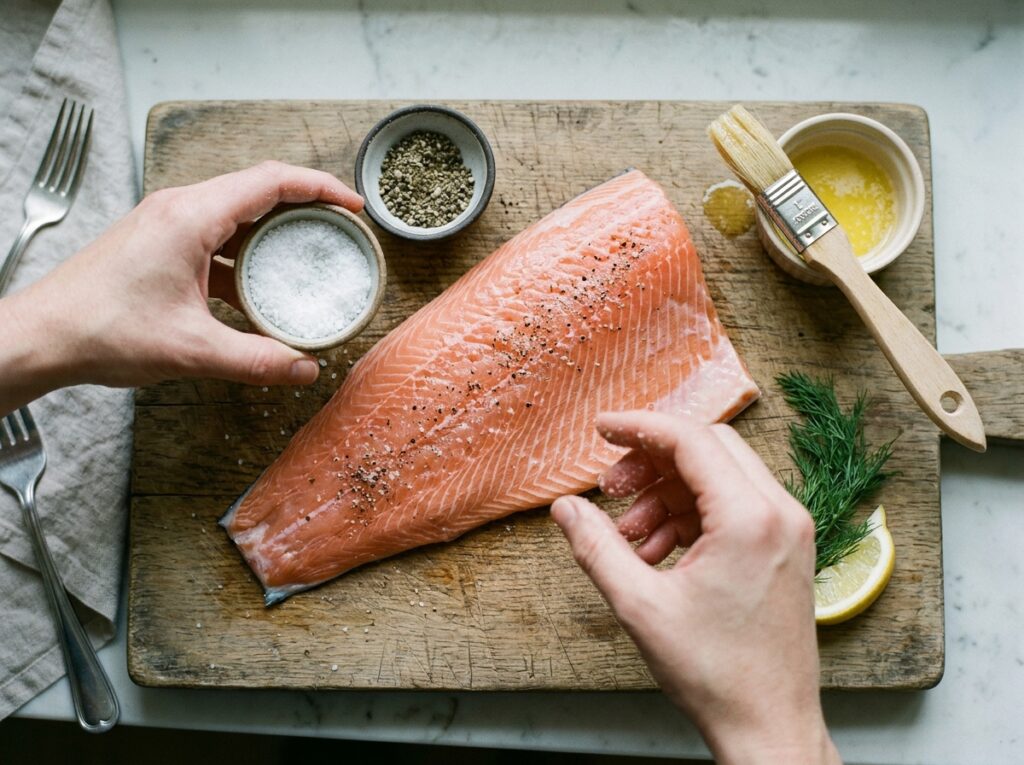
Brush the skin side lightly with melted butter or avocado oil. Flip the fillet so the flesh side is up. Sprinkle kosher salt evenly across the surface. Add black pepper and a pinch of smoked paprika if you are using it.
Do not over-season. Salmon has a delicate flavor that should not be buried under spice. The goal is to enhance, not mask.
Step 4: Place Skin-Side Down in the Basket
Once the air fryer is preheated for your Air Fryer Salmon, place the fillets skin-side down in the basket. Do not overlap them. Leave at least half an inch of space between fillets if you are cooking two.
Close the basket. Set the timer for twelve minutes. Do not open it early. Every time you open the drawer, you lose heat and disrupt airflow.
For more tips on the best food experiences, visit our home at Flavour Bazar.
Step 5: Check Internal Temperature at 10 Minutes
At the ten-minute mark, crack open the basket and insert an instant-read thermometer into the thickest part of the fillet. You are looking for 135°F (57°C).
If it is not there yet, close the basket and give it another minute or two. If it has already hit 135°F, pull it immediately. The salmon will coast up to 145°F (63°C) as it rests—this is called carryover cooking, and it is the reason most people overcook fish.
Step 6: Rest and Plate
Transfer the fillets to a plate and let them rest for two minutes. This allows the proteins to relax and the juices to redistribute.
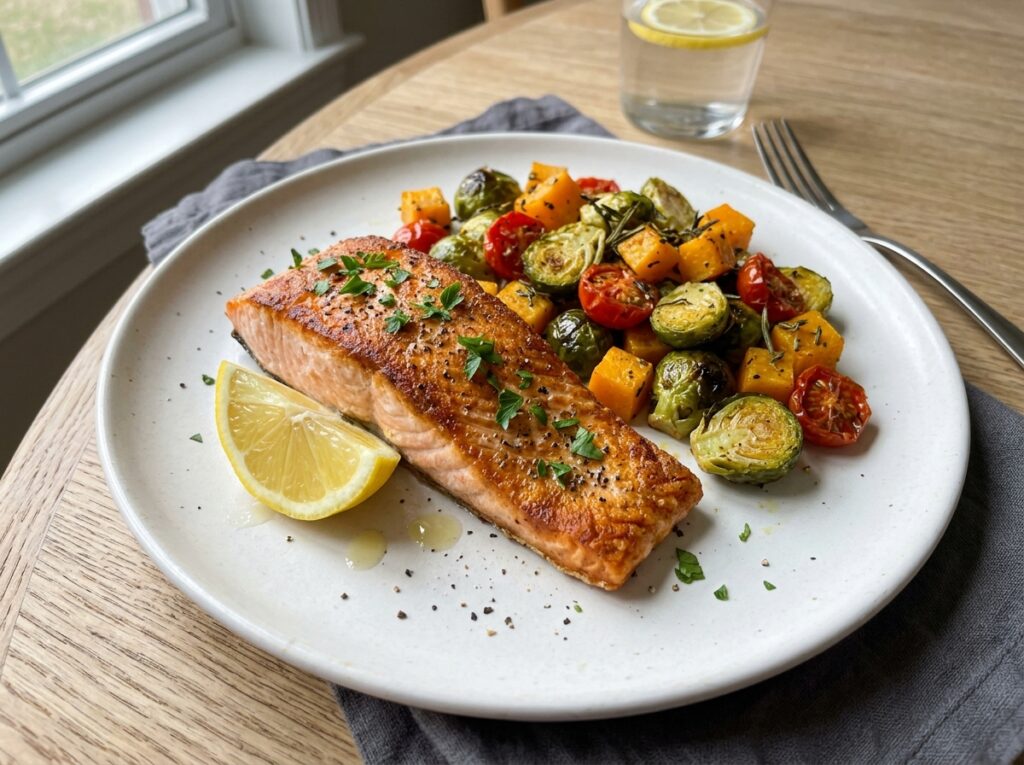
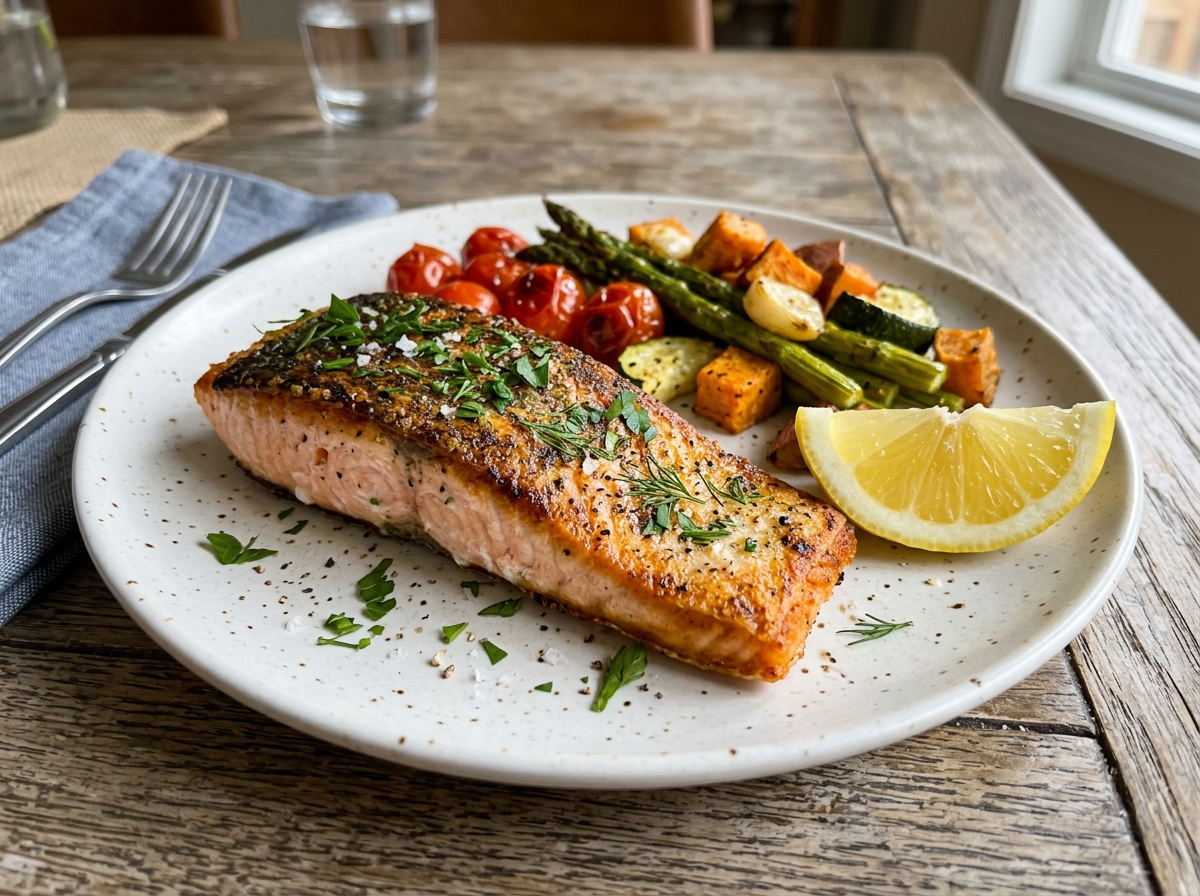
Squeeze fresh lemon over the top. Garnish with chopped dill or parsley. Serve immediately while the skin is still crackling.

Perfect 15-Minute Air Fryer Salmon
Ingredients
Equipment
Method
Step 1: Prep the Salmon
- Remove salmon from the fridge and let rest at room temperature for 10 minutes. Preheat air fryer to 380°F (193°C) for 3-4 minutes.
Step 2: Dry Thoroughly
- Pat both sides of the fillets completely dry with paper towels, paying special attention to the skin. Remove any pin bones with tweezers.
Step 3: Season
- Brush the skin side lightly with melted butter or avocado oil. Flip flesh-side up and sprinkle evenly with kosher salt, black pepper, and smoked paprika (if using).
Step 4: Air Fry
- Place fillets skin-side down in the preheated air fryer basket. Do not overlap. Close and cook for 12 minutes at 380°F (193°C) without opening.
Step 5: Check Temperature
- At 10 minutes, check internal temperature with an instant-read thermometer. Pull at 135°F (57°C) — it will coast to 145°F (63°C) during resting.
Step 6: Rest and Serve
- Transfer to a plate and rest for 2 minutes. Squeeze fresh lemon over the top, garnish with dill or parsley, and serve immediately.
Notes
- Pull temp: 135°F (57°C)
- Final temp after rest: 145°F (63°C)
- USDA safe minimum: 145°F (63°C)
- Best: Atlantic salmon from Whole Foods (skin-on, 1-inch thick)
- Wild option: Sockeye from Kroger or Walmart (reduce cook time by 30 seconds)
- Do not exceed 400°F cooking temperature
- Pat skin completely dry before cooking
- Optional: brine in saltwater (1 tbsp salt per cup water) for 10 minutes, then dry
- Fridge: 3 days in airtight container
- Freezer: 2 months, wrapped tightly
- Reheat: Air fryer at 320°F for 3-4 minutes
- Crowding the basket (causes uneven cooking)
- Not preheating (salmon sticks and cooks unevenly)
- Flipping the fillet (skin tears and sticks)
- Cooking from cold (outside overcooks before inside is done)
Chef Mansoor’s Insight 💭
There is a moment in every great dish where science becomes something more—where temperature and time give way to texture and memory. Salmon taught me that precision is not about control. It is about knowing when to stop. The difference between a perfect Air Fryer Salmon and an overdone one is often just thirty seconds.. In that tiny window, proteins relax instead of seize. Moisture stays instead of weeps. The skin crisps instead of burns. I have learned that the most powerful move in the kitchen is not what you add or how hot you cook. It is knowing exactly when to pull back.
— Chef Mansoor, Flavour Bazar
Nutrition Information (Per Serving) 📊
| Nutrient | Amount |
|---|---|
| Calories | 310 kcal |
| Protein | 34g |
| Total Fat | 18g |
| Saturated Fat | 4g |
| Carbohydrates | 0g |
| Sodium | 420mg |
| Cholesterol | 95mg |
Note: Nutrition values are estimates based on a 6 oz (170g) skin-on salmon fillet with 1 tbsp butter.
Food Safety & Temperature Guide 🌡️
| Cooking Stage | Temperature |
|---|---|
| USDA Safe Minimum (Salmon) | 145°F / 63°C |
| Chef Mansoor Target (Pull Temp) | 135°F / 57°C |
| Final Temp After Resting | 145°F / 63°C |
| Danger Zone (Do Not Hold Food Here) | 40°F–140°F / 4°C–60°C |
| Air Fryer Cooking Temp | 380°F / 193°C |
Important: Always use an instant-read thermometer. Visual cues alone are not reliable for salmon, especially if the fillet is thick or unevenly shaped.
Storage & Reheating Guide 🥡
| Storage Method | Duration | Best Reheat Method |
|---|---|---|
| Refrigerator (cooked, skin-on) | 3 days | Air fryer at 320°F for 3–4 minutes |
| Refrigerator (cooked, flaked) | 2 days | Microwave 30 sec or add cold to salads |
| Freezer (cooked, wrapped tightly) | 2 months | Thaw in fridge, reheat in air fryer at 300°F |
| Room temperature (cooked) | Do not store | Consume within 2 hours or refrigerate |
Pro Tip: Reheating salmon in the air fryer brings back some of the skin crispness. Do not microwave skin-on fillets—you will end up with rubber.
FAQs About Air Fryer Salmon ❓
Can I use frozen salmon without thawing it first?
Technically, yes. But you will need to add five to seven minutes to the cook time, and the texture will not be as good. The exterior tends to overcook before the center thaws and cooks through. Always thaw in the fridge overnight for best results.
Do I need to flip the salmon halfway through?
No. One of the best things about cooking salmon in an air fryer is that you can leave it skin-side down the entire time. The circulating air cooks the top evenly without flipping. If you flip it, the skin will stick and tear.
What if I do not have skin-on fillets?
You can still cook skinless salmon, but reduce the time by one to two minutes. Without the skin acting as a protective barrier, the flesh cooks faster and can dry out more easily. Brush the bottom with oil to prevent sticking.
How do I prevent the white stuff from coming out?
That white stuff is albumin, a protein that leaks out when salmon is cooked too aggressively. To minimize it, brine the salmon in a saltwater solution (1 tablespoon salt per cup of water) for ten minutes before cooking, then pat dry. Also, avoid cooking above 400°F.
Can I cook salmon with a marinade or glaze?
Yes, but be careful with sugar-based glazes like teriyaki or honey garlic. They can burn quickly in the air fryer. If you are using a glaze, apply it in the last two to three minutes of cooking, or brush it on after the salmon is done.