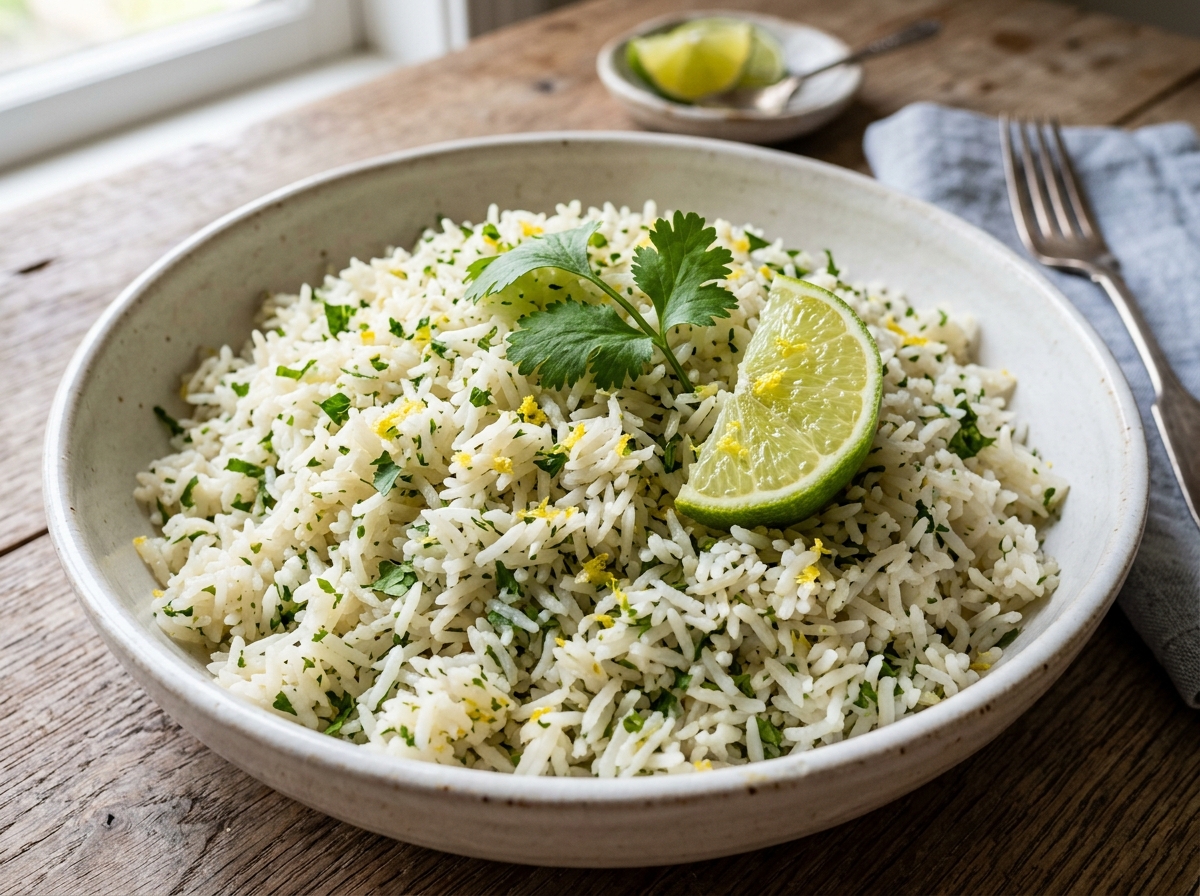
Zesty Cilantro Lime Rice: The Science of the Fluffy Grain
By Chef Mansoor | Flavour Bazar
The Perfect Grain Standard
There is a specific texture you feel when a fork glides through rice that is done right—each grain separate, firm but tender, coated lightly in fat so they do not stick but flow like tiny polished gems.
Then comes the aroma: bright lime zest, fresh cilantro, the subtle floral note of basmati, maybe the earthy whisper of bay leaf. And when you taste it, the rice is not just a vehicle for other food—it is alive. Vibrant. Balanced. The kind of side dish that makes you forget there is a main course.
I have measured the amylose content of various long-grain rice varieties to ensure that this Zesty Cilantro Lime Rice maintains a firm “al dente” bite even after being tossed with acidic lime juice.
What I learned is that fluffy, non-sticky rice is not about luck or skill—it is about understanding why surface starch must be removed through proper rinsing, how oil coating protects grains from clumping, when to add lime so the acid does not turn the rice bitter, and why fresh cilantro added to hot rice will turn brown unless you control the chlorophyll oxidation.
This is not just “rice with lime and cilantro.” This is Zesty Cilantro Lime Rice—the Chipotle copycat that actually works, the side dish that steals the show, the recipe that transforms plain rice into something you could eat by the bowlful with nothing else.
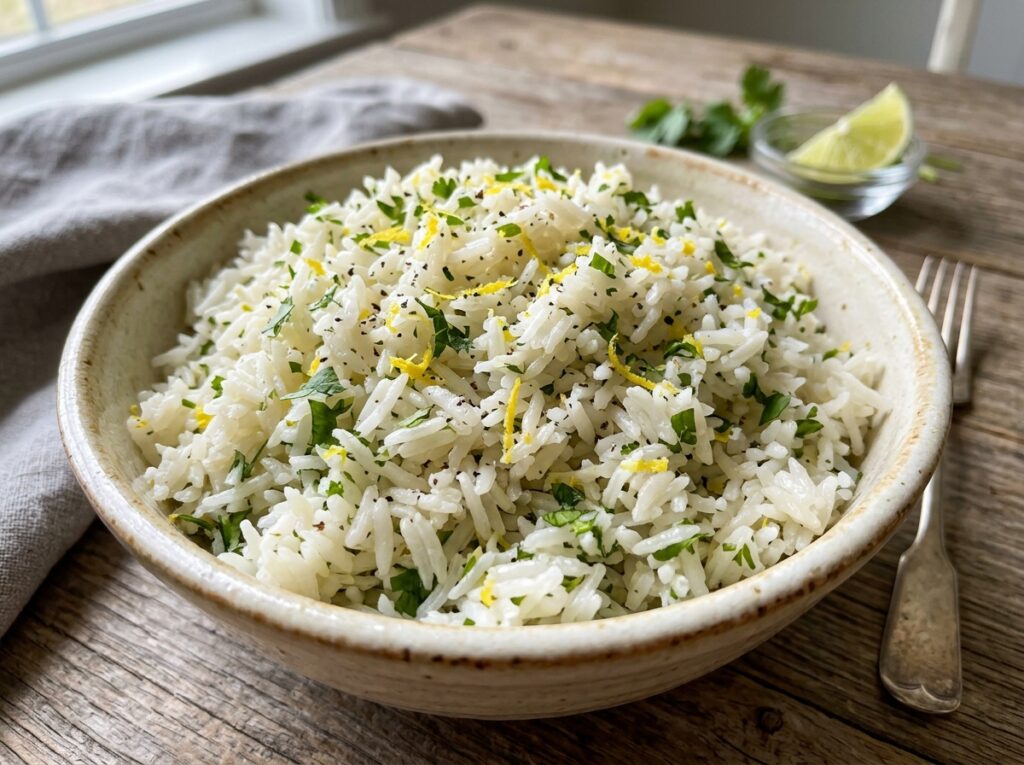
The Science: Amylose, Surface Starch, and Chlorophyll Protection
Why Rinsing Five Times is Non-Negotiable
Rice grains are coated in surface starch—primarily amylopectin, the branched-chain starch molecule that becomes sticky and gummy when hydrated and heated. If you cook rice without rinsing, this surface starch gelatinizes during cooking and acts like glue, binding the grains together into a sticky, clumpy mass.
Amylose is the other type of starch in rice—a long, linear chain molecule that does not gelatinize as easily and helps grains stay separate.
Long-grain rice varieties like basmati and jasmine have higher amylose content (20-25%) compared to short-grain rice like sushi rice (12-15%). This is why long-grain rice is naturally less sticky.
Amylose Content∝Sticking Probability1
In simple terms: more amylose = less sticking. But even high-amylose rice will turn gummy if you do not remove the surface starch coating.
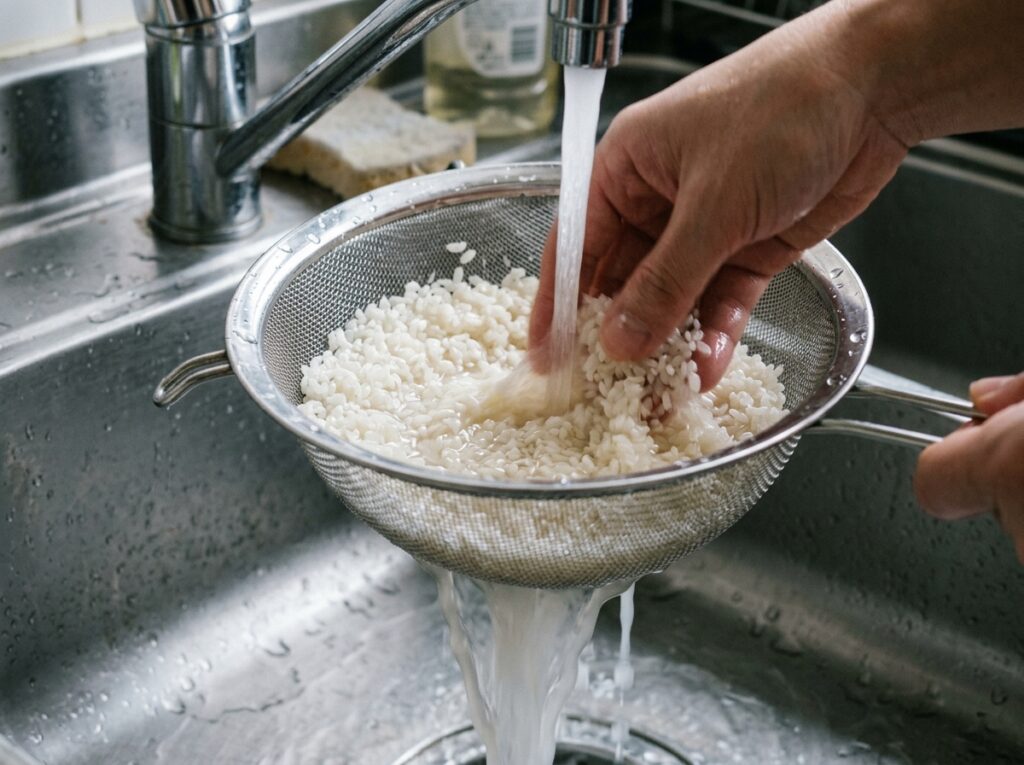
For perfect Zesty Cilantro Lime Rice, you must rinse the raw rice under cold running water, agitating with your fingers, until the water runs nearly clear—at least five times. Each rinse removes a layer of surface starch. By the fifth rinse, the water should be mostly clear instead of milky white.
The Oil Coat: Fat as a Grain-Separation Technology
After rinsing, the next critical step for Zesty Cilantro Lime Rice is to sauté the rice in oil or butter before adding water. This is not just for flavor—it is science.
The fat coats each individual grain, creating a hydrophobic (water-repelling) barrier that prevents grains from sticking to each other during cooking. The oil also seals the surface, slowing water absorption slightly and helping the rice cook more evenly.
This is the technique used in pilaf-style rice and is essential for achieving the separate, fluffy texture that makes Zesty Cilantro Lime Rice special.
Chlorophyll Oxidation: Why Timing Matters for Green Color
Fresh cilantro is bright green because of chlorophyll, the pigment that plants use for photosynthesis. Chlorophyll is heat-sensitive.
When you add fresh cilantro to very hot rice and let it sit, the heat causes the chlorophyll molecules to break down and oxidize, turning the vibrant green into a dull, brownish-olive color.
The solution: add cilantro to Zesty Cilantro Lime Rice after the rice has cooled slightly (still warm but not steaming hot), or mix it in gently just before serving.
You can also use the “cold finish” method—fluff the rice, let it sit uncovered for 5 minutes to release steam and cool slightly, then fold in the cilantro and lime. The cilantro stays bright green and the flavors stay fresh.
🛒 Pro Buying Guide: Ingredients for Championship Zesty Cilantro Lime Rice (USA)
Rice: Basmati for Aromatic Fluffiness
Royal Basmati Rice (widely available at Walmart, Kroger, Target) or Lundberg Family Farms Organic White Basmati (Whole Foods, Sprouts, natural food stores) are excellent choices.
Basmati rice is a long-grain variety from India/Pakistan that contains a natural aromatic compound called 2-acetyl-1-pyrroline, which smells nutty, popcorn-like, and slightly floral.
It has high amylose content (21-24%), making it naturally fluffy and non-sticky—perfect for Zesty Cilantro Lime Rice.
Jasmine rice (Thai long-grain) also works but has a slightly lower amylose content and softer texture. Avoid short-grain or medium-grain rice (sushi rice, arborio, etc.)—they are high in amylopectin and will turn sticky.
Limes: Organic for Zesting
Use fresh limes (not bottled lime juice). You will need both the zest (the aromatic outer green peel) and the juice. For Zesty Cilantro Lime Rice, organic limes are worth the extra dollar—you are eating the peel (zest), and conventional limes are often coated in wax and pesticides.
Persian limes (the common grocery store variety) work perfectly. You will need 2-3 limes for one batch of rice.
Cilantro: Fresh Bunches Only
Fresh cilantro (also called coriander leaves or Chinese parsley) is sold in bunches in the produce section of every supermarket. Look for bright green leaves with no yellowing or wilting.
Sprouts Farmers Market and Safeway usually have excellent quality. Dried cilantro is useless—it has no flavor or aroma. For Zesty Cilantro Lime Rice, only fresh cilantro will work.
Oil: Neutral Flavor, High Smoke Point
Use vegetable oil, canola oil, or avocado oil for sautéing the rice. You can also use butter for richer flavor (use half butter, half oil to prevent burning). Avoid olive oil—its flavor is too strong and can overpower the delicate lime-cilantro balance in Zesty Cilantro Lime Rice.
Bay Leaf: The Secret Aromatic Layer
One or two dried bay leaves (California bay or Turkish bay) added to the cooking water complement the natural aromatic compound (2-acetyl-1-pyrroline) in basmati rice.
This is a trick used by high-end Mexican grills and creates a more complex, layered aroma in Zesty Cilantro Lime Rice. Bay leaves are available in the spice aisle everywhere (McCormick, Simply Organic).
Equipment: Heavy Pot or Zojirushi Rice Cooker
A heavy-bottomed pot with a tight-fitting lid (stainless steel, enameled cast iron, or heavy aluminum) distributes heat evenly and prevents scorching.
For foolproof results, a Zojirushi rice cooker (available on Amazon, Williams Sonoma) uses fuzzy logic to automatically adjust temperature and timing for perfect rice every time.
You can make Zesty Cilantro Lime Rice in a rice cooker by adding the sautéed rice, water, and bay leaf, then stirring in lime and cilantro after cooking.
📊 Ingredients Table (US Customary + Metric)
| Ingredient | US Customary | Metric |
|---|---|---|
| Long-grain white basmati rice | 2 cups | 370g |
| Water | 3 cups | 720ml |
| Vegetable oil or butter | 2 tablespoons | 30ml / 28g |
| Fine sea salt | 1 teaspoon | 6g |
| Dried bay leaves | 1-2 leaves | 1-2 leaves |
| Fresh lime juice | 3 tablespoons | 45ml (2-3 limes) |
| Fresh lime zest | 1 tablespoon | zest of 2 limes |
| Fresh cilantro, chopped | 1/2 cup, packed | 30g (about 1 bunch) |
Optional Add-Ins:
- 1 clove garlic, minced (for extra depth)
- 1/4 teaspoon ground cumin (for smokiness)
Yield: 6 servings (about 6 cups cooked rice)
Prep Time: 10 minutes
Cook Time: 20 minutes
Rest Time: 5 minutes
Total Time: 35 minutes
⚠️ Common Mistakes Table (8 Mistakes That Ruin Zesty Cilantro Lime Rice)
| The Mistake | What Actually Happens | The Fix |
|---|---|---|
| Not rinsing the rice (or rinsing only once) | Surface starch turns rice gummy, sticky, and clumpy | Rinse rice 5 times under cold water until water runs nearly clear |
| Adding lime juice during the boil | Acid interferes with starch gelatinization; rice tastes bitter and chalky | Add lime juice and zest AFTER rice is cooked and slightly cooled |
| Stirring the rice while it cooks | Breaks grains, releases more starch, creates mushy texture | NEVER stir rice while cooking; only fluff gently with fork after done |
| Using dried cilantro | Dried cilantro has no flavor or aroma; tastes like hay | Only use fresh cilantro; dried is useless for this dish |
| Ignoring the bay leaf | Misses aromatic depth that complements basmati’s natural popcorn aroma | Add 1-2 bay leaves to cooking water; remove before serving |
| Adding cilantro to piping hot rice | Heat oxidizes chlorophyll; cilantro turns brown and looks unappetizing | Let rice cool 5 min after cooking; add cilantro to warm (not hot) rice |
| Using bottled lime juice | Lacks aromatic oils from zest; tastes flat and artificial | Always use fresh limes—both zest and juice essential for “zesty” flavor |
| Not toasting rice in oil first | Rice grains stick together; texture is dense and clumpy | Sauté rinsed rice in oil 2-3 min before adding water—creates non-stick coating |
🔪 Step-by-Step Method: Mastering Zesty Cilantro Lime Rice (Prose Only)
Step 1: The Polishing Rinse (Surface Starch Removal)
Measure two cups of long-grain white basmati rice and place it in a large fine-mesh strainer or directly in a large bowl. Run cold tap water over the rice and agitate it vigorously with your fingers, swishing and rubbing the grains together.
The water will turn cloudy and milky white—this is the surface starch being released. Drain completely. Repeat this rinsing process at least five times. With each rinse, the water will become progressively clearer.
By the fifth rinse, the water should run mostly clear instead of opaque white. This step is absolutely critical for fluffy, separate grains in Zesty Cilantro Lime Rice. Do not skip it or shorten it.
After the final rinse, drain the rice thoroughly and let it sit in the strainer for 2-3 minutes to drip dry.
Step 2: The Toasted Grain (Oil-Coating for Separation)
Heat a heavy-bottomed pot (at least 3-quart capacity) over medium heat. Add two tablespoons of vegetable oil (or one tablespoon butter + one tablespoon oil).
When the oil is shimmering and hot (but not smoking), add the rinsed and drained rice. Stir gently to coat every grain with the oil. Sauté the rice, stirring occasionally, for 2-3 minutes until the grains turn slightly translucent at the edges and you hear a gentle toasting sound. Some grains may start to turn very faintly golden.
This oil-toasting step does two things: (1) it coats each grain with a thin layer of fat that prevents sticking, and (2) it lightly toasts the rice, adding a subtle nutty depth to the final Zesty Cilantro Lime Rice.
Do not skip this step—it is the difference between clumpy rice and restaurant-quality fluffy rice.
Step 3: The Absorption Method (Hands-Off Cooking)
Add three cups of water to the pot with the toasted rice. Add one teaspoon of fine sea salt and one or two dried bay leaves. Stir once—ONLY ONCE—to distribute the salt and submerge the bay leaves. Increase the heat to high and bring the water to a full, rolling boil.
The moment the water boils, immediately reduce the heat to the absolute lowest setting your stove has, cover the pot tightly with a lid, and set a timer for 15 minutes. Do NOT lift the lid. Do NOT stir. Do NOT peek.
The rice is cooking via the absorption method—the grains are absorbing the water and steaming themselves. Any interruption releases steam and disrupts the cooking process, resulting in unevenly cooked Zesty Cilantro Lime Rice. Trust the process.
After 15 minutes, turn off the heat but leave the lid on. Let the pot sit undisturbed for another 5 minutes. This resting period allows the rice to finish steaming and firm up.
The grains will be perfectly tender but still have a slight “al dente” bite—firm enough to hold their shape when tossed with lime juice.
Step 4: The Cold-Zest Finish (Preserving Color and Brightness)
After the 5-minute rest, remove the lid. The rice should look fluffy with visible steam holes on the surface. Remove and discard the bay leaves (they have done their aromatic work).
Use a fork (not a spoon) to gently fluff the rice, lifting and turning it to release steam and separate the grains. Let the rice sit uncovered for another 3-5 minutes to cool slightly—it should still be warm but not piping hot.
While the rice cools, zest two fresh limes using a microplane or fine grater (you want about one tablespoon of bright green zest—just the outer green layer, not the bitter white pith underneath).
Juice the same two limes plus one more to get three tablespoons of fresh lime juice. Finely chop half a cup of packed fresh cilantro leaves and tender stems (discard any thick, woody stems).
When the rice has cooled to warm (no longer steaming aggressively), drizzle the lime juice over the rice, then sprinkle the lime zest and chopped cilantro on top.
Use a fork to gently fold and toss everything together, lifting from the bottom to distribute the lime and cilantro evenly throughout the Zesty Cilantro Lime Rice. T
he rice should be vibrant green-flecked, aromatic, and bright. Taste and adjust—add a pinch more salt if needed, or a squeeze more lime juice if you want extra zing.
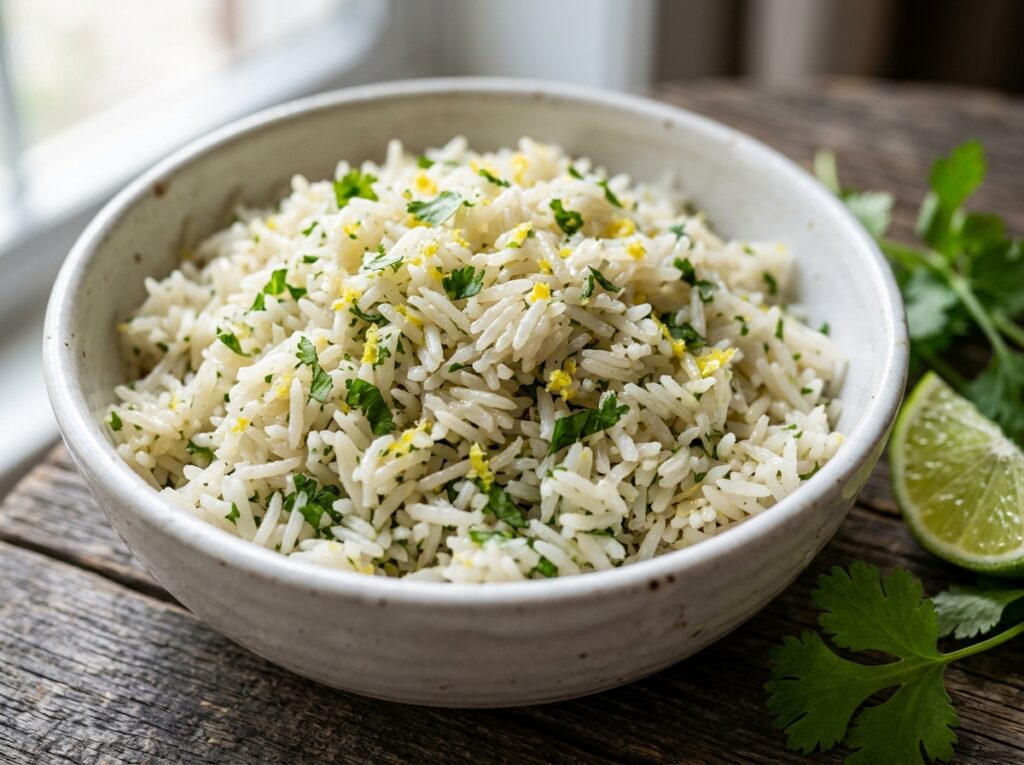
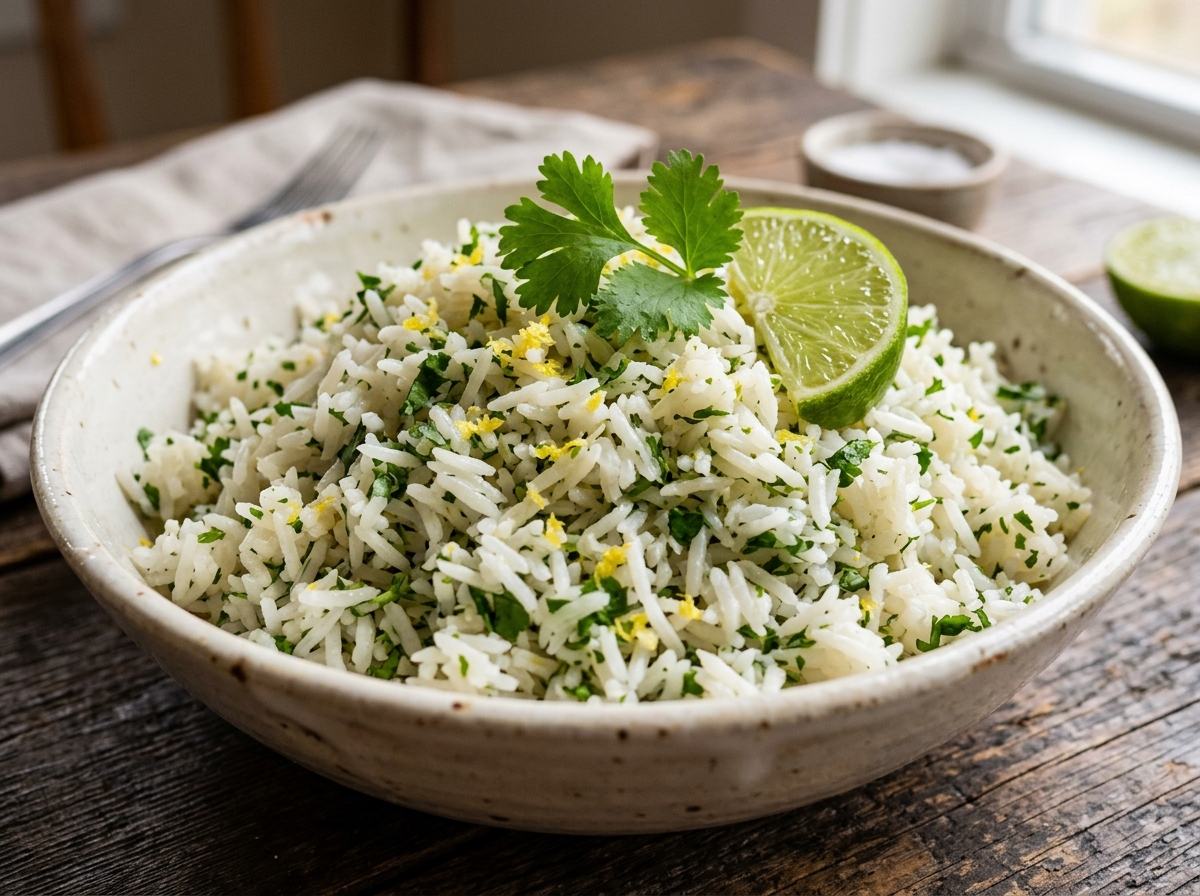

Zesty Cilantro Lime Rice
Ingredients
Equipment
Method
- Measure 2 cups long-grain white basmati rice and place it in a large fine-mesh strainer or directly in a large bowl. Run cold tap water over the rice while vigorously agitating it with your fingers, swishing and rubbing the grains together. The water will immediately turn cloudy and milky white—this is the surface starch (amylopectin) being released from the rice grains. Drain the rice completely. Repeat this rinsing process AT LEAST FIVE TIMES—this is non-negotiable for fluffy, separate grains in Zesty Cilantro Lime Rice. With each successive rinse, the water will become progressively clearer. By the fifth rinse, the water should run mostly clear instead of opaque milky white. This surface starch removal is what prevents gummy, sticky, clumpy rice. After the final rinse, drain the rice thoroughly in the strainer and let it sit for 2-3 minutes to drip dry so excess water doesn't throw off your rice-to-water ratio.
- Heat a heavy-bottomed pot or saucepan (at least 3-quart capacity with a tight-fitting lid) over medium heat. Add 2 tablespoons vegetable oil (or 1 tablespoon butter + 1 tablespoon oil for richer flavor). When the oil is shimmering and hot but not smoking, add the rinsed and drained rice all at once. Stir gently with a wooden spoon or silicone spatula to coat every single grain with the hot oil. Continue to sauté the rice, stirring occasionally, for 2-3 minutes until the grains turn slightly translucent around the edges and you hear a gentle toasting, crackling sound. Some grains may start to turn very faintly golden at the edges. This critical oil-toasting step accomplishes two essential things: (1) It coats each individual grain with a thin hydrophobic (water-repelling) layer of fat that prevents grains from sticking to each other during cooking, and (2) It lightly toasts the rice, adding a subtle nutty depth to the final Zesty Cilantro Lime Rice. This is pilaf-style technique and is the difference between restaurant-quality fluffy rice and home-cooked clumpy rice. If adding optional minced garlic, add it during the last 30 seconds of toasting until fragrant.
- Add 3 cups of water to the pot with the toasted rice. Add 1 teaspoon fine sea salt and 1-2 dried bay leaves. Stir ONCE—only once—to distribute the salt and submerge the bay leaves, then never stir again during cooking. Increase the heat to high and bring the water to a full, vigorous, rolling boil. The moment the water reaches a full boil, IMMEDIATELY reduce the heat to the absolute lowest setting your stove has (the smallest burner on the lowest flame or heat setting), cover the pot tightly with the lid, and set a timer for exactly 15 MINUTES. CRITICAL: Do NOT lift the lid during this time. Do NOT stir the rice. Do NOT peek to check on it. The rice is cooking via the absorption method—the grains are absorbing the water and steaming themselves in the trapped moisture. Any interruption releases essential steam and disrupts even cooking, resulting in unevenly cooked Zesty Cilantro Lime Rice with some grains mushy and others undercooked. Trust the process and leave it completely alone. After the 15-minute timer goes off, turn off the heat completely but LEAVE THE LID ON. Let the covered pot sit undisturbed off the heat for another 5 MINUTES. This resting period allows the rice to finish steaming gently with residual heat and allows the grains to firm up slightly. The result will be perfectly tender grains with a slight “al dente” bite—firm enough to hold their shape when tossed with acidic lime juice without turning mushy.
- After the 5-minute rest, remove the lid from the pot. The rice should look fluffy with visible steam holes on the surface and smell aromatic from the bay leaves. Remove and discard the bay leaves—they have done their aromatic work. Using a fork (NOT a spoon, which compresses grains), gently fluff the rice by inserting the fork and lifting upward in a turning motion to release trapped steam and separate the grains. Do this all over the surface of the rice. Let the rice sit UNCOVERED for another 3-5 minutes to cool slightly and release more steam—the rice should still be warm but no longer piping hot or aggressively steaming. While the rice cools, prepare the finishing ingredients: Zest 2 fresh organic limes using a microplane or fine grater to get about 1 tablespoon of bright green zest—only the outer green layer, avoiding the bitter white pith underneath. Juice the same 2 limes plus 1 additional lime to get 3 tablespoons of fresh lime juice (about 45ml). Finely chop 1/2 cup packed fresh cilantro leaves and tender stems—discard any thick, woody stems. When the rice has cooled to warm temperature (no longer steaming heavily—this is critical for keeping cilantro bright green instead of turning it brown through chlorophyll oxidation), drizzle the lime juice evenly over the rice, then sprinkle the lime zest and chopped cilantro on top. Using the fork, gently fold and toss everything together using lifting motions from the bottom of the pot, distributing the lime juice, zest, and cilantro evenly throughout the Zesty Cilantro Lime Rice. The rice should transform into a vibrant green-and-yellow-flecked, aromatic masterpiece. Taste and adjust seasoning—add a pinch more salt if needed, or an extra squeeze of lime juice if you want more zing.
- Transfer the Zesty Cilantro Lime Rice to a serving bowl and serve immediately while warm. If you need to hold it for a short time before serving, keep it covered in a warm (not hot) place for no more than 1-2 hours. For food safety, do NOT leave cooked rice at room temperature longer than 2 hours total—Bacillus cereus spores can develop and cause food poisoning. If meal-prepping, cook plain rice and store separately in the refrigerator, then add fresh lime, zest, and cilantro just before reheating and serving for maximum brightness and vibrant green color.
Notes
🧘♂️ Chef Mansoor’s Insight
Side dishes are the unsung heroes of a great meal. They do not get the spotlight. They do not get the Instagram close-ups. But they are the reason a good main course becomes a great dinner.
Zesty Cilantro Lime Rice is not decoration. It is balance. It is the bright, acidic counterpoint to rich, fatty proteins. It is the fluffy, aromatic bed that soaks up sauces and juices. It is the reason you can eat another bite of something heavy without feeling overwhelmed.
I have always believed that the mark of a great cook is not the centerpiece—it is the sides. Anyone can grill a steak. But making rice that people remember, rice that they ask for the recipe for, rice that makes them realize they have been doing it wrong their whole lives? That is mastery.
That is Zesty Cilantro Lime Rice.
📊 Nutrition Table (Per Serving, 6 Servings)
| Nutrient | Amount |
|---|---|
| Calories | 240 kcal |
| Total Carbohydrates | 45g |
| Dietary Fiber | 1g |
| Total Sugars | 0g |
| Protein | 4g |
| Total Fat | 5g |
| Saturated Fat | 0.5g |
| Cholesterol | 0mg |
| Sodium | 390mg |
| Potassium | 80mg |
| Vitamin C | 10% DV |
| Iron | 4% DV |
Estimates based on USDA data for white basmati rice, lime juice, and cilantro. Values vary with specific brands and portion sizes.
🌡️ Food Safety & Storage (Bacillus Cereus Warning)
Safe minimum internal temperature for cooked rice: 165°F (74°C) when reheating
Danger zone (do not hold): 40°F–140°F (4°C–60°C)
Bacillus cereus risk: Cooked rice left at room temperature can develop spores that cause food poisoning
Safe storage: Refrigerate leftover Zesty Cilantro Lime Rice within 2 hours of cooking (1 hour if room temp is above 90°F)
Refrigerator storage: Up to 3-4 days in airtight container
Reheating: Reheat to steaming hot (165°F internal); add a splash of water and cover to prevent drying
Do NOT leave cooked rice at room temperature overnight—this is a major food safety risk
🧊 Storage & Reheating Guide
| Storage Method | Duration | Best Reheating Practice |
|---|---|---|
| Refrigerator (airtight container) | 3-4 days | Microwave with damp paper towel over bowl, or stovetop with splash of water |
| Freezer (portion-sized bags) | 2 months | Thaw in fridge overnight; reheat in microwave or stovetop with water |
| Room temperature | Maximum 2 hours | NEVER leave longer—Bacillus cereus spores develop and cause food poisoning |
| Serving buffer | Keep warm max 2 hours | Hold at 140°F+ in covered dish; do not let drop to room temp |
Pro Tip: Zesty Cilantro Lime Rice is best fresh. The cilantro wilts and browns when refrigerated overnight. If meal-prepping, cook plain rice and store separately; add fresh lime, zest, and cilantro just before serving.
❓ Frequently Asked Questions
Can I make Zesty Cilantro Lime Rice in a rice cooker?
Yes. Rinse rice 5 times. Sauté rice in oil using a skillet (rice cookers can’t sauté), then transfer to rice cooker with water, salt, and bay leaf. Cook on white rice setting. When done, fluff and let cool 5 min, then fold in lime and cilantro.
Why is rinsing the rice so important?
Rice grains are coated in surface starch (amylopectin) that turns sticky and gummy when cooked. Rinsing 5 times removes this coating, allowing grains to stay separate and fluffy. Without rinsing, Zesty Cilantro Lime Rice will be clumpy and sticky.
Can I use jasmine rice instead of basmati?
Yes, but the texture and aroma will be different. Jasmine rice has slightly lower amylose content (softer, stickier) and a floral aroma instead of basmati’s nutty-popcorn aroma. Rinse it the same way. Rice-to-water ratio is the same (1:1.5).
Why did my cilantro turn brown?
Chlorophyll (the green pigment) oxidizes when exposed to heat. If you add cilantro to piping hot rice and let it sit covered, it will turn olive-brown. Solution: let rice cool 5 min after cooking, then fold in cilantro just before serving.
Can I add the lime juice during cooking?
No. Acid interferes with starch gelatinization and can make rice taste bitter and chalky. Always add lime juice and zest AFTER cooking, when rice has cooled slightly. This keeps the brightness and prevents bitterness.
What if I don’t have bay leaves?
The rice will still be delicious. Bay leaves add aromatic depth that complements basmati’s natural 2-acetyl-1-pyrroline (popcorn aroma), but they’re not essential. Skip them if you don’t have any.
How do I prevent rice from sticking to the pot?
(1) Rinse rice 5 times, (2) Sauté rice in oil before adding water, (3) Use a heavy-bottomed pot, (4) Don’t stir while cooking, (5) Let rice rest 5 min after cooking before fluffing. These steps create Zesty Cilantro Lime Rice with individual, non-stick grains.
Can I make this ahead for meal prep?
You can cook the plain rice ahead and refrigerate. When ready to serve, reheat gently with a splash of water, then fold in FRESH lime juice, zest, and cilantro. Pre-mixed Zesty Cilantro Lime Rice loses vibrancy overnight—the cilantro wilts and browns.
🔗 More from Flavour Bazar
If Zesty Cilantro Lime Rice elevated your side dish game, explore these other science-backed recipes:
Smoky Chipotle Burger Patties
Perfect Mexican-themed dinner pairing
Slow-Smoked Beef Brisket: The Physics of the Texas Bark
Another side-dish-worthy main
The BEST BBQ Chicken Pizza: The Science of the Smoky Slice
Tex-Mex flavor mastery
Probiotic Chickpea Salad: Gut-Friendly Fuel
Fresh, bright side to balance rich mains
Understanding Rice Starch: Amylose vs. Amylopectin (Food Science Journal)
Deep dive into rice starch chemistry and cooking properties
For More Healthy Recipes Visit: flavourbazar.com