Flakiest Blueberry Hand Pies: The Science of Laminated Pastry
By Chef Mansoor | Flavour Bazar
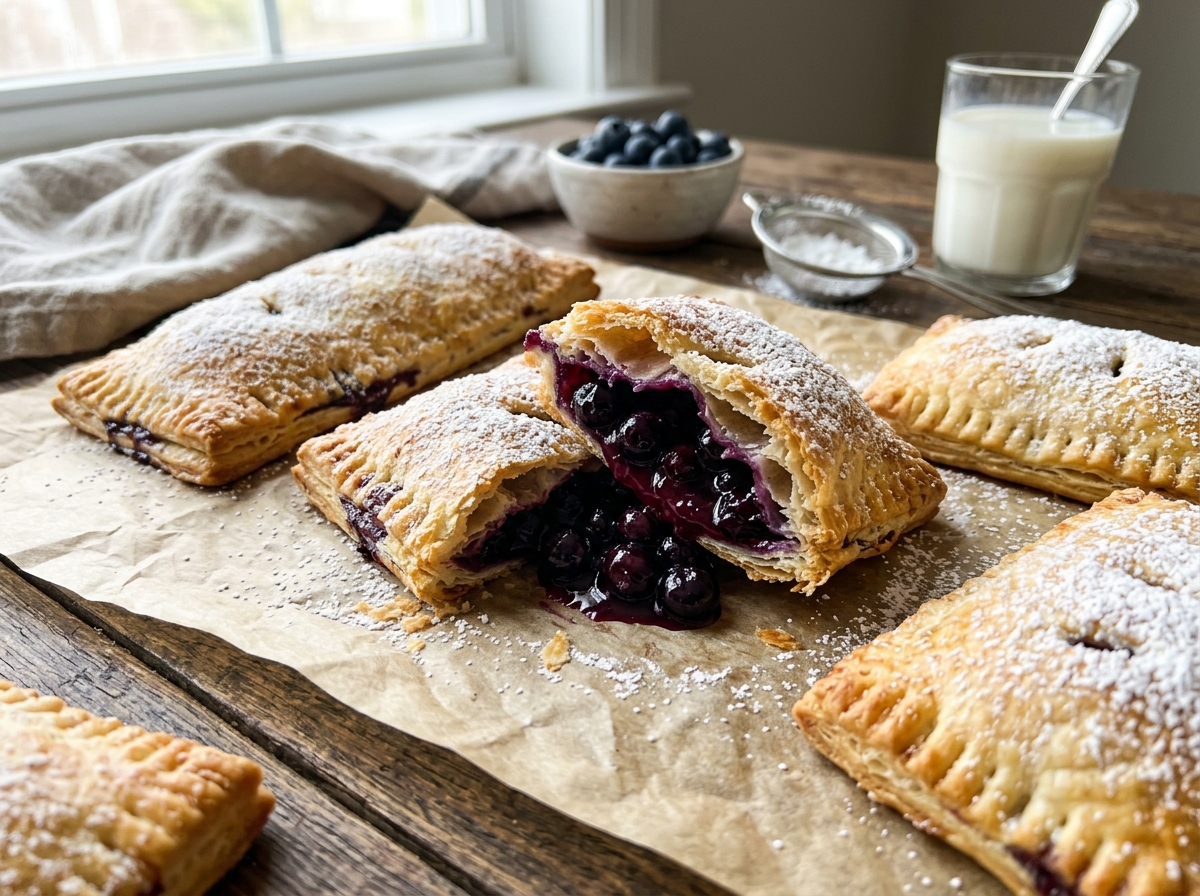
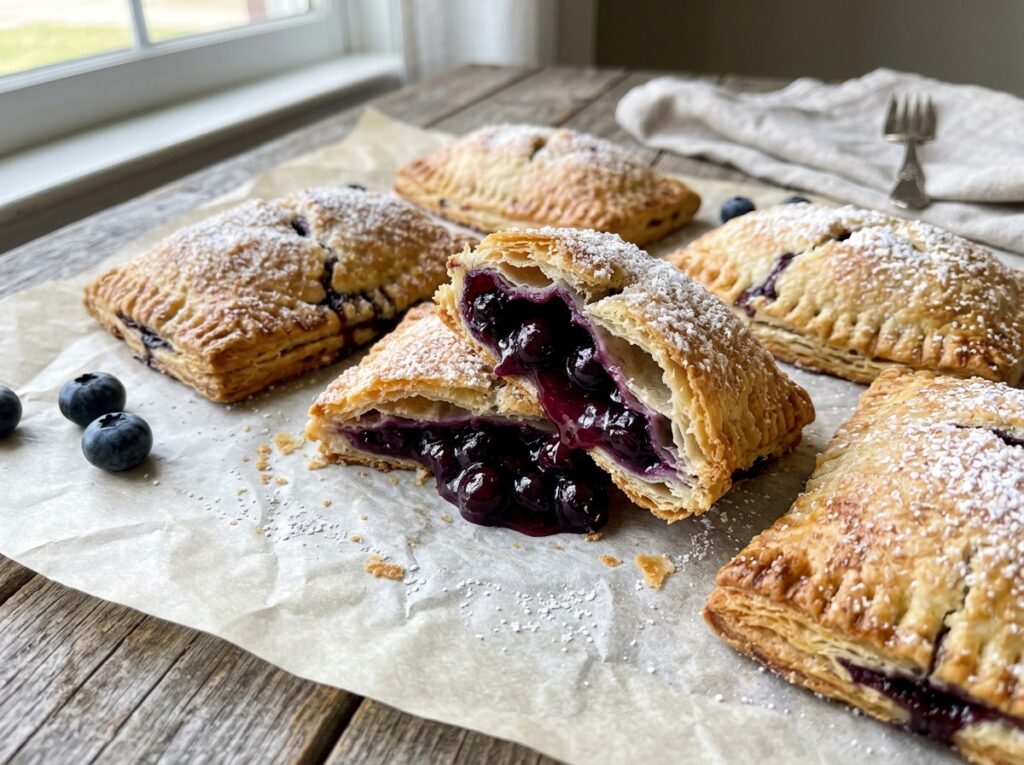
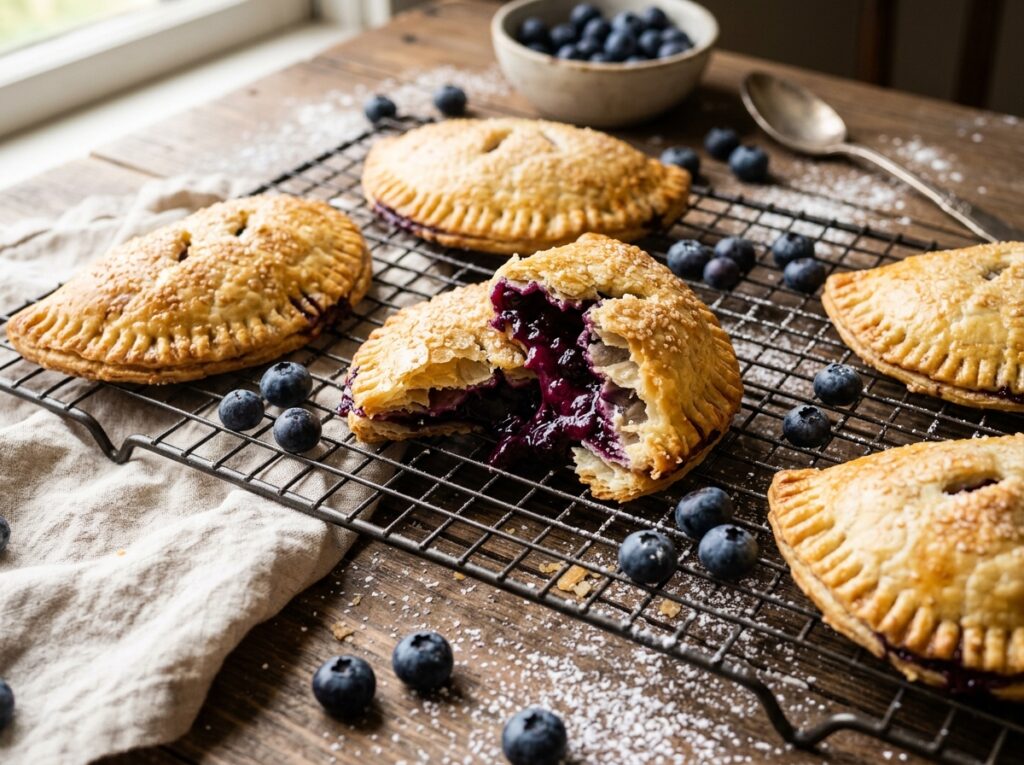
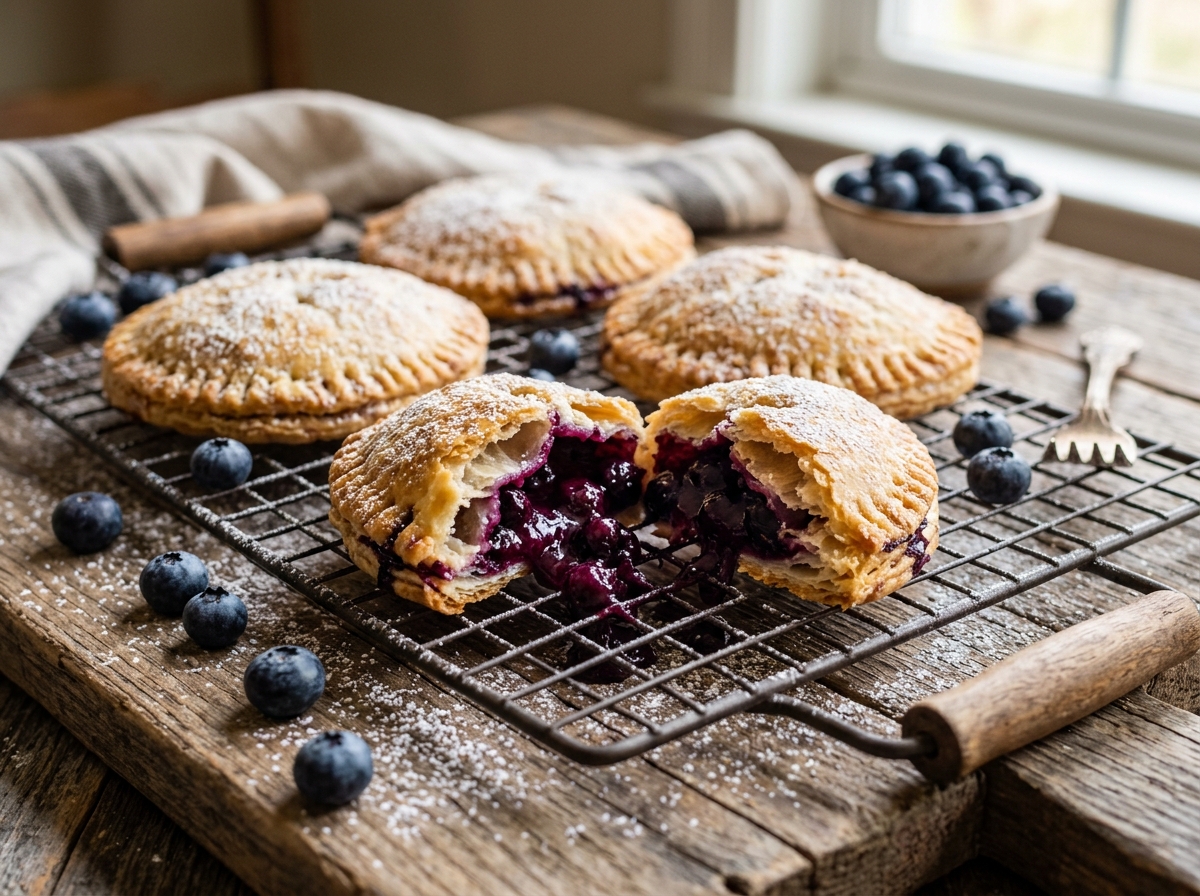
The first bite is not quiet. There is a sharp, audible shatter as your teeth break through the golden crust, releasing a cascade of buttery flakes that fracture like thin glass. Then comes the rush—hot, purple-blue blueberry filling that pools on your tongue, sweet and tart and thickened just enough to stay inside the pastry without turning gummy. This is what Flakiest Blueberry Hand Pies are supposed to be: portable, indulgent, and engineered for maximum textural drama.
I have cross-examined the melting points of various butter brands to guarantee that these Flakiest Blueberry Hand Pies achieve micro-layers of flaky lamination without losing their structural integrity. The difference between a mediocre hand pie and one that delivers that signature shatter comes down to three variables: butter quality, temperature control, and proper venting. Get those right, and you are not just baking a pastry—you are building a handheld architecture of steam, starch, and fat.
This is not a forgiving recipe. It demands cold hands, precision with your liquid ratios, and patience during the resting phases. But the payoff is extraordinary: Flakiest Blueberry Hand Pies that rival anything you would find at a high-end bakery, with the added satisfaction of knowing exactly what went into them.
The Thermodynamics of Flakiness: What Makes Flakiest Blueberry Hand Pies Work
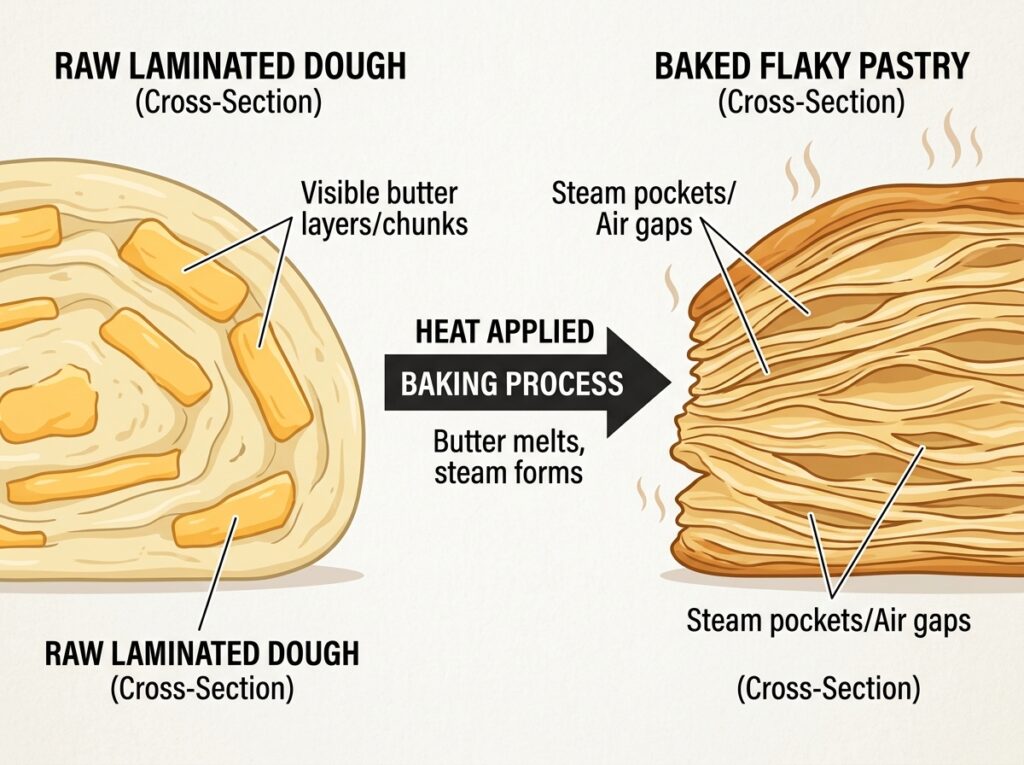
When you bite into Flakiest Blueberry Hand Pies, you are experiencing the result of a controlled thermal event. Inside the oven, small pockets of cold butter embedded in the dough begin to melt. Butter contains roughly 15-18% water, and when that water hits the high heat of a 400°F oven, it converts instantly to steam.
Steam expands rapidly—up to 1,600 times its original volume. This expansion pushes the surrounding flour layers apart, creating those thin, crisp sheets we call flakes. The more distinct butter pockets you preserve in your dough, the more steam pockets form, and the more dramatic the lamination.
This is why European-style butter matters. Brands like Kerrygold and Plugrà contain 82-84% fat compared to the 80% found in standard American butter. That extra 2-4% fat means less water in the dough, which translates to less gluten formation and more defined butter layers. The result? Flakier pastry with better lift.
Water in Butter+Oven Heat (400∘F)→Steam Expansion (Flaky Layers)
The second challenge in Flakiest Blueberry Hand Pies is preventing the dreaded soggy bottom. Fresh blueberries release a lot of juice when heated—sometimes up to 30% of their weight. If that juice soaks into the bottom crust before the pastry has a chance to set, you end up with a beautiful top and a sad, limp base.
The fix is twofold. First, you macerate the berries with sugar and cornstarch, then simmer them briefly to activate the starch and evaporate excess liquid. Cornstarch granules gelatinize around 180°F, absorbing water and forming a thick gel that traps the juice. Second, you bake the hand pies on a preheated baking steel or stone, which delivers instant bottom heat and sets the crust before the filling can penetrate.
In simple terms: you are fighting moisture migration with heat and starch chemistry.
Pro Buying Guide: What You Need for the Flakiest Blueberry Hand Pies (USA)
The Butter
This is the single most important ingredient. I recommend Kerrygold Irish Butter or Plugrà European-Style Butter, both available at Target, Whole Foods, Trader Joe’s, and most Kroger locations. The higher fat content creates superior flakiness and a richer flavor.
Keep the butter in the freezer for 15 minutes before you start. You want it cold enough to grate or cut into firm cubes without softening under your hands.
The Flour
King Arthur All-Purpose Flour is my go-to for Flakiest Blueberry Hand Pies. It has a moderate protein content (11.7%), which gives you enough structure without making the dough tough. If you can find King Arthur Pastry Flour (lower protein), even better—it will yield an even more tender result.
Avoid bread flour entirely. The high protein will overdevelop gluten and give you a chewy, dense crust instead of a flaky one.
The Blueberries
Fresh Driscoll’s Blueberries are ideal, especially in summer when they are at peak sweetness. If you are baking off-season, frozen wild blueberries work beautifully—they are smaller, more concentrated in flavor, and release less liquid than cultivated berries. Do not thaw them before cooking; add them frozen to the saucepan.
The Tools
- Pastry Cutter or Grater: A pastry cutter gives you control over butter size. Alternatively, freeze your butter and grate it on a box grater directly into the flour.
- Baking Steel or Stone: Preheated at 400°F, this delivers the instant bottom heat that prevents soggy crusts. If you do not have one, flip a heavy baking sheet upside down and preheat that.
- Parchment Paper: Non-stick and essential for transferring delicate hand pies without tearing.
- Pastry Brush: For egg wash application.
- Sharp Paring Knife: For cutting clean vents in the top crust.
The Cornstarch
Use Bob’s Red Mill Cornstarch or any pure cornstarch. Avoid “instant” thickeners—they behave unpredictably at high heat.
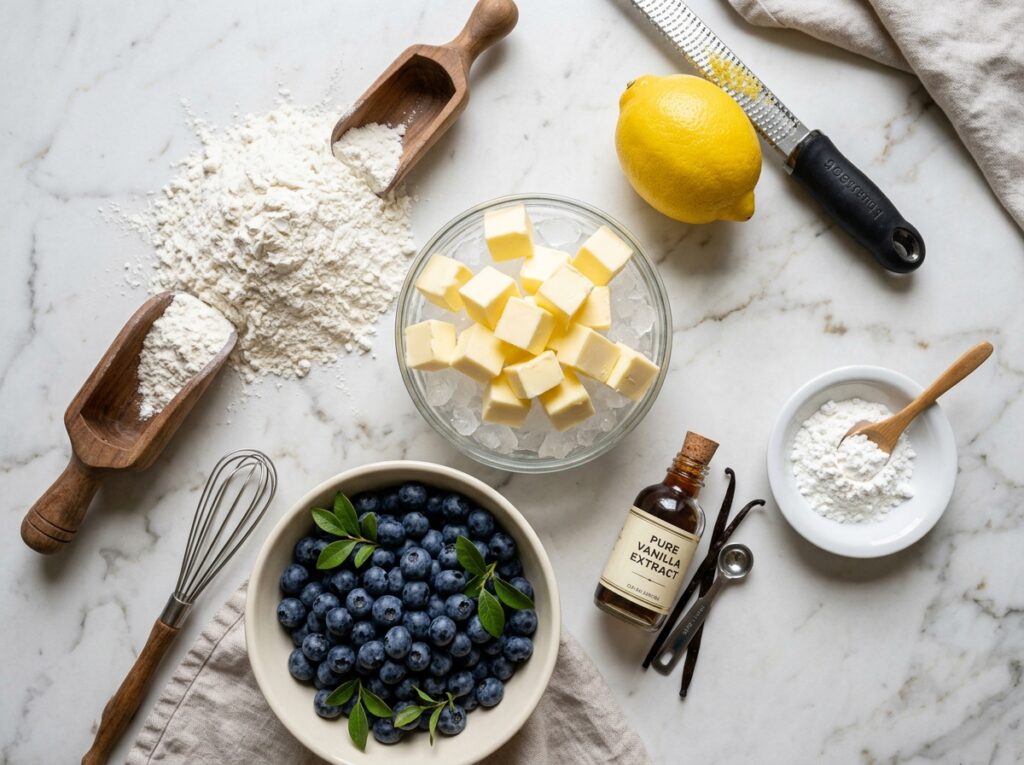
Ingredients for Flakiest Blueberry Hand Pies
For the Pastry Dough:
| Ingredient | US Customary | Metric |
|---|---|---|
| All-purpose flour | 2 ½ cups | 300g |
| Granulated sugar | 1 tablespoon | 12g |
| Kosher salt | 1 teaspoon | 6g |
| Cold European-style butter, cubed | 1 cup (2 sticks) | 226g |
| Ice water | 6–8 tablespoons | 90–120ml |
| Apple cider vinegar | 1 teaspoon | 5ml |
For the Blueberry Filling:
| Ingredient | US Customary | Metric |
|---|---|---|
| Fresh or frozen blueberries | 2 ½ cups | 350g |
| Granulated sugar | ⅓ cup | 65g |
| Cornstarch | 2 tablespoons | 16g |
| Fresh lemon juice | 1 tablespoon | 15ml |
| Lemon zest | 1 teaspoon | 2g |
| Vanilla extract | ½ teaspoon | 2ml |
| Kosher salt | Pinch | Pinch |
For Assembly:
| Ingredient | US Customary | Metric |
|---|---|---|
| Egg | 1 large | ~50g |
| Heavy cream or milk | 1 tablespoon | 15ml |
| Coarse sugar (turbinado or sanding) | 2 tablespoons | 24g |
Common Mistakes When Making Flakiest Blueberry Hand Pies
| The Mistake | What Actually Happens | The Fix |
|---|---|---|
| Using warm or room-temperature butter | Butter melts into flour; no steam pockets form; pastry is dense and greasy | Freeze butter for 15 min. Keep dough cold at every stage. Work quickly. |
| Over-working the dough (activating gluten) | Pastry becomes tough, elastic, and shrinks during baking | Mix just until dough holds together. Some visible butter streaks are good. |
| Not venting the hand pies | Internal steam pressure causes pastry to burst open or filling to leak | Cut 2–3 small slits in the top of each pie before baking. |
| Using too much liquid in the filling | Juice soaks into bottom crust; you get a soggy, undercooked base | Simmer filling to thicken and evaporate excess moisture. |
| Skipping the egg wash | Pale, dry-looking crust with no shine or browning | Brush with egg + cream mixture for golden color and sheen. |
| Rolling dough too thin | Filling breaks through during baking; structural failure | Aim for ⅛-inch thickness. Thinner = fragile. Thicker = doughy. |
| Not chilling dough between steps | Butter softens, dough becomes sticky, flakes don’t form properly | Rest dough in fridge for 30 min after mixing and after rolling. |
| Overfilling the hand pies | Filling leaks during crimping and baking; seams don’t seal | Use 2–3 tablespoons filling max per pie. Less is more. |
How to Make Flakiest Blueberry Hand Pies: The Method
Step 1: The Butter-Pebble Cut
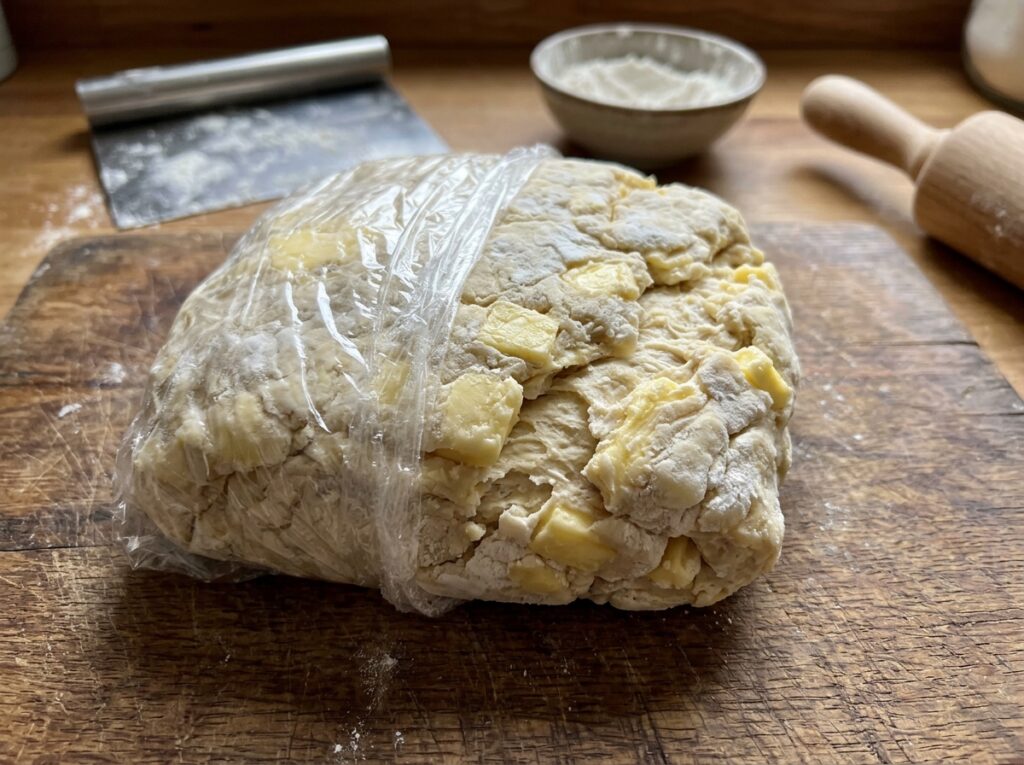
In a large mixing bowl, whisk together the flour, sugar, and salt. Add the cold, cubed butter. Using a pastry cutter or your fingertips, work the butter into the flour until the mixture resembles coarse sand with pea-sized butter chunks scattered throughout.
Do not aim for uniformity. Those larger butter pieces—some as big as small pebbles—are what will create the dramatic flakes in your Flakiest Blueberry Hand Pies. If you over-process the butter into the flour, you will lose the lamination effect.
Some bakers prefer to grate frozen butter on a box grater directly into the flour. This method keeps the butter colder and creates more evenly distributed fat layers. Either technique works; the key is speed and coldness.
Step 2: The Ice-Water Trick
In a small bowl, combine the ice water and apple cider vinegar. The acid in the vinegar inhibits gluten development slightly, giving you a more tender pastry.
Drizzle 6 tablespoons of the ice water mixture over the flour-butter blend. Use a fork to toss and distribute the moisture. Add more water, one tablespoon at a time, until the dough just begins to clump together. You want it shaggy, not wet.
Press a small piece of dough between your fingers. If it holds together without crumbling, you have enough water. If it is still dry and sandy, add a bit more liquid.
Turn the dough out onto a lightly floured surface and gently press it into a rough rectangle. Do not knead. Fold it over itself twice, then flatten into a disc, wrap tightly in plastic, and refrigerate for at least 30 minutes.
This rest period allows the gluten strands to relax and the butter to firm back up. Skipping this step will give you shrinkage and toughness in the final Flakiest Blueberry Hand Pies.
Step 3: The Macerated Berry Simmer
While the dough chills, prepare the filling. In a medium saucepan, combine the blueberries, sugar, cornstarch, lemon juice, lemon zest, vanilla, and a pinch of salt.
Let the mixture sit for 5 minutes. The sugar will begin to draw moisture out of the berries through osmosis—this is called maceration. You will see the berries start to release their juice.
Place the saucepan over medium heat and cook, stirring frequently, until the mixture comes to a simmer and thickens noticeably—about 5-7 minutes. The cornstarch will activate around 180°F, and the liquid will transform from watery to glossy and gel-like.
Remove from heat and spread the filling on a plate or shallow dish to cool completely. If you add hot filling to cold dough, the butter will melt and you will lose your flakes.
This pre-cooking step is what separates professional-level Flakiest Blueberry Hand Pies from amateur versions. It concentrates flavor, removes excess liquid, and prevents soggy bottoms.
Step 4: The Roll and Cut
Preheat your oven to 400°F (204°C). If you are using a baking steel or stone, place it on the middle rack now so it has time to heat fully.
Roll the chilled dough out on a lightly floured surface to about ⅛-inch thickness. Use firm, even pressure with your rolling pin. If the dough feels too stiff, let it sit at room temperature for 2-3 minutes.
Using a 4-inch round cutter (or a bowl as a template), cut out circles. You should get 10-12 rounds. Gather the scraps, press them together gently, re-roll once, and cut more rounds. Do not re-roll more than once or the dough will become tough.
Place the rounds on a parchment-lined baking sheet and refrigerate for 10 minutes. This firms up the butter again and makes assembly easier.
Step 5: The Fill, Crimp, and Vent Seal
Remove the dough rounds from the fridge. Place 2-3 tablespoons of cooled blueberry filling in the center of each round, leaving a ½-inch border.
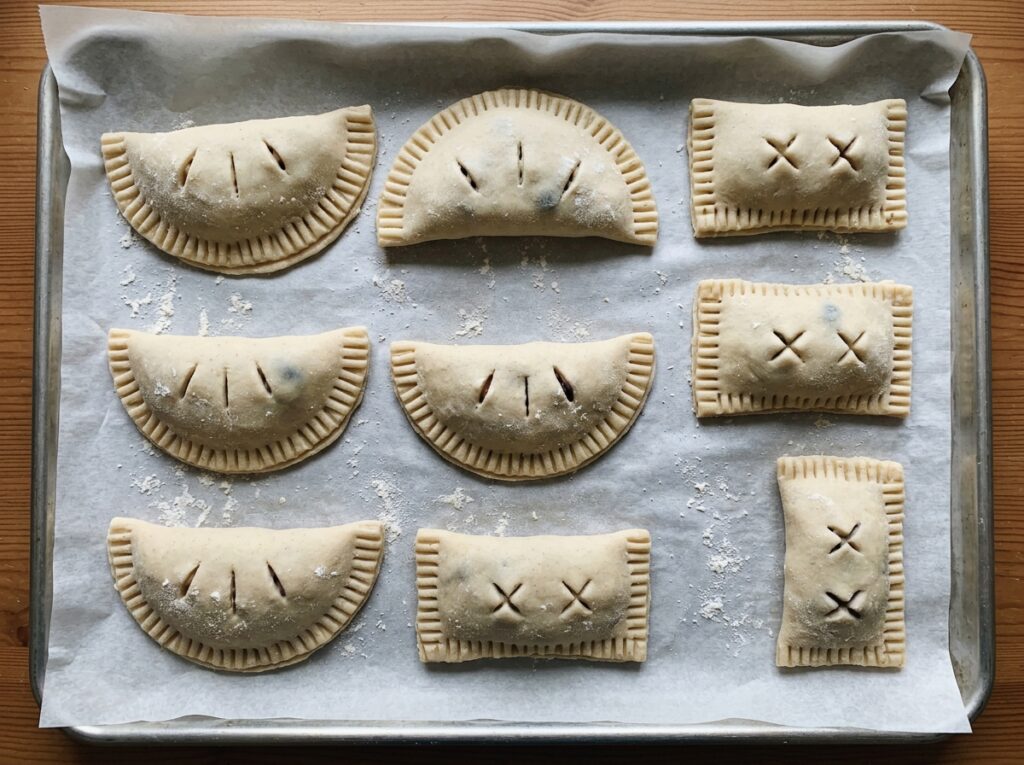
Fold the dough over to create a half-moon shape. Press the edges together gently, then crimp with a fork to seal. Make sure the seal is tight—any gaps will leak filling during baking.
This next step is critical for Flakiest Blueberry Hand Pies: use a sharp paring knife to cut 2-3 small slits in the top of each hand pie. These vents allow steam to escape. Without them, pressure builds inside and the pastry will burst open or leak from the seams.
Step 6: The Egg Wash and Sugar Crust
In a small bowl, whisk together the egg and heavy cream until smooth. Using a pastry brush, lightly coat the top of each hand pie with the egg wash. This protein-rich glaze will caramelize in the oven, giving you that beautiful golden-brown color.
Sprinkle each pie generously with coarse turbinado or sanding sugar. The large crystals add crunch and visual appeal.
Transfer the hand pies to the preheated baking steel or a parchment-lined baking sheet. If using a sheet, place it on the lowest oven rack to maximize bottom heat.
Step 7: The High-Heat Bake
Bake the Flakiest Blueberry Hand Pies for 22-26 minutes, rotating the pan halfway through. You are looking for deep golden-brown color on top and visible flakiness along the crimped edges.
The high heat (400°F) is essential. Lower temperatures will not generate enough steam quickly enough, and you will get a soft, bready texture instead of crisp, flaky layers.
If the tops are browning too quickly, tent loosely with foil for the last 5 minutes.
Remove from the oven and let the hand pies cool on the baking sheet for 10 minutes before transferring to a wire rack. The filling will be molten hot inside—resist the urge to bite in immediately.

Flakiest Blueberry Hand Pies
Ingredients
Equipment
Method
- In a large mixing bowl, whisk together flour, sugar, and salt. Add cold, cubed butter. Using a pastry cutter or your fingertips, work the butter into the flour until the mixture resembles coarse sand with pea-sized butter chunks throughout. Do not over-process—visible butter pieces create the flaky layers.
- Combine ice water and apple cider vinegar in a small bowl. Drizzle 6 tablespoons over the flour-butter mixture. Toss with a fork to distribute moisture. Add more water, 1 tablespoon at a time, until dough just begins to clump together. It should be shaggy, not wet.
- Turn dough onto a lightly floured surface. Gently press into a rough rectangle, fold over itself twice, then flatten into a disc. Wrap tightly in plastic wrap and refrigerate for at least 30 minutes. This allows gluten to relax and butter to firm up.
- In a medium saucepan, combine blueberries, sugar, cornstarch, lemon juice, lemon zest, vanilla, and salt. Let sit for 5 minutes to macerate. Place over medium heat and cook, stirring frequently, until mixture simmers and thickens (5-7 minutes). The filling should be glossy and gel-like. Spread on a plate to cool completely.
- Preheat oven to 400°F (204°C). If using a baking steel or stone, place it on the middle rack now. Line a baking sheet with parchment paper.
- Remove dough rounds from fridge. Place 2-3 tablespoons of cooled blueberry filling in the center of each round, leaving a ½-inch border. Fold dough over to create a half-moon shape. Press edges together, then crimp with a fork to seal firmly.
- Using a sharp paring knife, cut 2-3 small slits in the top of each hand pie. This is critical—vents allow steam to escape and prevent the pies from bursting open during baking.
- Whisk together egg and heavy cream until smooth. Brush the top of each hand pie with egg wash. Sprinkle generously with coarse turbinado sugar for crunch and visual appeal.
- Transfer hand pies to preheated baking steel (or place baking sheet on lowest oven rack). Bake for 22-26 minutes, rotating pan halfway through, until deep golden-brown on top with visible flaky edges. If tops brown too quickly, tent loosely with foil for the last 5 minutes.
- Remove from oven and let cool on baking sheet for 10 minutes before transferring to a wire rack. The filling will be very hot—wait before biting in. Serve warm or at room temperature.
Notes
Freeze butter for 15 minutes before using. Cold butter creates steam pockets during baking, which form the flaky layers. Room temperature butter will melt into the dough and make it greasy. Don’t Skip the Vents:
Cutting slits in the top allows steam to escape. Without vents, internal pressure builds and the pies will burst or leak filling from the seams. Pre-Cook the Filling:
This step is non-negotiable. It activates the cornstarch, thickens the juice, and prevents soggy bottoms. Always cool the filling completely before assembly. Use European-Style Butter:
Kerrygold or Plugrá contain 82-84% fat vs 80% in American butter. The extra fat means less water, less gluten, and flakier pastry. Baking Surface Matters:
A preheated baking steel or stone delivers instant bottom heat, setting the crust before filling can soak through. If you don’t have one, use an upside-down heavy baking sheet on the lowest rack. The Bake-from-Frozen Method:
Assemble hand pies completely, freeze on a tray until solid (2 hours), then transfer to freezer bags. Bake from frozen at 400°F for 27-32 minutes—no thawing needed. Flour Variations:
King Arthur Pastry Flour will give an even more tender result. Avoid bread flour—it has too much protein and will make the dough tough. Filling Variations:
Try strawberries, blackberries, cherries, peaches, or apples. Adjust cornstarch based on fruit’s water content. Make-Ahead Dough:
Dough keeps in the fridge for 2 days or freezer for 3 months. Thaw frozen dough overnight in refrigerator. Serving Suggestions:
Serve with vanilla ice cream, whipped cream, or a dusting of powdered sugar.
Why the “Envelope Fold” Technique Elevates Flakiest Blueberry Hand Pies
While this recipe does not require full lamination like croissants or puff pastry, incorporating one or two “envelope folds” during the resting phase can dramatically improve flakiness.
After your dough has rested for 30 minutes, roll it into a rectangle on a floured surface. Fold the top third down and the bottom third up, like folding a letter. Rotate 90 degrees, roll out again, and repeat the fold. Wrap and chill for another 15 minutes.
This creates additional layers of butter and dough without adding much time or effort. The result is Flakiest Blueberry Hand Pies with even more dramatic lamination and lift.
I use this technique when I am making hand pies for special occasions or when I want to impress guests. It is not mandatory, but it is a simple upgrade that delivers professional-level results.
Chef Mansoor’s Insight
Flakiest Blueberry Hand Pies occupy a unique space in the American baking tradition. They are humble enough for a lunchbox, elegant enough for a farmhouse wedding dessert table. They carry the nostalgia of county fairs and roadside fruit stands, but when executed with precision, they rival any French patisserie. I have made these in small batches for my family and in bulk for catering events. The reaction is always the same: surprise, then silence, then the request for another. The lesson is this: flakiness is not just about technique—it is about respect for temperature, patience with process, and the willingness to let butter do what it does best.
— Chef Mansoor, Flavour Bazar
Nutrition Information for Flakiest Blueberry Hand Pies (Per Pie, 10 Servings)
| Nutrient | Amount |
|---|---|
| Calories | 295 kcal |
| Total Fat | 16g |
| Saturated Fat | 10g |
| Trans Fat | 0g |
| Cholesterol | 45mg |
| Sodium | 180mg |
| Total Carbohydrates | 35g |
| Dietary Fiber | 2g |
| Sugars | 14g |
| Protein | 4g |
| Vitamin C | 6% DV |
| Calcium | 2% DV |
| Iron | 8% DV |
Note: Nutrition values are estimates based on standard ingredients. Using European butter or different flour may slightly alter values.
Flakiest Blueberry Hand Pies are indulgent, with the majority of calories coming from butter. However, they also provide antioxidants from the blueberries, including anthocyanins, which have been linked to cardiovascular and cognitive health.
Food Safety & Temperature Guide for Flakiest Blueberry Hand Pies
| Stage | Temperature | Note |
|---|---|---|
| Butter during prep | 32–40°F / 0–4°C | Keep cold at all times |
| Dough resting | 35–40°F / 2–4°C | Refrigerate between steps |
| Filling before assembly | Room temp or cooler | Never add hot filling to cold dough |
| Oven temperature | 400°F / 204°C | High heat essential for steam and flake formation |
| Internal temp when done | 190–200°F / 88–93°C | Pastry fully cooked, filling bubbling |
| Cooling before eating | 120–130°F / 49–54°C | Filling extremely hot initially—wait 10 min |
USDA Reminder: These hand pies contain dairy and eggs. Store in the refrigerator if not consumed within 2 hours. When reheating, bring internal temperature to at least 165°F to ensure food safety.
Storage, Freezing & Reheating Guide for Flakiest Blueberry Hand Pies
| Storage Method | Duration | Best Practices |
|---|---|---|
| Room temperature (baked) | 6–8 hours | Cover loosely. Do not seal airtight or crust softens. |
| Refrigerator (baked) | 3–4 days | Store in airtight container. Reheat to restore crispness. |
| Freezer (unbaked, assembled) | Up to 3 months | Flash-freeze on tray, then transfer to freezer bag. Bake from frozen, add 5 min. |
| Freezer (baked) | Up to 2 months | Wrap individually in foil. Reheat at 350°F for 15 min. |
| Best reheating method | 350°F oven, 10–12 min | Restores crispness. Microwave makes crust soggy. |
The “Bake from Frozen” Master Method: One of the best features of Flakiest Blueberry Hand Pies is that you can assemble them completely, freeze them unbaked, and bake directly from frozen whenever you want fresh pastry.
Assemble the hand pies as directed, place them on a parchment-lined baking sheet, and freeze until solid (about 2 hours). Transfer to a freezer-safe bag or container.
When ready to bake, brush with egg wash, sprinkle with sugar, and bake at 400°F for 27-32 minutes, adding 5-7 minutes to the original bake time. No thawing required.
Frequently Asked Questions About Flakiest Blueberry Hand Pies
Can I use store-bought pie dough for Flakiest Blueberry Hand Pies?
Technically, yes—but you will sacrifice a significant amount of flakiness and flavor. Store-bought dough often contains shortening instead of butter, and it is formulated for ease of rolling, not maximum lamination. If you are short on time, look for brands that use all-butter dough, like Trader Joe’s pie crust.
Why did my hand pies leak filling during baking?
Three common causes: overfilling, poor crimping, or skipping the vents. Use no more than 2-3 tablespoons of filling per pie, seal the edges firmly with a fork, and always cut vents in the top. Also, make sure your filling is completely cool before assembly.
Can I make Flakiest Blueberry Hand Pies with other fruits?
Absolutely. Strawberries, blackberries, cherries, peaches, and apples all work beautifully. Adjust the cornstarch based on the fruit’s water content—berries need 2 tablespoons per 2 cups of fruit, stone fruits need slightly less, apples need less still.
How do I prevent soggy bottoms?
Preheat your baking surface (steel, stone, or heavy baking sheet) and bake on the lower rack. The instant bottom heat sets the pastry before the filling can seep through. Also, always pre-cook and thicken your filling.
Can I make the dough ahead?
Yes. Wrapped tightly, the dough will keep in the refrigerator for up to 2 days or in the freezer for up to 3 months. Thaw frozen dough overnight in the fridge before rolling.
What is the difference between hand pies and turnovers?
The terms are often used interchangeably, but traditionally, hand pies are smaller and more rustic, while turnovers are larger and made with puff pastry. Flakiest Blueberry Hand Pies use a butter-based pie dough, which is sturdier and easier to handle than puff pastry.
Related Recipes You Will Love on Flavour Bazar
If you enjoyed these Flakiest Blueberry Hand Pies, explore these complementary recipes:
Blueberry Buttermilk Pancakes
More blueberry chemistry and the science of tender batters
Buttermilk Biscuits: The Science of Flaky Layers
Cold fat lamination and gluten control
Strawberry Shortcake: The Science of the Perfect Crumb
Fat-gluten interaction in tender baking
The Perfect Chocolate Chip Cookie: The Science of Chewy vs. Crispy
Master Maillard reaction and sugar ratios
For More Healthy Recipes Visit: flavourbazar.com