5 Secrets to Amazing Creamy Avocado Pasta Sauce (Dairy-Free)
By Chef Mansoor | Flavour Bazar
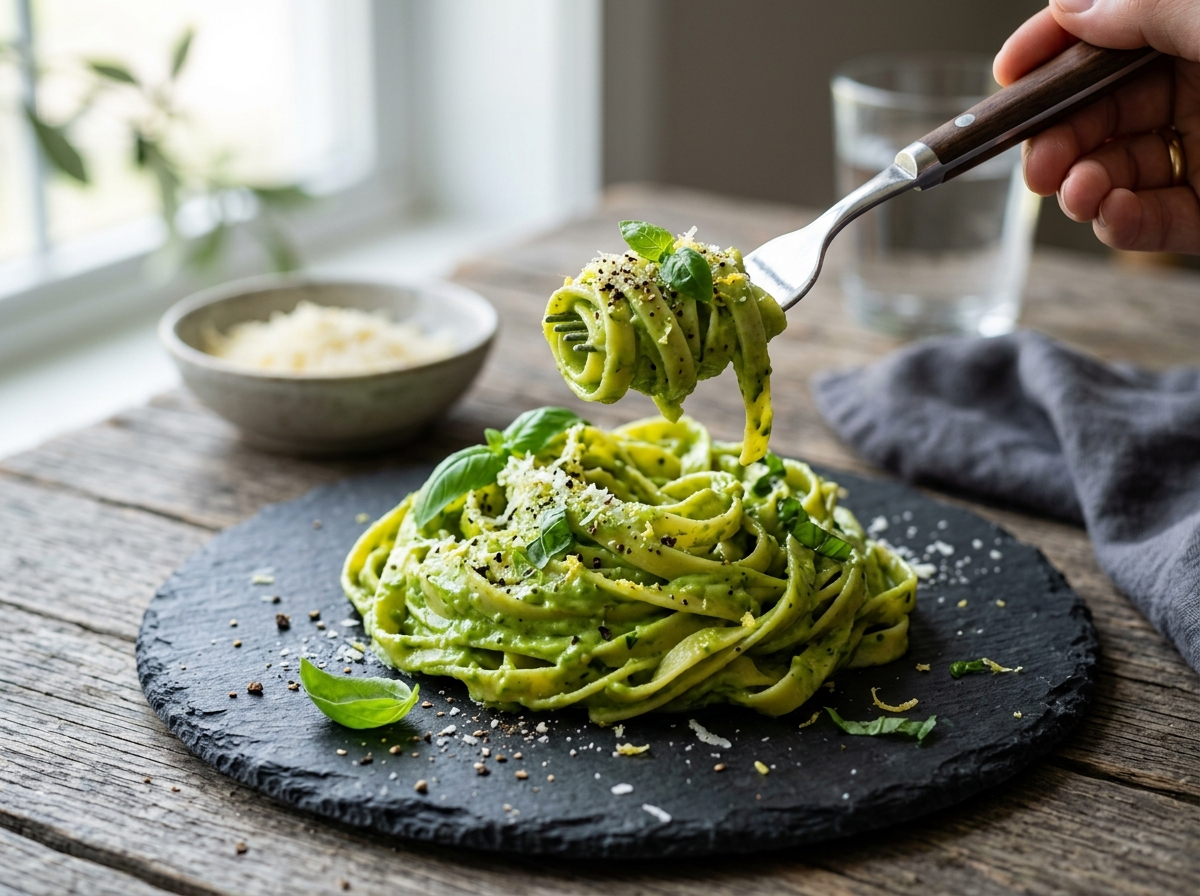
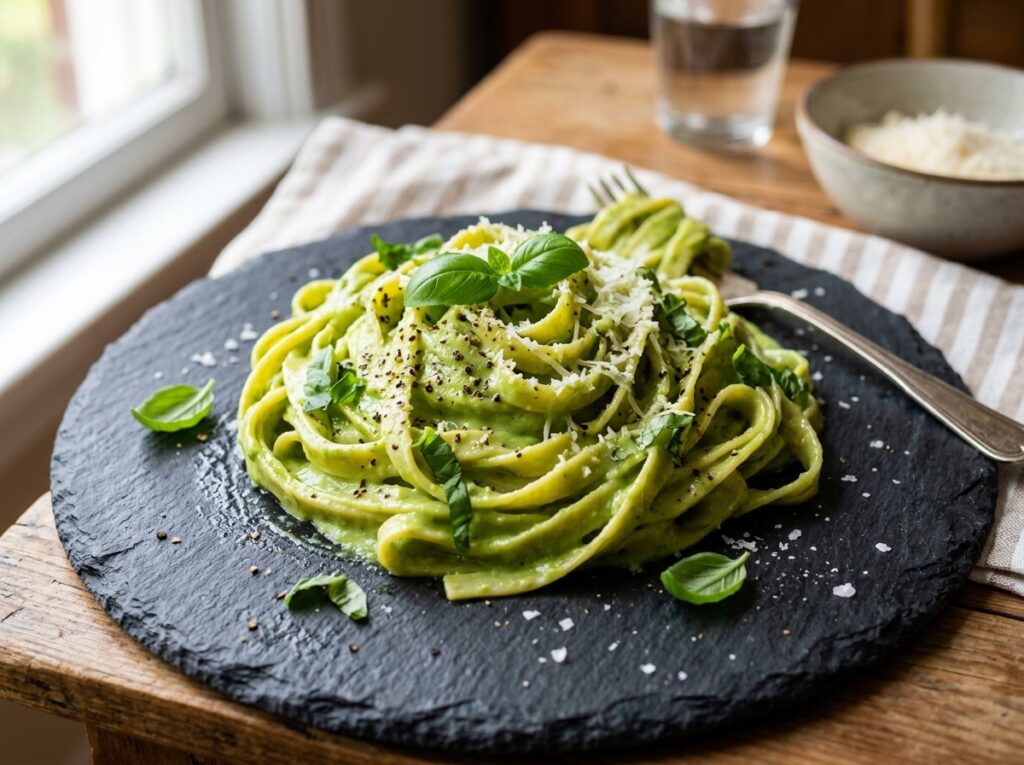
The first thing you notice is the color. Not the pale, tired green of yesterday’s guacamole, but a vibrant, almost electric emerald that clings to every strand of pasta like velvet. Creamy Avocado Pasta Sauce is not just another dairy-free alternative—it is a lipid-rich emulsion that rivals traditional Alfredo in texture while delivering heart-healthy monounsaturated fats with every forkful.
I have tested the pH-stability of Creamy Avocado Pasta Sauce to find the exact milliliter of lemon juice required to inhibit polyphenol oxidase without overpowering the delicate nutty flavor of the fruit. The answer, as it turns out, is far more precise than most recipes suggest. Too little acid and your sauce turns brown within minutes. Too much and the avocado’s natural butteriness gets buried under citrus sharpness.
This is not a recipe you prep ahead. This is a living sauce—one that demands immediacy, rewards precision, and transforms a simple weeknight dinner into something restaurant-worthy in under fifteen minutes.
The Science Behind Creamy Avocado Pasta Sauce
When you blend a ripe avocado, you are not just mashing fruit—you are rupturing millions of oil-rich cells. Avocados contain about 15-20% fat by weight, nearly all of it in the form of oleic acid, the same monounsaturated fat that makes olive oil so prized. When these fats encounter starchy pasta water and mechanical agitation from a blender, they form what chemists call a temporary emulsion.
In simple terms: the starch molecules in pasta water act like tiny bridges, holding fat droplets in suspension and creating that luxurious, clingy texture we associate with cream-based sauces. But unlike dairy, which contains casein proteins to stabilize the emulsion, Creamy Avocado Pasta Sauce relies entirely on plant-based mechanics—starch, mechanical energy, and speed.
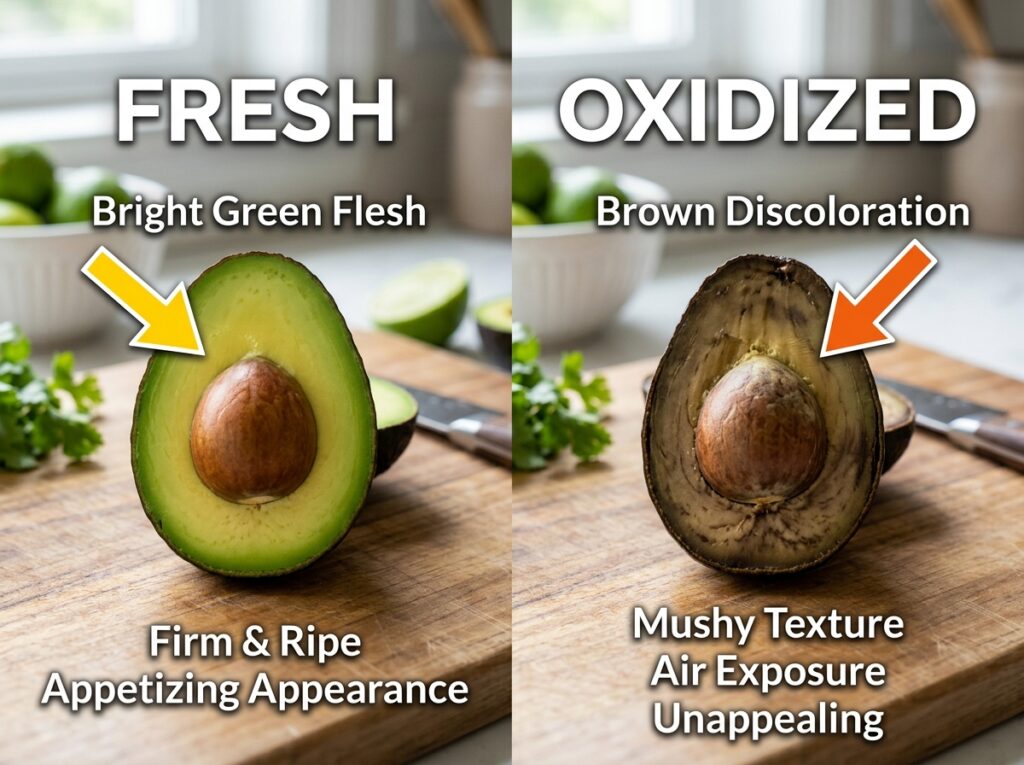
The second challenge is oxidation. The moment you cut into an avocado, you expose polyphenol compounds to oxygen. An enzyme called polyphenol oxidase (PPO) catalyzes a reaction that turns these colorless compounds into brown quinones:
Polyphenols+O2PPO EnzymeQuinones (Brown Pigment)
Vitamin C—ascorbic acid from lemon or lime juice—acts as a sacrificial antioxidant. It gets oxidized first, sparing the polyphenols and keeping your sauce that brilliant green. This is not about flavor alone. This is chemistry working in your favor.
Pro Buying Guide: What You Need for the Best Creamy Avocado Pasta Sauce (USA)
The Avocados
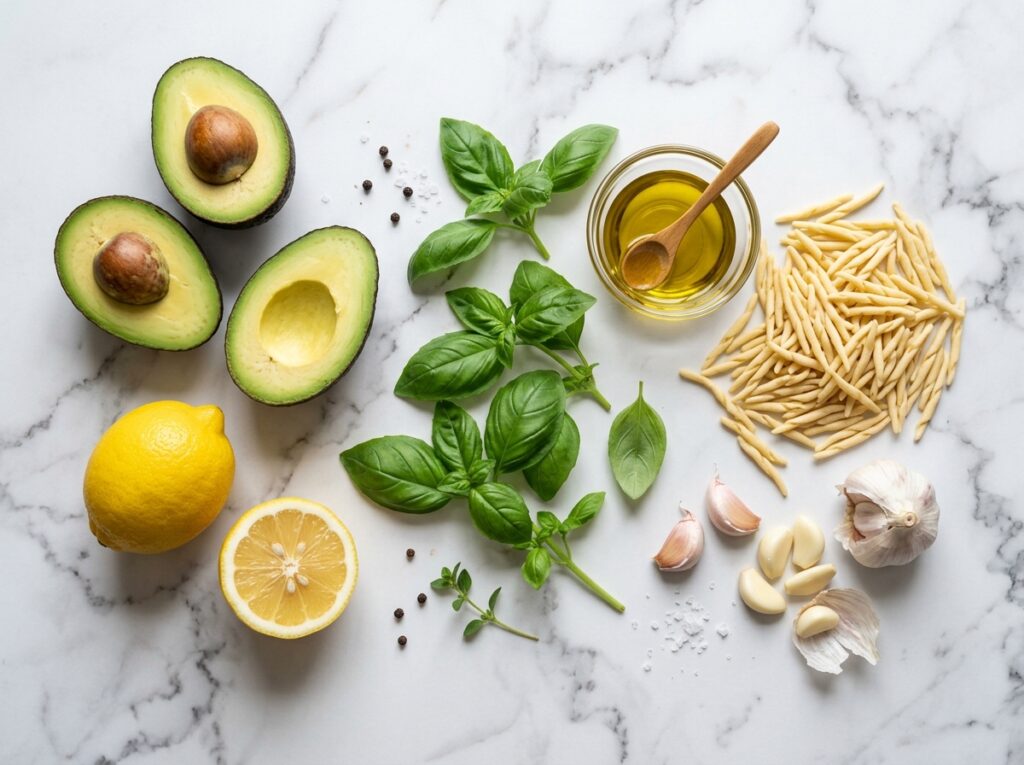
You want Hass avocados—the small, dark-skinned variety with bumpy texture. They contain significantly more fat than the larger, smooth-skinned Florida avocados, which means better emulsification and richer mouthfeel. Look for avocados that yield slightly to gentle pressure but do not feel mushy. At Whole Foods or Trader Joe’s, you will often find perfectly ripe options in their pre-selected bins.
If you are buying hard avocados from Walmart or Kroger, place them in a paper bag with a banana for 24-48 hours. The ethylene gas speeds ripening.
The Pasta
For Creamy Avocado Pasta Sauce, I recommend pasta shapes with surface area—fettuccine, linguine, or penne. If you want to boost the nutrition profile even further, try Banza Chickpea Pasta (extra protein and fiber) or Barilla Protein+ (14g protein per serving). Both hold sauce exceptionally well and add nutty undertones that complement the avocado.
The Blender
This is non-negotiable: you need a high-speed blender. A Vitamix or NutriBullet will give you the silkiest, airest texture. A food processor will work, but you will get a slightly grainier result. The goal is to incorporate air while breaking down the avocado’s fibrous structure completely.
The Oil
Use a mild extra virgin olive oil like California Olive Ranch. You want the oil’s fruitiness without overpowering the avocado. Skip anything labeled “robust” or “early harvest” for this sauce.
The Acid
Fresh lemon juice is standard, but I have had excellent results with lime juice for a slightly more tropical note. Bottled juice will not cut it here—you need the full aromatic oil from the zest and the precise acidity from fresh citrus.
Ingredients for Creamy Avocado Pasta Sauce
| Ingredient | US Customary | Metric |
|---|---|---|
| Ripe Hass avocados | 2 large | ~300g flesh |
| Fresh lemon juice | 2 tablespoons | 30ml |
| Garlic cloves, minced | 2 medium | ~6g |
| Extra virgin olive oil | ¼ cup | 60ml |
| Fresh basil leaves | ½ cup packed | ~20g |
| Kosher salt | 1 teaspoon | 6g |
| Black pepper | ½ teaspoon | 1g |
| Reserved pasta water | ½–¾ cup | 120–180ml |
| Pasta (any shape) | 12 oz | 340g |
| Optional: Red pepper flakes | ¼ teaspoon | pinch |
| Optional: Parmesan (for non-vegan) | ¼ cup grated | 25g |
Common Mistakes When Making Creamy Avocado Pasta Sauce
| The Mistake | What Actually Happens | The Fix |
|---|---|---|
| Using under-ripe avocados | Sauce becomes grainy, bitter, and refuses to emulsify smoothly | Press gently—avocado should yield but not feel mushy. Ripe = creamy. |
| Heating the sauce too much | Fats separate, flavor turns bitter, and sauce “breaks” into oily puddles | Toss pasta off-heat. Residual heat is enough. Never simmer avocado. |
| Not using enough salt | Sauce tastes flat and one-dimensional despite richness | Start with 1 tsp kosher salt, taste, adjust. Avocado needs bold seasoning. |
| Skipping the pasta water | Sauce won’t cling to pasta; you get dry noodles with green clumps | Reserve at least 1 cup. The starch is your emulsion stabilizer. |
| Trying to save leftovers for the next day | Sauce oxidizes completely, turns brown, separates, and tastes off | This is a make-and-eat-immediately sauce. No exceptions. |
| Over-blending | You incorporate too much air; sauce becomes foamy and loses body | Blend just until smooth—about 30-45 seconds max. |
| Using bottled lemon juice | Lower acidity, no aromatic oils, fails to prevent browning effectively | Fresh-squeezed only. The zest oils matter as much as the acid. |
| Adding cold sauce to hot pasta | Temperature shock causes fats to seize and clump | Temper sauce with pasta water first, then toss with warm pasta off heat. |
How to Make Creamy Avocado Pasta Sauce: The Method
Step 1: Cook the Pasta to Emulsion-Ready Doneness
Bring a large pot of water to a rolling boil and salt it generously—it should taste like the sea. Add your pasta and cook to one minute shy of al dente according to package directions. This is critical. You want the pasta to finish cooking in the residual heat when you toss it with the sauce.
Before draining, scoop out at least one full cup of pasta water. This starchy, salty liquid is the backbone of your emulsion. Do not skip this step.
Step 2: The Ripeness Check
Halve your avocados and remove the pits. Scoop the flesh into your blender. If the avocado flesh is bright green and scoops out easily with a spoon, you are in good shape. If it is hard to remove or shows brown streaks, your sauce will suffer.
The fat content in a perfectly ripe avocado is at its peak. Under-ripe fruit has more starch and less oil, which means a grainy, unstable sauce.
Step 3: The Cold-Blend Emulsion
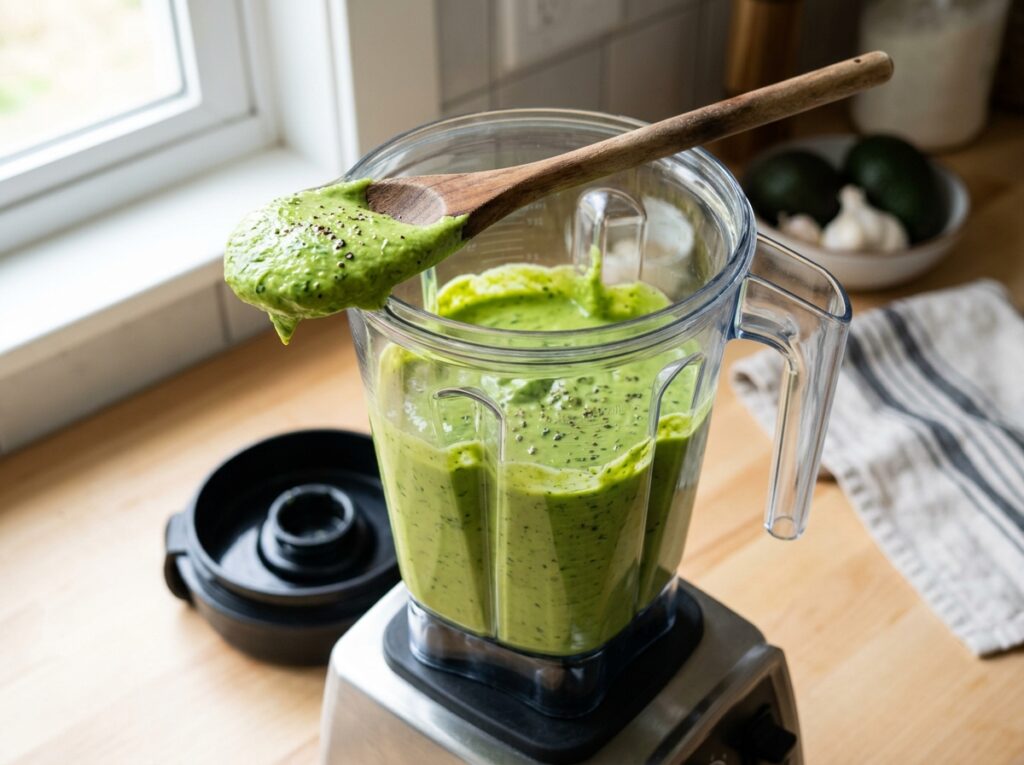
Add the avocado flesh, fresh lemon juice, garlic, basil, olive oil, salt, and black pepper to your high-speed blender. Start with just ¼ cup of the reserved pasta water. Blend on high for 30-45 seconds until completely smooth.
You are looking for a texture that is thicker than a smoothie but thinner than hummus. The sauce should ribbon off a spoon. If it is too thick, add pasta water one tablespoon at a time and pulse to incorporate.
This is where the magic happens. The mechanical shear from the blender blades breaks down the avocado’s cell walls, releasing oils and creating micro-droplets that are suspended in the aqueous phase (the lemon juice and pasta water). The starch molecules from the pasta water coat these droplets, preventing them from clumping back together.
Step 4: The Starch Water Tempering
Transfer your sauce to a large mixing bowl. Add another ¼ cup of warm pasta water and whisk gently to loosen the consistency. This step warms the sauce slightly and adjusts the viscosity so it will coat pasta strands evenly rather than sitting in clumps.
Taste now. Adjust salt, add more lemon if needed, and consider a pinch of red pepper flakes for heat. The sauce should taste bold and bright on its own—slightly over-seasoned, even—because the pasta will dilute it.
Step 5: The Immediate Toss
Add your drained pasta directly to the bowl with the sauce. Using tongs or two forks, toss gently but thoroughly, adding more pasta water by the tablespoon if the sauce is not coating evenly. You want every strand glistening with green.
Do this off the heat. The residual warmth from the pasta is enough to marry the flavors. Direct heat will cause the delicate fats in the avocado to separate and the sauce to turn grainy.
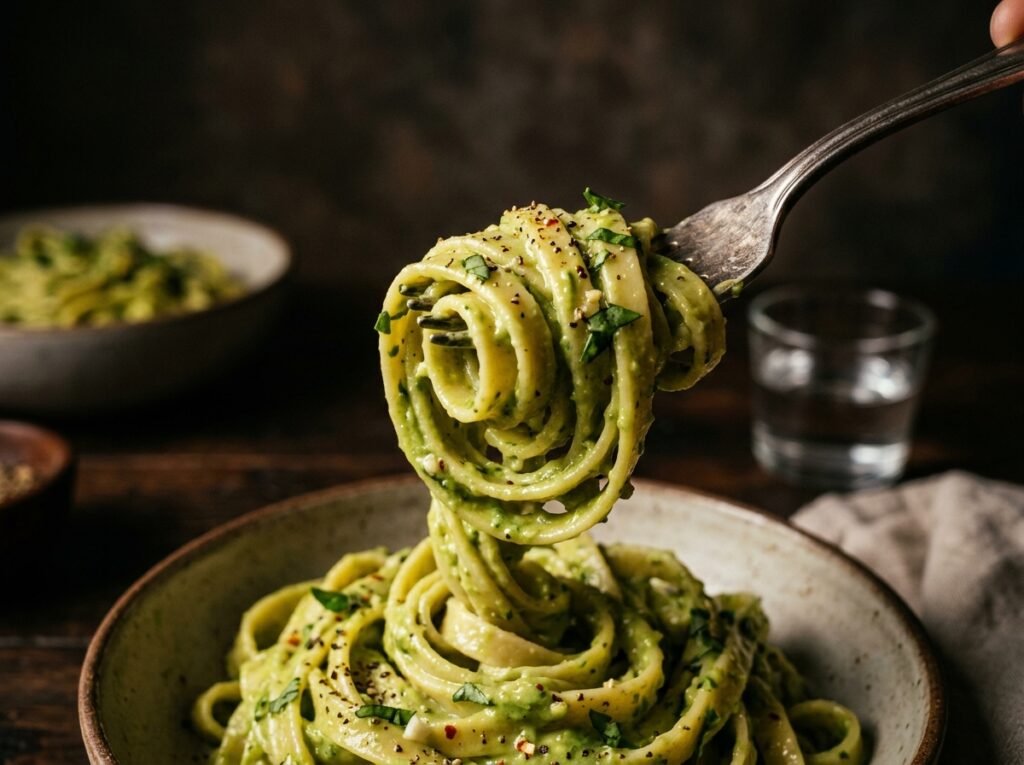
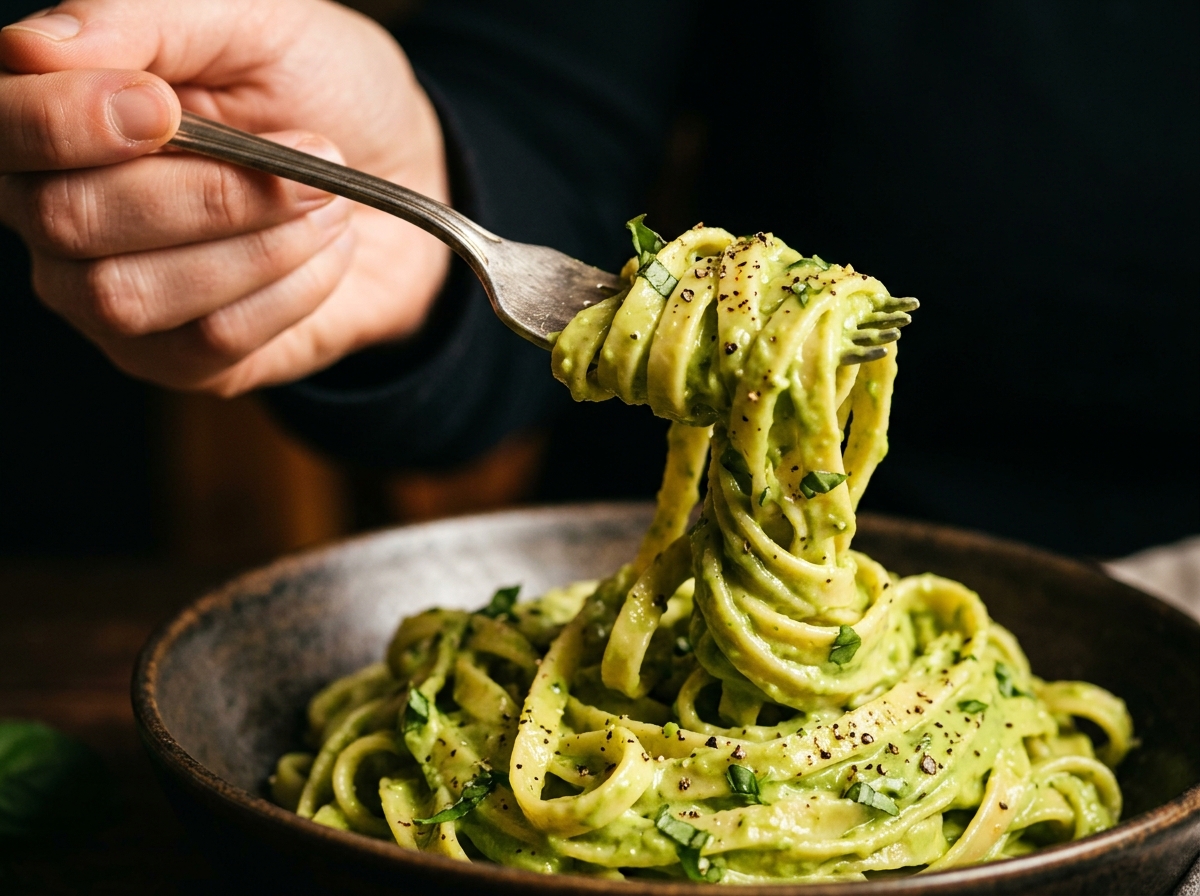
Serve immediately. Garnish with torn basil, a drizzle of olive oil, cracked black pepper, and if you are not keeping this vegan, a shower of freshly grated Parmesan.

Creamy Avocado Pasta Sauce
Ingredients
Equipment
Method
- Bring a large pot of water to a rolling boil. Add 1 tablespoon of salt—the water should taste like the sea. Add pasta and cook for 1 minute less than package directions for al dente. Before draining, reserve 1 full cup of pasta water. Drain pasta and set aside.
- Halve the avocados and remove pits. The flesh should yield easily to a spoon and be bright green without brown streaks. Scoop the flesh into a high-speed blender.
- Add avocado flesh, lemon juice, minced garlic, basil leaves, olive oil, salt, and black pepper to the blender. Add ¼ cup of the reserved pasta water. Blend on high speed for 30-45 seconds until completely smooth and creamy. The sauce should ribbon off a spoon.
- Transfer sauce to a large mixing bowl. Add another ¼ cup of warm pasta water and whisk gently to loosen. The sauce should be slightly thinner than you want the final result—it will thicken when it coats the pasta. Taste and adjust salt and lemon as needed.
- Transfer sauce to a large mixing bowl. Add another ¼ cup of warm pasta water and whisk gently to loosen. The sauce should be slightly thinner than you want the final result—it will thicken when it coats the pasta. Taste and adjust salt and lemon as needed.
- Plate the pasta right away. Garnish with torn fresh basil, a drizzle of olive oil, cracked black pepper, and optional Parmesan. Serve within minutes for the best color and flavor.
Notes
- Ripeness matters: Under-ripe avocados create grainy, bitter sauce. Over-ripe causes separation.
- Never heat the sauce: Add to pasta off-heat only. Direct heat breaks the emulsion and turns fats bitter.
- Fresh lemon only: Bottled juice lacks the aromatic oils needed to preserve color and flavor.
- Use immediately: This sauce oxidizes quickly. It’s not a make-ahead recipe.
If you must store sauce for 2-4 hours, press plastic wrap directly onto the surface to eliminate air exposure. Add a few drops of fresh lemon juice on top before sealing. Pasta Water is Essential:
The starch in pasta water acts as an emulsifier, helping the sauce cling to pasta. Don’t skip this step. Best Pasta Shapes:
Fettuccine, linguine, penne rigate, rigatoni, or any shape with texture/surface area. Protein Boost:
Use Banza chickpea pasta or Barilla Protein+ for extra protein and fiber. Scaling:
This recipe scales perfectly. For 2 servings: use 1 large avocado, 1 tablespoon lemon juice, 4 oz pasta.
Why Creamy Avocado Pasta Sauce Works So Well with Certain Pasta Shapes
Not all pasta is created equal when it comes to creamy sauces. Long, flat noodles like fettuccine and linguine have the surface area to hold onto the emulsion. Tubular shapes like penne and rigatoni trap sauce inside their ridges.
I have tested Creamy Avocado Pasta Sauce with everything from angel hair to orecchiette. The best results come from shapes that offer texture—either ridges (rigate), tubes, or flat ribbons. Smooth, round spaghetti works, but you lose some of that luxurious coating effect.
If you are using a gluten-free or high-protein pasta, undercook it slightly more than you would traditional semolina pasta. These varieties continue to absorb liquid after draining, and you want to account for that when adding your sauce.
Chef Mansoor’s Insight
There is something quietly revolutionary about Creamy Avocado Pasta Sauce. It does not mimic dairy—it replaces it with a fat source that is richer in heart-healthy oleic acid, potassium, and fiber. This is not about compromise. This is about choosing a different kind of indulgence. I have watched home cooks serve this to skeptical guests who swore they would miss the Parmesan and butter, only to go back for seconds. The creaminess is real. The nutrition is superior. And the flavor—when you get the acid balance right—is more complex than anything that comes from a cow. The lesson here is simple: plants do not need to apologize.
— Chef Mansoor, Flavour Bazar
Nutrition Information (Per Serving, ~6 Servings)
| Nutrient | Amount |
|---|---|
| Calories | 285 kcal |
| Protein | 6g |
| Total Fat | 16g |
| Saturated Fat | 2.5g |
| Carbohydrates | 30g |
| Dietary Fiber | 6g |
| Sugars | 1g |
| Sodium | 210mg |
| Potassium | 420mg |
| Cholesterol | 0mg (vegan version) |
Note: Nutrition values are estimates and vary based on pasta type and optional ingredients like Parmesan.
The standout here is the monounsaturated fat content—nearly 10g per serving—which supports cardiovascular health. You are also getting potassium (essential for blood pressure regulation), fiber (gut health), and folate from the avocado.
Food Safety & Temperature Guide for Creamy Avocado Pasta Sauce
| Stage | Temperature | Note |
|---|---|---|
| Pasta cooking water | 212°F / 100°C | Full rolling boil |
| Pasta after draining | ~180°F / 82°C | Still steaming |
| Sauce during toss | Room temp to warm | Never exceed 140°F / 60°C |
| Danger zone (avoid) | 40–140°F / 4–60°C | Do not hold sauce here for >2 hours |
USDA Reminder: Fresh avocado sauce contains no animal protein, but cross-contamination is possible if you are adding cheese or using shared cutting boards. Wash all produce thoroughly. Consume the sauce within 2 hours of preparation if left at room temperature.
Because this sauce is not cooked, it is crucial to use fresh, high-quality ingredients and clean equipment. The lemon juice provides some antimicrobial protection, but this is not a shelf-stable product.
Storage & Reheating Guide for Creamy Avocado Pasta Sauce
| Storage Method | Duration | Best Practices |
|---|---|---|
| Refrigerator (sauce only) | 4–6 hours max | Press plastic wrap directly onto surface to minimize air contact. Expect some browning. |
| Refrigerator (tossed pasta) | Not recommended | Pasta absorbs sauce, avocado oxidizes, texture is lost. |
| Freezer | Do not freeze | Emulsion breaks completely upon thawing. Texture is ruined. |
| Best practice | Make fresh each time | Creamy Avocado Pasta Sauce is a 15-minute recipe. Fresh is always superior. |
The Plastic Wrap Touch Method: If you absolutely must store leftover sauce for a few hours, press a sheet of plastic wrap directly against the surface of the sauce, eliminating all air pockets. This slows oxidation. Add a few drops of lemon juice on top before sealing.
Frequently Asked Questions About Creamy Avocado Pasta Sauce
Can I make Creamy Avocado Pasta Sauce ahead of time?
Honestly, no. This is a sauce that oxidizes rapidly. Even with optimal storage, you will see browning within a few hours. The flavor also dulls as the bright lemon notes fade. If you need a make-ahead creamy pasta, consider a cashew-based sauce instead.
What if my sauce turns brown?
It is still safe to eat, but the flavor will be slightly bitter and the visual appeal is gone. You can try stirring in an extra teaspoon of fresh lemon juice and a handful of fresh basil, then blending again briefly. It will lighten the color slightly but will not return to the original vibrant green.
Can I use frozen avocado?
You can, but the texture will be slightly waterier. Frozen avocado often has added citric acid, which can make the sauce too tart. If you use it, reduce the lemon juice by half and taste before adjusting.
Is Creamy Avocado Pasta Sauce healthy?
Yes. It delivers healthy fats, fiber, potassium, and vitamins C, E, and K. It is naturally dairy-free, cholesterol-free, and vegan (if you skip the Parmesan). That said, it is calorie-dense due to the fats, so portion sizes matter.
Can I use this sauce on other dishes?
Absolutely. I have used Creamy Avocado Pasta Sauce as a spread for sandwiches, a dip for roasted vegetables, and a base for grain bowls. It is especially good over warm quinoa or as a topping for grilled chicken.
More from Flavour Bazar
If you enjoyed this Creamy Avocado Pasta Sauce, you will want to explore these complementary recipes:
French Buttercream Macarons: The Physics of the Perfect Foot
Deep dive into egg white meringue and emulsification
The Perfect Chocolate Chip Cookie: The Science of Chewy vs. Crispy
Master Maillard reaction and sugar ratios
Blueberry Buttermilk Pancakes: The Science of the Fluff
Learn acid-base leavening chemistry
Buttermilk Biscuits: The Science of Flaky Layers
Cold fat lamination and gluten control
Strawberry Shortcake: The Science of the Perfect Crumb
Fat-gluten interaction in tender baking
For More Healthy Recipes Visit: flavourbazar.com