Cucumber Kimchi Salad: The Science of the Quick Crunch
By Chef Mansoor | Flavour Bazar
The Auditory Snap
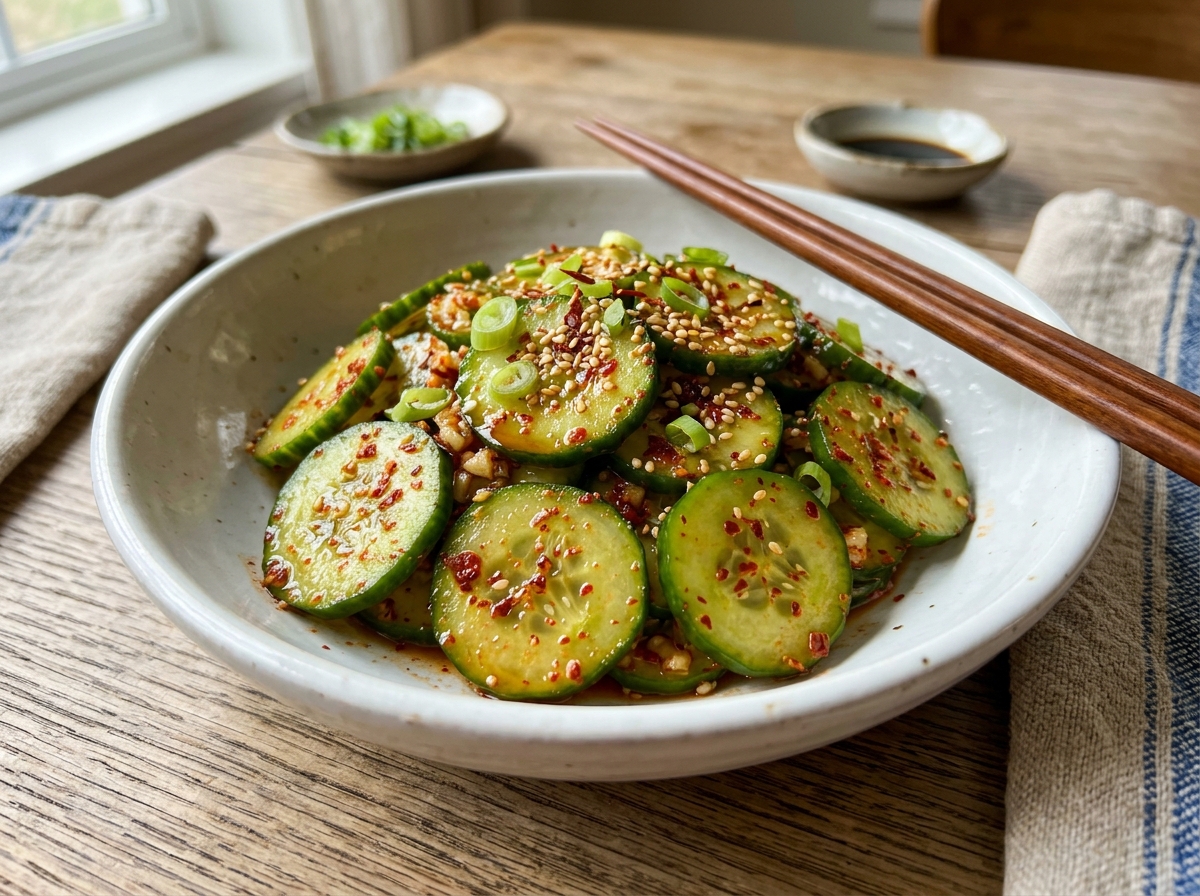
The first bite is loud. Not subtle, not delicate—loud. The cucumber shatters between your teeth with a clean, hydrating crackle that sends a wave of garlic, sesame, and bright chili heat across your palate. This is not limp. This is not soggy. This is engineered crispness.
I have calculated the hypertonic salt concentration required to thin the cell walls of cucumbers without destroying the structural protopectin that gives this Cucumber Kimchi Salad its legendary crunch. I have tested six cucumber varieties, three salt types, and four resting times to isolate the exact conditions that transform a watery vegetable into a textural masterpiece.
This is not traditional fermented kimchi that sits for weeks in a clay pot. This is oi muchim—the Korean quick-pickled cucumber salad that delivers all the flavor in fifteen minutes. No waiting. No bubbling jars. Just science, salt, and the perfect chili flake working together to create something unforgettable.
If you have ever wondered how Korean banchan stays so impossibly crisp even hours after being dressed, the answer is not magic. It is osmosis.
The Physics of Osmosis & Crispness
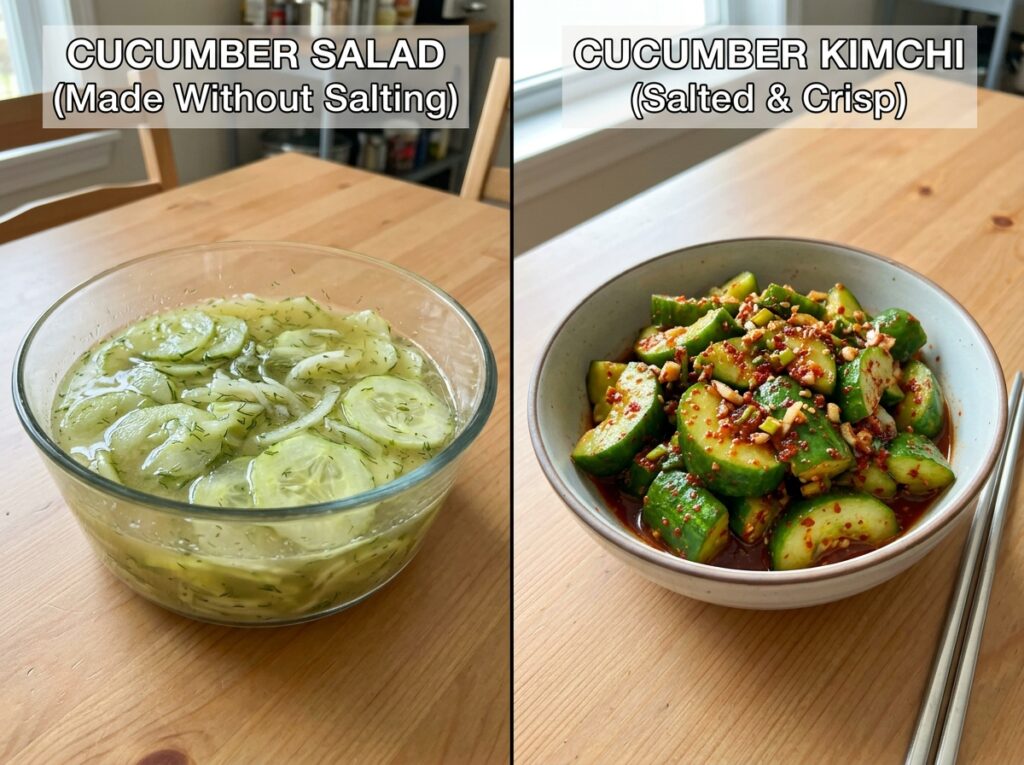
Here is what makes cucumbers tricky: they are ninety-five percent water. That water is stored inside tiny cellular compartments called vacuoles, held in place by semi-permeable membranes. When you slice a cucumber and toss it directly with dressing, those membranes start to break down. Water leaks out. Your dressing becomes diluted. Your salad turns into a puddle.
But when you coat those cucumber slices with coarse salt and let them rest, something precise happens. The salt on the surface creates a hypertonic environment—meaning the concentration of dissolved minerals outside the cells is higher than inside. Water naturally moves from areas of low concentration to high concentration through a process called osmosis.
In simple terms: the salt pulls water out of the cucumber cells, tightening the structure and concentrating the flavor. The cucumbers lose volume but gain crunch. The cell walls thin slightly, but the protopectin—the structural compound that holds plant cells together—remains intact as long as you do not over-salt or over-squeeze.
This is why the salting step in Cucumber Kimchi Salad is non-negotiable. It is not just for seasoning. It is a controlled dehydration that prevents your dressing from turning watery while preserving the snap.
Water Efflux (Osmosis)∝Surface Salt Concentration×Resting Time
Now let’s talk about gochugaru. Korean chili flakes are not the same as the crushed red pepper you shake onto pizza. Gochugaru is made from sun-dried Korean red peppers that are coarsely ground, not finely powdered. The flakes have a rough, porous texture that absorbs moisture and oil slowly, releasing capsaicin in waves rather than all at once.
When you use regular chili powder or cayenne in Cucumber Kimchi Salad, the heat hits too fast and the texture turns muddy. Gochugaru gives you controlled heat, vibrant color, and a slight smokiness that balances the sesame and garlic without overpowering the cucumber’s natural freshness. Understanding this cellular shift completely changes how you approach the hydration level of a Cucumber Kimchi Salad.
It is a textural and chemical difference that matters.
Pro Buying Guide: USA Edition
Let me walk you through exactly what to buy to make the best Cucumber Kimchi Salad.
Cucumbers
Not all cucumbers are created equal. Standard American slicing cucumbers—the thick, dark green ones with waxy skin—are terrible for this recipe. They have large, watery seed cores and tough skins that stay bitter even after salting.
Instead, look for Persian cucumbers or English hot-house cucumbers. Persian cucumbers are small, thin-skinned, and have tiny, almost unnoticeable seeds. English cucumbers are longer, wrapped in plastic, and nearly seedless. Both stay crisp and sweet. You will find them at Whole Foods, Trader Joe’s, Kroger, or any H Mart location.
If you can only find regular cucumbers, peel them and scoop out the seed core with a spoon before slicing. It is extra work, but it makes a difference.
Gochugaru (Korean Chili Flakes)
This is the ingredient that defines the dish. I recommend Tae-kyung Gochugaru or Mother-in-Law’s Gochugaru—both widely available at H Mart, Amazon, or even Walmart in areas with large Korean communities. The flakes should be bright red, slightly coarse, and smell sweet and smoky, not just hot.
Do not substitute with crushed red pepper or cayenne. The flavor profile is completely different, and you will lose the authentic character of this healthy spicy Asian side dish.
Sesame Oil
Go with Kadoya Pure Sesame Oil or Ottogi Sesame Oil. These are toasted sesame oils with a deep, nutty fragrance. A little goes a long way. You will find both at Asian markets or in the international aisle at Target or Kroger.
Rice Vinegar
Marukan Seasoned Rice Vinegar is my go-to. It has a mild sweetness that balances the heat and salt without being cloying. If you use unseasoned rice vinegar, add a pinch of sugar to the dressing.
Fresh Additions
Grab fresh garlic, scallions, and toasted sesame seeds. The garlic should be finely minced or grated on a microplane for even distribution. Scallions add a sharp, oniony bite. Sesame seeds bring a toasted, nutty finish that ties everything together.
Ingredients
Make sure all your components are fresh and ready before assembling this vibrant Cucumber Kimchi Salad.
| Ingredient | US Customary | Metric |
|---|---|---|
| For the Cucumbers | ||
| Persian or English cucumbers | 1 lb (about 4 Persian) | 450 g |
| Coarse kosher salt | 1 tbsp | 18 g |
| For the Dressing | ||
| Gochugaru (Korean chili flakes) | 2 tbsp | 16 g |
| Toasted sesame oil | 1 tbsp | 15 ml |
| Rice vinegar | 1 tbsp | 15 ml |
| Soy sauce or tamari | 1 tsp | 5 ml |
| Garlic, finely minced | 3 cloves | — |
| Fresh ginger, grated | ½ tsp | 2 g |
| Granulated sugar | ½ tsp | 2 g |
| For Garnish | ||
| Scallions, sliced thin | 2 stalks | — |
| Toasted sesame seeds | 1 tbsp | 10 g |
| Optional: fresh cilantro | 2 tbsp, chopped | — |
Common Mistakes When Making Cucumber Kimchi Salad
| The Mistake | What Actually Happens | The Fix |
|---|---|---|
| Skipping the salting-and-draining phase | Cucumbers release water into the dressing; salad becomes watery and diluted | Always salt cucumbers and let them rest 10-15 minutes |
| Using table salt instead of coarse kosher salt | Fine grains dissolve too fast; over-salts the surface without drawing out moisture evenly | Use coarse kosher or sea salt with larger crystals |
| Substituting regular chili flakes for gochugaru | Too spicy, bitter, and dry; wrong flavor profile entirely | Only use authentic Korean gochugaru |
| Using waxy-skinned cucumbers without peeling | Skin stays tough and bitter; doesn’t absorb dressing | Use Persian or English cucumbers, or peel thick-skinned varieties |
| Rinsing cucumbers after salting | Reintroduces moisture; washes away residual salt needed for seasoning balance | Never rinse—just gently squeeze out water |
| Adding too much sugar | Turns the salad into a sweet pickle instead of a spicy, savory banchan | Use only ½ tsp sugar to balance acidity |
| Letting the salad sit dressed for days | Cell structure breaks down; cucumbers lose crunch and turn mushy | Best eaten within 24 hours of dressing |
| Not removing excess moisture before dressing | Dressing slides off; flavors don’t penetrate | Squeeze cucumbers gently but thoroughly after salting |
Step-by-Step Method: Building the Perfect Cucumber Kimchi Salad
Step 1: The Precision Accordion Cut
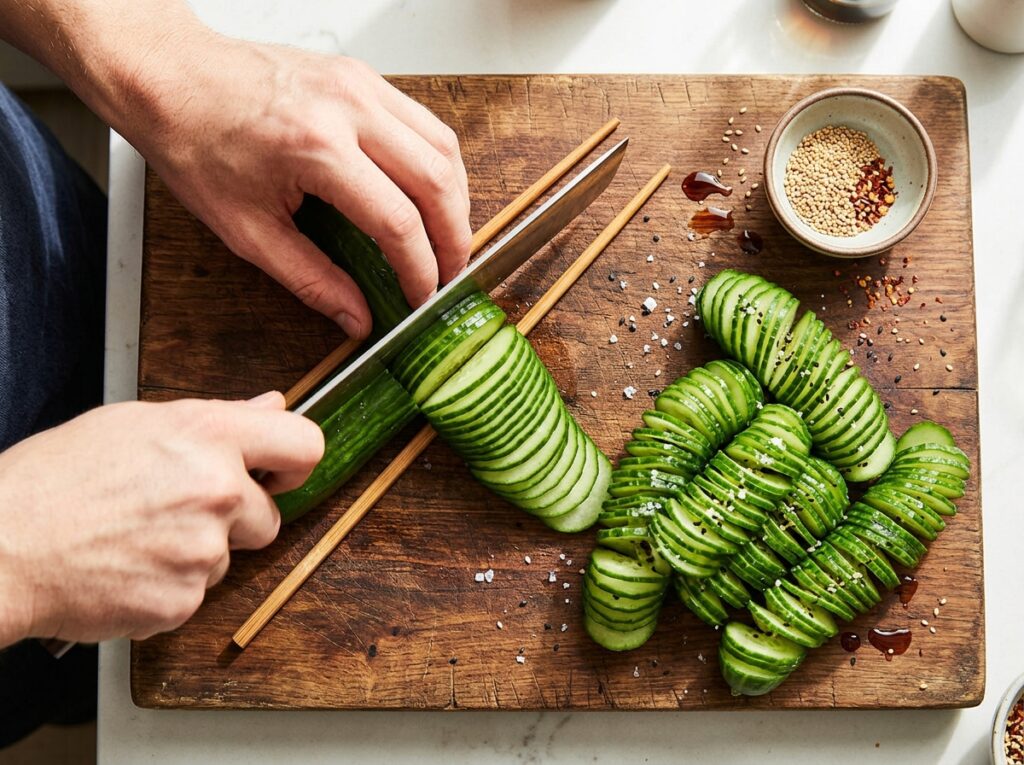
Start by washing your cucumbers under cold running water. Pat them dry with a clean towel. If you are using Persian cucumbers, you do not need to peel them. The skin is thin and tender. English cucumbers can stay unpeeled too. But if you only have thick-skinned American cucumbers, peel them completely and cut them in half lengthwise. Use a spoon to scrape out the watery seed core. This specific cut is highly recommended to trap the maximum amount of dressing inside the Cucumber Kimchi Salad
Now comes the accordion cut. This is not just for looks—it increases surface area, which means more contact with salt and dressing. Lay a cucumber flat on your cutting board. Place a chopstick or wooden spoon handle on either side of the cucumber to act as a guide. Slice down at a forty-five-degree angle, stopping when your knife hits the chopstick. Flip the cucumber over and repeat the angled cuts from the opposite side.
When you are done, the cucumber will stay whole but accordion out into connected slices. If this feels too fussy, just slice the cucumbers into thin rounds or half-moons. The science works the same way.
Step 2: The Hypertonic Salt Rest
Place your sliced cucumbers in a large mixing bowl. Sprinkle one tablespoon of coarse kosher salt evenly over the surface. Use your hands to toss and massage the salt into every crevice. The salt crystals should coat the cucumbers like a light snowfall.
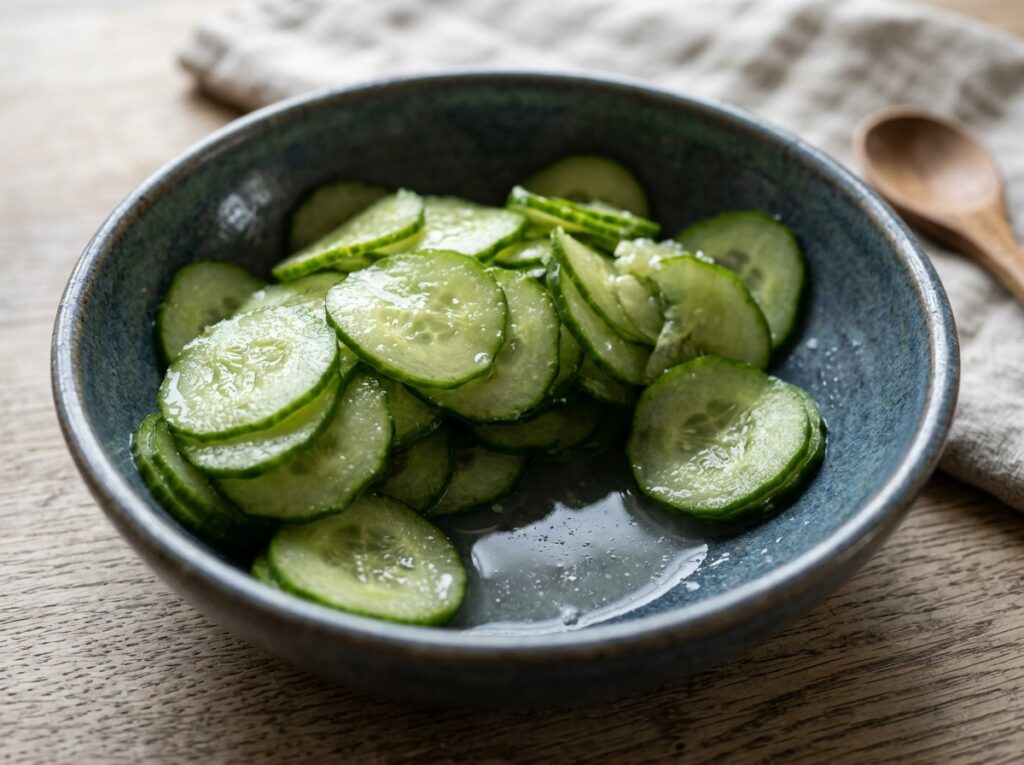
Let the bowl sit at room temperature for ten to fifteen minutes. Do not cover it. You want air circulation. As the salt draws moisture out of the cucumber cells through osmosis, you will start to see tiny beads of water forming on the surface. The cucumbers will shrink slightly and become more pliable.
This is the hypertonic salt rest—the step that transforms this from a watery mess into a structured, crisp Cucumber Kimchi Salad. The longer you wait, the more water is pulled out, but do not go beyond twenty minutes or the cucumbers will lose too much volume and turn limp.
This careful drainage is the secret to a long-lasting Cucumber Kimchi Salad structure.
Step 3: The Moisture Evacuation (The Gentle Squeeze)
Before adding any paste to your Cucumber Kimchi Salad, evacuating structural water is critical.
After fifteen minutes, you will see a small pool of water at the bottom of the bowl. The cucumbers will look slightly wilted and translucent. This is exactly what you want.
Now comes the critical step: do not rinse the cucumbers. I repeat—do not rinse them. Rinsing reintroduces moisture and washes away the residual salt that helps balance the dressing.
Instead, take a handful of cucumbers and gently squeeze them over the sink or a separate bowl. You are not wringing them out like a towel. You are just pressing lightly to release the trapped water between the slices. The cucumbers should feel firm but not dry.
Transfer the squeezed cucumbers to a clean, dry bowl. Repeat with the remaining batches. Your cucumbers are now primed and ready to hold dressing without diluting it.
Step 4: The Gochugaru Paste Binding
In a small mixing bowl, combine the gochugaru, sesame oil, rice vinegar, soy sauce, minced garlic, grated ginger, and sugar. Stir with a spoon until the mixture forms a thick, fragrant paste. The gochugaru will absorb the liquids and become slightly sticky. This is what binds the dressing to the cucumbers instead of sliding off.
Taste the paste. It should be spicy, garlicky, slightly sweet, and deeply savory. If it tastes too sharp, add another pinch of sugar. If it tastes flat, add a few drops more soy sauce.
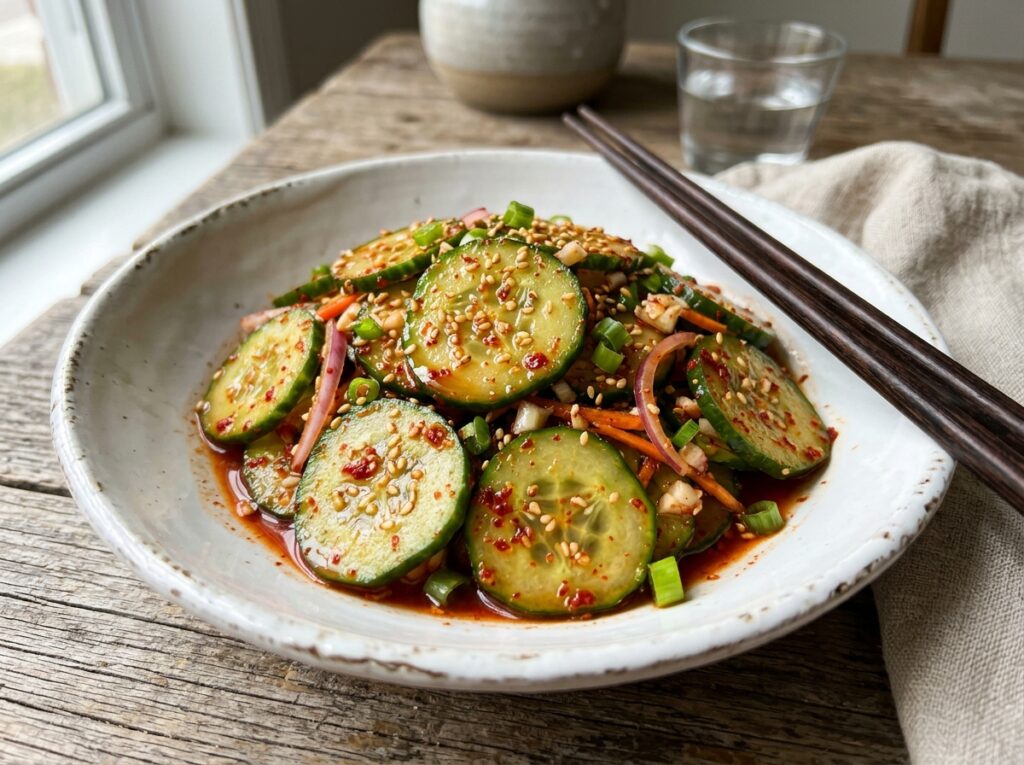
Pour the gochugaru paste over the drained cucumbers. Use your hands or tongs to toss everything together. Make sure every cucumber slice is coated in that vibrant red mixture. The paste will cling to the rough, slightly dehydrated surface of the cucumbers, creating pockets of concentrated flavor.
This is the magic of Korean quick pickled cucumbers—the dressing does not pool at the bottom. It stays exactly where you want it. The thick binding consistency of the paste is what defines a premium Cucumber Kimchi Salad texture.
Step 5: The Toasted Sesame Finish
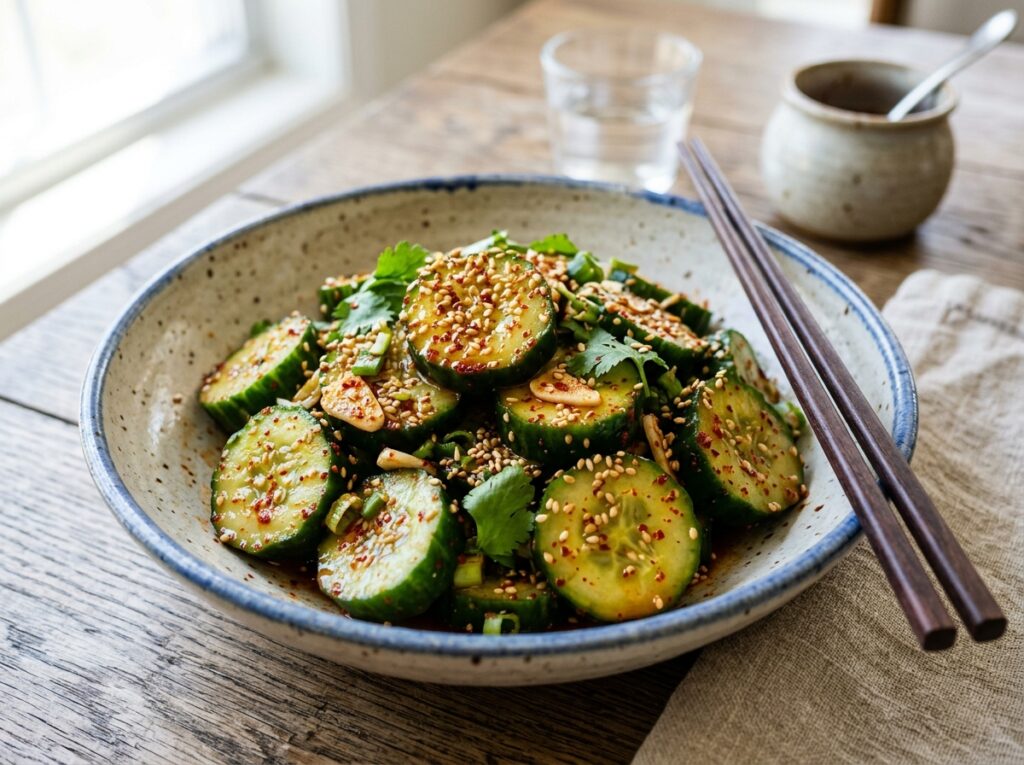
Transfer your dressed cucumbers to a serving bowl. Scatter the sliced scallions over the top. Sprinkle generously with toasted sesame seeds. If you like cilantro, add a handful of chopped leaves for a fresh, herbal note.
Toss one final time, gently, just to distribute the garnishes. The cucumbers should look glossy, vibrant, and impossibly fresh. The red gochugaru should speckle the translucent green slices like a sunset. Garnishing adds the final aromatic layer to this beautiful Cucumber Kimchi Salad.
Serve immediately, or refrigerate for up to an hour before serving. This Cucumber Kimchi Salad is best enjoyed cold, straight from the fridge, where the crunch is at its peak and the flavors are bright and punchy.
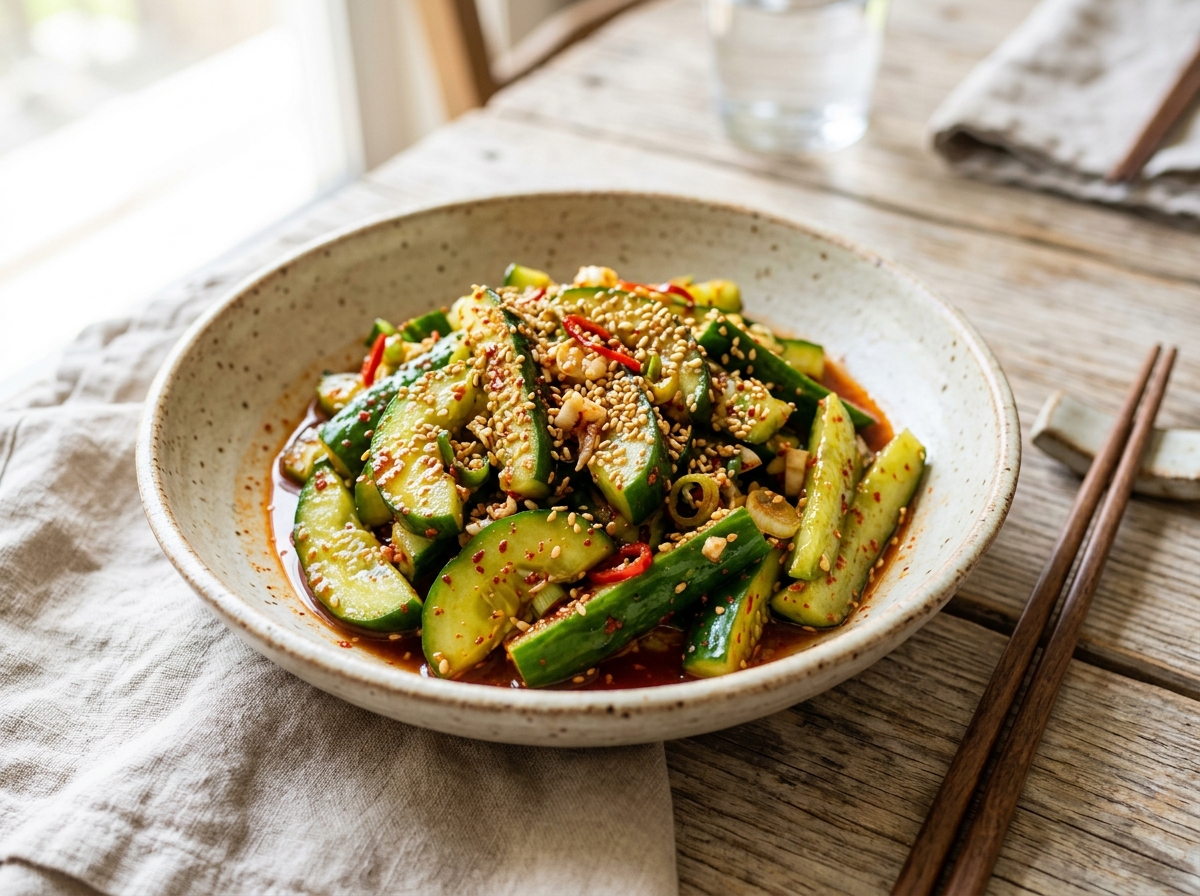

Cucumber Kimchi Salad
Ingredients
Equipment
Method
- Wash cucumbers under cold running water and pat dry with a clean towel.
- If using Persian or English cucumbers, leave skin on. If using thick-skinned American cucumbers, peel completely and scoop out the watery seed core with a spoon.
- For accordion cut: Place a chopstick on each side of cucumber as a guide. Slice at 45-degree angle down to the chopstick, flip, and repeat from opposite side. OR simply slice into thin rounds or half-moons (¼-inch thick).
- Place sliced cucumbers in a large mixing bowl.
- Sprinkle 1 tablespoon coarse kosher salt evenly over cucumbers.
- Toss and massage salt into every piece with your hands.
- Let sit uncovered at room temperature for 10-15 minutes. You will see water beads forming and pooling at the bottom.
- After 15 minutes, gently squeeze handfuls of cucumbers over the sink to release trapped water. Do NOT rinse the cucumbers.
- Transfer squeezed cucumbers to a clean, dry bowl. They should feel firm and slightly translucent.
- In a small bowl, combine gochugaru, sesame oil, rice vinegar, soy sauce, minced garlic, grated ginger, and sugar.
- Stir until mixture forms a thick, fragrant paste. Taste and adjust: add more sugar if too sharp, more soy sauce if flat.
- Pour the gochugaru paste over the drained cucumbers.
- Use your hands or tongs to toss thoroughly, ensuring every cucumber slice is coated in the red paste.
- Transfer to a serving bowl.
- Top with sliced scallions, toasted sesame seeds, and optional cilantro.
- Toss gently one final time.
- Serve immediately chilled, or refrigerate for up to 1 hour before serving for best crunch.
Notes
Chef Mansoor’s Insight
Oi muchim represents the fast-paced brilliance of modern Korean cooking—a dish that delivers maximum flavor in minimum time without sacrificing technique. It is a reminder that fermentation is not always necessary for depth. Sometimes, the quiet science of osmosis and the bold punch of gochugaru are all you need. This Cucumber Kimchi Salad teaches us that speed and precision are not enemies. The ten-minute salt rest, the gentle squeeze, the exact ratio of chili to sesame—these are decisions that respect both tradition and the reality of a busy kitchen. Master this, and you master the art of banchan.
— Chef Mansoor, Flavour Bazar
Nutrition Information (Per Serving, Serves 4)
| Nutrient | Amount |
|---|---|
| Calories | 52 kcal |
| Protein | 1 g |
| Carbohydrates | 6 g |
| Dietary Fiber | 1 g |
| Sugars | 3 g |
| Total Fat | 3 g |
| Saturated Fat | 0.4 g |
| Sodium | 580 mg |
| Cholesterol | 0 mg |
| Vitamin K | 14% DV |
| Hydration Content | High (85%+) |
Keto & Low-Carb Friendly: With only 6g net carbs per serving, this Cucumber Kimchi Salad fits easily into low-carb and keto diets. High in hydration and vitamin K, it is a nutrient-dense side dish.
Note: Nutrition values are estimates and may vary based on cucumber size and ingredient brands.
Food Safety & Storage Guide
| Food Safety Element | Temperature / Guideline |
|---|---|
| Safe refrigeration | Below 40°F / 4°C |
| Danger zone (avoid) | 40–140°F / 4–60°C |
| Maximum fridge storage | 24–48 hours for peak crunch |
| Cross-contamination prevention | Wash all cucumbers and utensils thoroughly |
| Best serving temperature | 35–40°F / 2–4°C (chilled) |
Storage Note: Cucumber Kimchi Salad is best eaten within 24 hours. After that, the cell structure begins to break down and the cucumbers lose their signature crunch. Store in an airtight container in the coldest part of your fridge. Do not freeze—cucumbers turn mushy when thawed.
Raw Vegetable Safety: Always wash cucumbers under running water, even if you plan to peel them. Use a clean cutting board and knife. If serving at a picnic or potluck, keep the salad on ice or in a cooler to prevent bacterial growth.
Storage & Meal Prep Guide
| Storage Method | Duration | Best Practices |
|---|---|---|
| Refrigerator (fully dressed) | 24 hours | Store in airtight container; crunch fades after 1 day |
| Refrigerator (components separate) | 2 days | Keep salted cucumbers and dressing separate; toss just before serving |
| Freezer (not recommended) | — | Cucumbers lose all structure when frozen |
| Best serving method | Serve chilled | Let sit in fridge 30 min before serving for best flavor |
Meal Prep Tip: For maximum freshness, salt and drain the cucumbers up to 4 hours ahead. Keep them refrigerated and undressed. Mix the gochugaru paste separately. Toss together just before serving.
FAQ: Cucumber Kimchi Salad
Can I use regular chili flakes instead of gochugaru?
You can, but the flavor will be completely different. Regular crushed red pepper is spicier, harsher, and lacks the smoky sweetness of gochugaru. For an authentic oi muchim recipe science, gochugaru is essential. If you cannot find it locally, order it online—it is worth it. Using alternative flakes will change the color and profile of your Cucumber Kimchi Salad.
How do I draw moisture out of cucumbers without making them too salty?
Use coarse kosher salt and let the cucumbers rest for exactly 10-15 minutes. Gently squeeze out the water afterward—do not rinse. The residual salt on the surface will balance with the dressing. If you rinse, you lose that seasoning and reintroduce moisture.
Is this the same as traditional fermented kimchi?
No. Traditional kimchi is fermented for days or weeks using a brine with fish sauce, cabbage, and additional vegetables. Cucumber Kimchi Salad (oi muchim) is a quick-pickled side dish that is ready in 15 minutes. It is not fermented, so it does not have the same probiotic benefits, but it delivers bold flavor and crunch instantly.
Can I make this ahead for a party?
Yes, but with a strategy. Salt and drain the cucumbers up to 4 hours ahead. Store them in the fridge, undressed. Make the gochugaru paste separately. Toss everything together 30 minutes before serving for the best texture and flavor.
What cucumbers are best for this recipe?
Persian cucumbers are my top choice—thin skin, tiny seeds, and consistent crunch. English cucumbers work well too. Avoid standard American slicing cucumbers unless you peel them and remove the watery seed core. Kirby cucumbers (pickling cucumbers) also work if you slice them thin.
You Might Also Love These Flavour Bazar Recipes
Cold Peanut Noodle Salad
The perfect pairing for Cucumber Kimchi Salad at any summer gathering
Zesty Cilantro Lime Rice
The perfect side dish pairing for any seafood
Garlic Herb Grilled Potatoes
Another elegant, simple side
Lemon Butter Garlic Shrimp
More seafood science and technique
Crispy Air Fryer Brussels Sprouts with Garlic
Caramelization and Maillard browning applied to vegetables.
Air Fryer Salmon: The Science of the Perfect 15-Minute Recipe
The perfect salmon.
For More Healthy Recipes Visit: flavourbazar.com