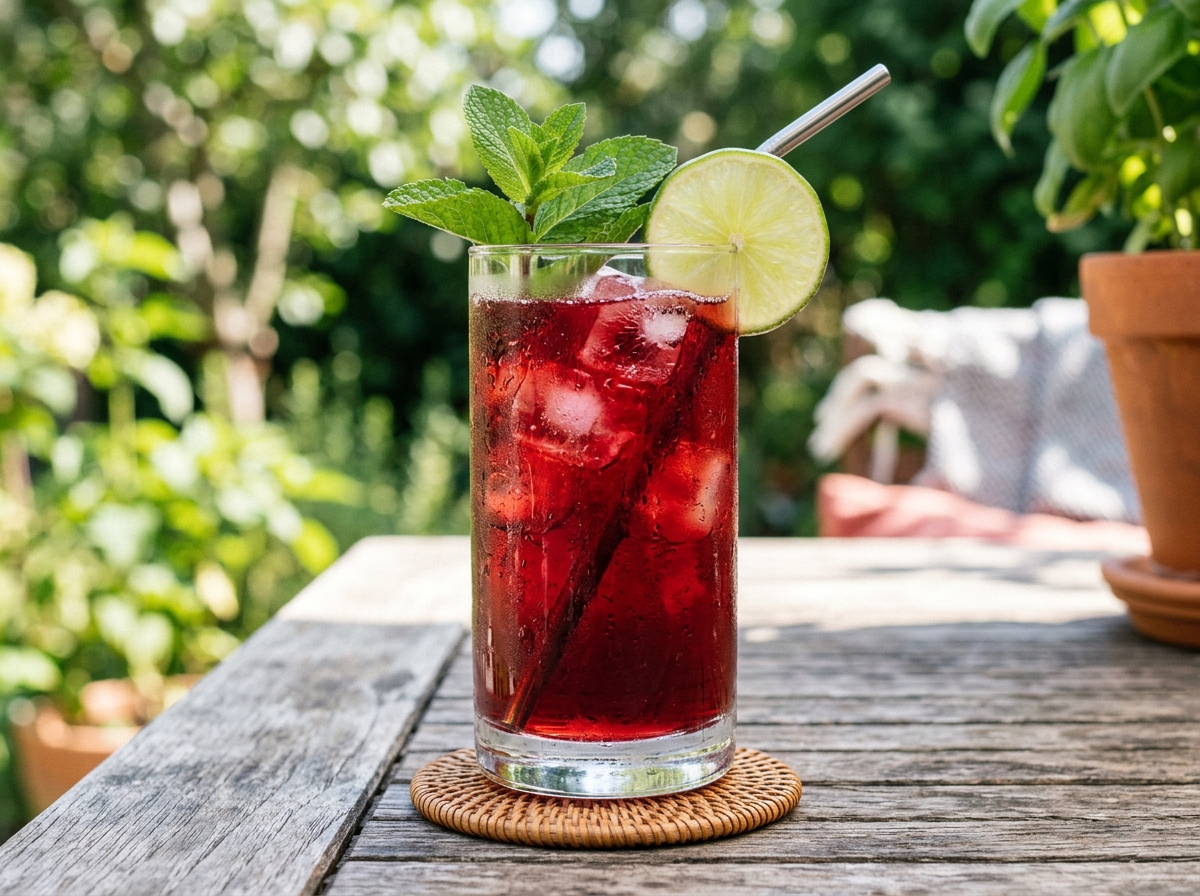
Iced Hibiscus Tea with Honey: The Science of Vivid Extraction
By Chef Mansoor | Flavour Bazar
There is a moment when you pour deeply crimson liquid over crystal-clear ice cubes that feels almost alchemical. The cold makes the color more vivid, the condensation forms instantly on the glass, and the first sip delivers a tart, floral punch that is both refreshing and medicinal. Iced Hibiscus Tea with Honey is not just a drink—it is a carefully calibrated botanical extraction that balances antioxidant power, natural acidity, and sweetness in a way that few beverages can match.
I have calibrated the steep-time and thermal molecular degradation of dried calyces to ensure this Iced Hibiscus Tea with Honey retains its maximum antioxidant payload without extracting bitter tannins. The window for perfection is narrower than you might think. Steep too briefly and the flavor is weak, the color pale. Steep too long or at too high a temperature, and you extract bitter compounds that overpower the natural floral brightness.
This recipe is rooted in the Mexican tradition of Agua de Jamaica, but refined with a scientific approach to extraction, sweetening, and presentation. It is the kind of drink that stops conversations when you bring it to the table—vibrant, healthy, and deeply satisfying on a hot summer day.
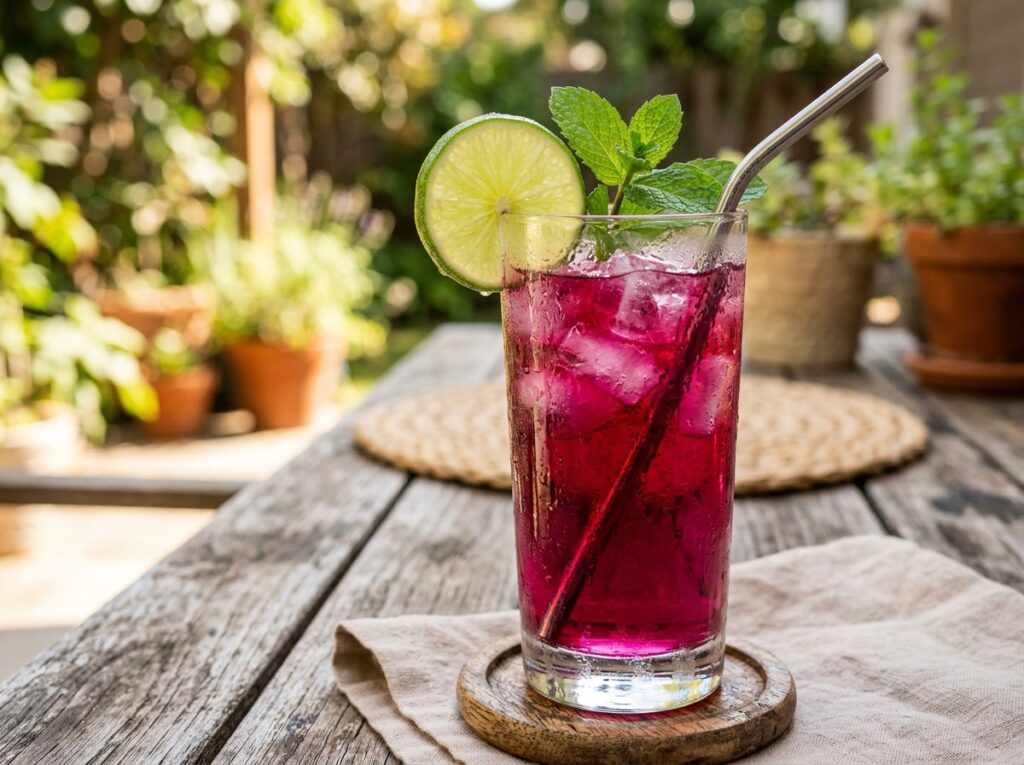
The Science Behind Iced Hibiscus Tea with Honey
The magic of Iced Hibiscus Tea with Honey begins with anthocyanins—the same water-soluble pigments that give blueberries, red cabbage, and red wine their color. In hibiscus flowers (specifically the dried calyces of Hibiscus sabdariffa), anthocyanins are present in high concentrations, which is why the tea develops that intense ruby-red hue.
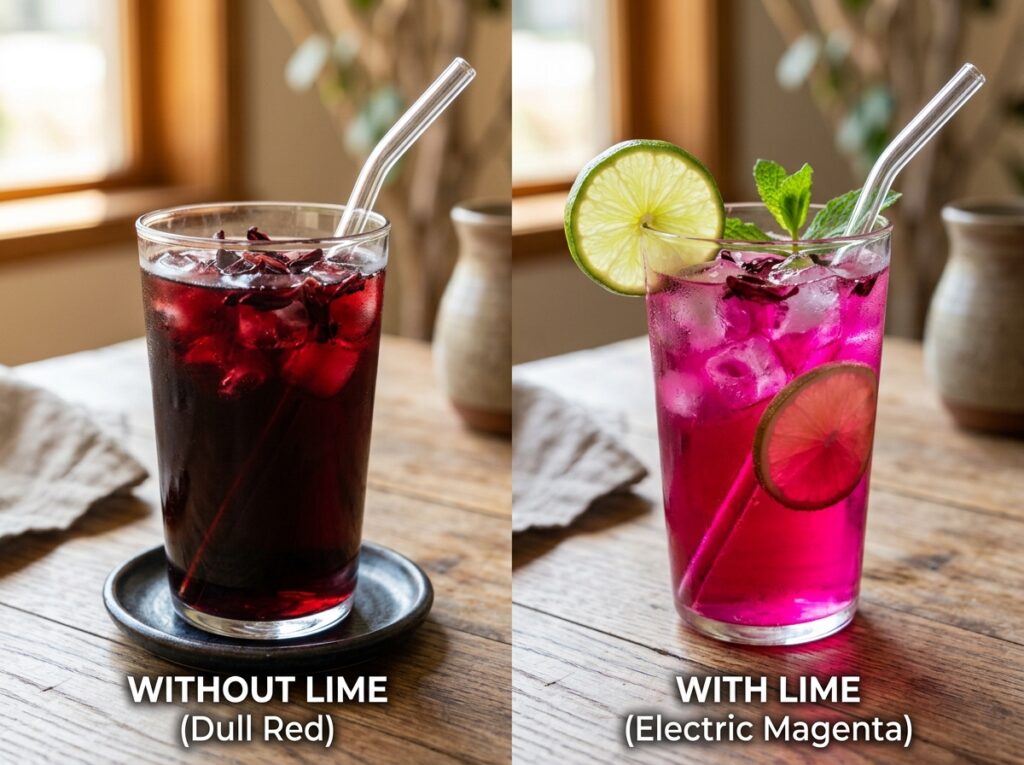
Anthocyanins are pH-sensitive chromophores. In acidic environments, they appear bright red to magenta. In neutral or alkaline environments, they shift toward purple or even blue. This is why adding lime or lemon juice to Iced Hibiscus Tea with Honey does not just balance the flavor—it transforms the color from a dull burgundy to an electric, almost neon magenta. The citric acid lowers the pH, intensifying the visual appeal.
But anthocyanins are also heat-sensitive. At temperatures above 200°F, prolonged exposure begins to degrade these pigments and break down the delicate floral compounds that give hibiscus its characteristic flavor. This is why you should never boil hibiscus flowers continuously. Instead, you bring water to a near-boil (195-200°F), remove it from heat, and steep the flowers in the residual warmth.
Anthocyanin Yield∝Water Temp (195∘F−200∘F)×Steep Time (15 mins)
The second scientific consideration in Iced Hibiscus Tea with Honey is the honey itself. Raw, unfiltered honey contains beneficial enzymes like diastase and invertase, as well as trace minerals, pollen, and antioxidants. But these compounds are heat-sensitive. At temperatures above 120°F, enzyme activity begins to decline. Above 140°F, most of the beneficial properties are destroyed.
This creates a dilemma: honey dissolves more easily in warm liquid, but adding it to boiling tea kills what makes raw honey special. The solution is the honey temperature window—cooling the tea to 110-120°F before adding honey. At this temperature, the honey dissolves smoothly without crystallizing, but the enzymes remain intact.
In simple terms: you are maximizing color, flavor, and health benefits by controlling extraction temperature and sweetening timing.
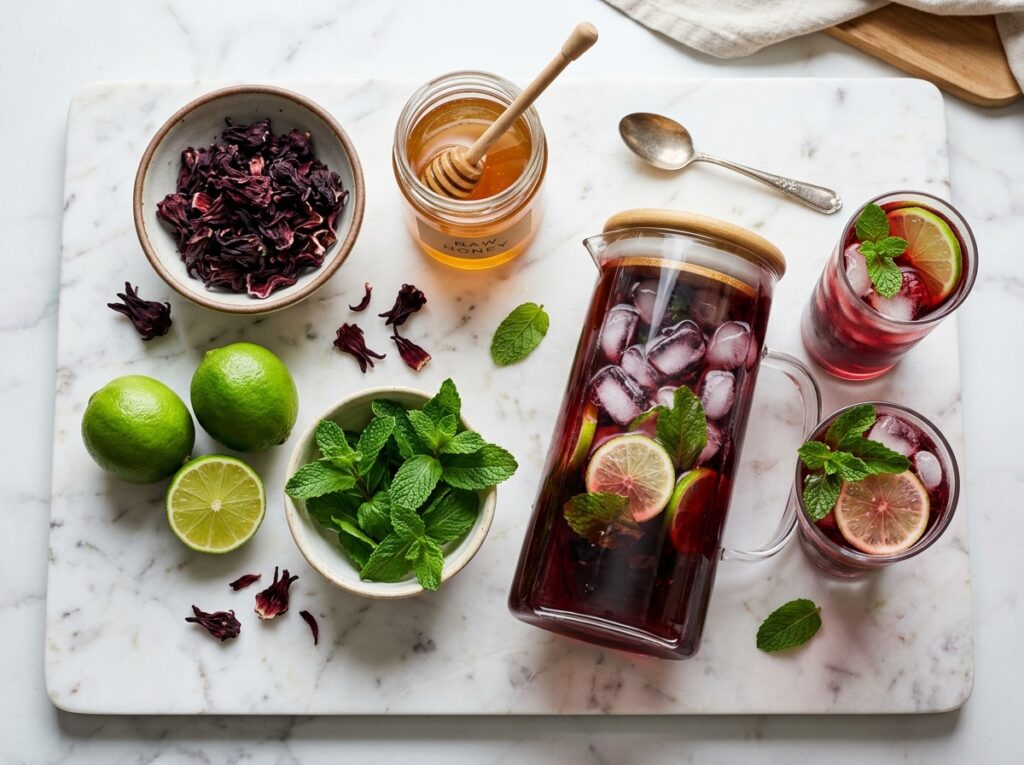
Pro Buying Guide: What You Need for the Best Iced Hibiscus Tea with Honey (USA)
The Hibiscus Flowers
The star ingredient is dried hibiscus flowers, also called Flor de Jamaica. You want whole, dried calyces—not powdered or ground. Whole flowers release flavor more gradually and produce a cleaner, brighter tea.
Trader Joe’s sells organic dried hibiscus in their tea section. Whole Foods carries it in the bulk herb area or packaged near specialty teas. If you live near a Hispanic grocery store or carnicería, you will often find large bags of high-quality hibiscus at a fraction of the price.
Look for flowers that are deep red to purple, not brown. Brown indicates oxidation and age, which means weaker flavor and color.
The Honey
For Iced Hibiscus Tea with Honey, I recommend raw, unfiltered honey like Nature Nate’s (available at Walmart, Target, and most supermarkets) or local wildflower honey from farmers’ markets.
Raw honey has a more complex flavor and retains the enzymes and pollen that contribute to health benefits.
Avoid ultra-filtered, pasteurized honey—it is essentially just fructose syrup with no functional difference from table sugar.
The Citrus
Fresh limes are traditional in Agua de Jamaica, but lemons work beautifully too. The key is the citric acid, which brightens flavor and shifts the tea’s color to that stunning magenta.
Optional Add-Ins
- Fresh mint: Adds cooling aromatics
- Ginger slices: Spicy, warming contrast
- Cinnamon stick: Warm spice depth
- Orange zest: Citrus complexity
The Tools
- Large Pot: For heating water
- Fine-Mesh Strainer or Cheesecloth: Essential for removing all hibiscus debris
- Glass Pitcher: For storing and serving (at least 2 quarts)
- Whisk or Spoon: For dissolving honey
- Thermometer (optional but helpful): To check honey-safe temperature
Ingredients for Iced Hibiscus Tea with Honey
| Ingredient | US Customary | Metric |
|---|---|---|
| Dried hibiscus flowers (Flor de Jamaica) | 1 cup loosely packed | ~30g |
| Water | 6 cups | 1.4 liters |
| Raw honey | ½ cup | 120ml (~170g) |
| Fresh lime juice | ¼ cup | 60ml |
| Lime zest (optional) | 1 teaspoon | 2g |
| Fresh mint leaves (optional) | 10-12 leaves | ~5g |
| Ice cubes | As needed | As needed |
| Lime wheels for garnish | 2-3 limes | — |
Yield: About 6 cups (1.5 liters) concentrated tea, serves 6-8 over ice
Common Mistakes When Making Iced Hibiscus Tea with Honey
| The Mistake | What Actually Happens | The Fix |
|---|---|---|
| Boiling the hibiscus flowers continuously | Extracts bitter tannins, degrades anthocyanins, flavor becomes harsh | Bring water to near-boil, remove from heat, then steep flowers 15 min. |
| Adding honey to boiling water | Destroys beneficial enzymes and antioxidants in raw honey | Cool tea to 110-120°F before adding honey. |
| Using pre-packaged stale tea bags | Weak flavor, pale color, no vibrant extraction | Use whole dried hibiscus flowers from bulk bins or specialty stores. |
| Not straining the debris thoroughly | Gritty texture, cloudy appearance, sediment at bottom of glass | Strain through fine-mesh strainer or double layer of cheesecloth. |
| Diluting too much with ice | Weak, watery flavor; tea becomes insipid | Make tea concentrated, use large ice cubes that melt slowly. |
| Omitting the citrus element (lime/lemon) | Dull red color, unbalanced flavor, too tart without brightness | Always add fresh lime or lemon juice—it shifts pH and color. |
| Steeping for too short a time | Pale, weak tea with minimal antioxidant extraction | Steep for full 15 minutes to maximize anthocyanin yield. |
| Storing in plastic or metal containers | Off-flavors, color degradation, acidic tea reacts with metal | Always use glass pitcher for storage. |
How to Make Iced Hibiscus Tea with Honey: The Method
Step 1: The Calyx Rinse
Place the dried hibiscus flowers in a fine-mesh strainer and rinse them briefly under cool running water. This removes any dust or debris from processing and storage. You do not need to scrub them—just a quick rinse.
This step ensures your Iced Hibiscus Tea with Honey has a clean, pure flavor without any off-notes from handling or packaging.
Step 2: The Off-Heat Steep
In a large pot, bring 6 cups of water to a rolling boil, then immediately remove from heat. Add the rinsed hibiscus flowers to the hot water. Do not return the pot to the heat.
Cover the pot with a lid and let the flowers steep for exactly 15 minutes. This is the optimal extraction time for Iced Hibiscus Tea with Honey. At 15 minutes, you have maximum anthocyanin yield, full flavor development, and minimal bitterness.
During this time, the water will transform from clear to a deep, wine-red color. The calyces will unfold and release their pigments, acids, and aromatic compounds.
If you steep for less than 10 minutes, the flavor will be weak. If you steep for more than 20 minutes, you will start to extract bitter tannins that overpower the floral notes.
Step 3: The Strain and Cool
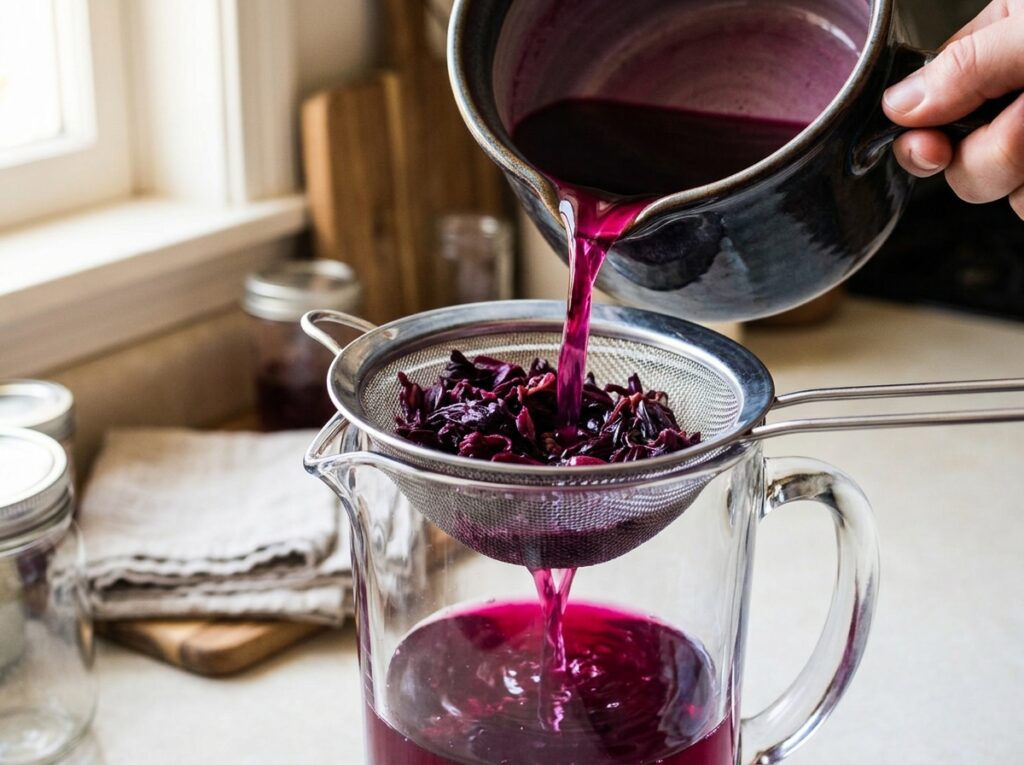
After 15 minutes, strain the tea through a fine-mesh strainer into a glass pitcher, pressing gently on the hibiscus flowers to extract all the liquid. Discard the spent flowers—they have given everything they have to offer.
At this point, the tea is still very hot—around 180-190°F. You need to cool it down to the honey-safe zone before adding sweetener.
Let the tea sit at room temperature for 10-15 minutes, or place the pitcher in an ice bath (a larger bowl filled with ice water) and stir occasionally. You are aiming for a temperature of 110-120°F (43-49°C). If you have a thermometer, check it.
If not, you should be able to hold your hand comfortably against the side of the pitcher without burning.
This is the critical window for adding honey to Iced Hibiscus Tea with Honey without destroying its beneficial enzymes.
Step 4: The Honey Whisk
Once the tea has cooled to 110-120°F, add the raw honey. Use a whisk or long spoon to stir vigorously until the honey is completely dissolved. Raw honey is thicker than processed honey, so it may take a minute or two of stirring.
Taste the tea at this point. It should be pleasantly sweet with a bright, tart edge. If you prefer it sweeter, add more honey in small increments (2 tablespoons at a time) and stir to dissolve.
Some people prefer Iced Hibiscus Tea with Honey less sweet, allowing the natural tartness of the hibiscus to dominate. Adjust to your preference—the beauty of making it at home is full control over sweetness.
Step 5: The pH Shift with Citrus
Add the fresh lime juice and lime zest (if using) to the sweetened tea. Stir well. Watch as the color shifts—what was a deep, dark red will brighten noticeably, turning into a vivid, almost electric magenta.
This is the anthocyanin pH response in action. The citric acid lowers the pH of the tea, and the pigments respond by shifting toward a brighter, more saturated hue.
The lime juice also balances the sweetness of the honey and adds aromatic complexity. Without it, Iced Hibiscus Tea with Honey can taste one-dimensional.
If you are adding fresh mint, tear the leaves gently to release their oils and stir them into the tea. Let the pitcher sit for another 5 minutes to infuse the mint.
Step 6: The Chill and Ice Presentation
Refrigerate the Iced Hibiscus Tea with Honey for at least 2 hours, or until thoroughly chilled. The tea will continue to develop flavor as it sits.
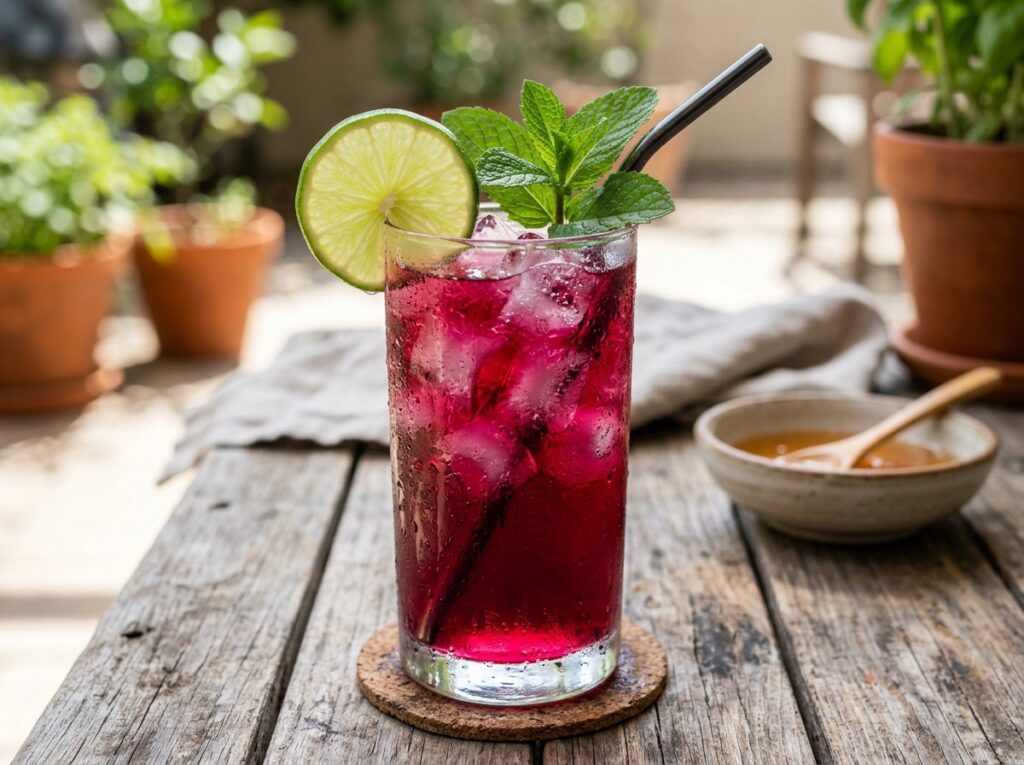
When ready to serve, fill tall glasses with ice cubes—the larger the better, as they melt more slowly and dilute the tea less. Pour the chilled hibiscus tea over the ice, filling the glass about three-quarters full.
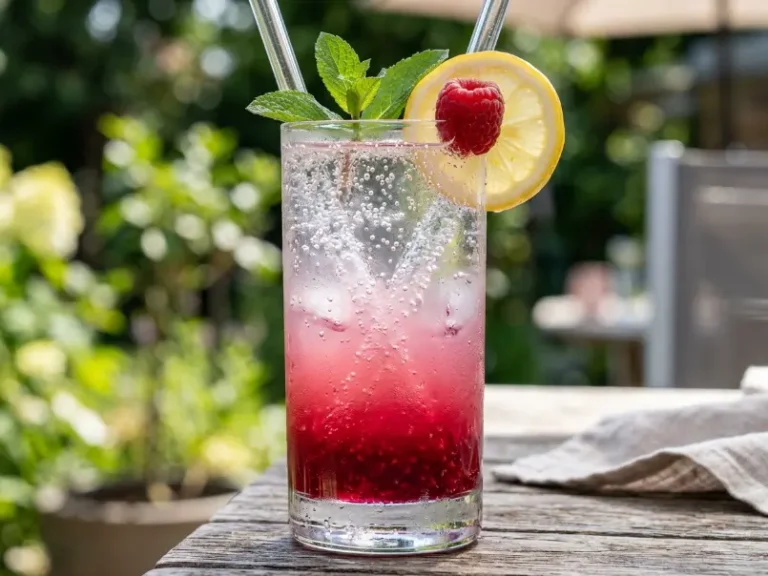
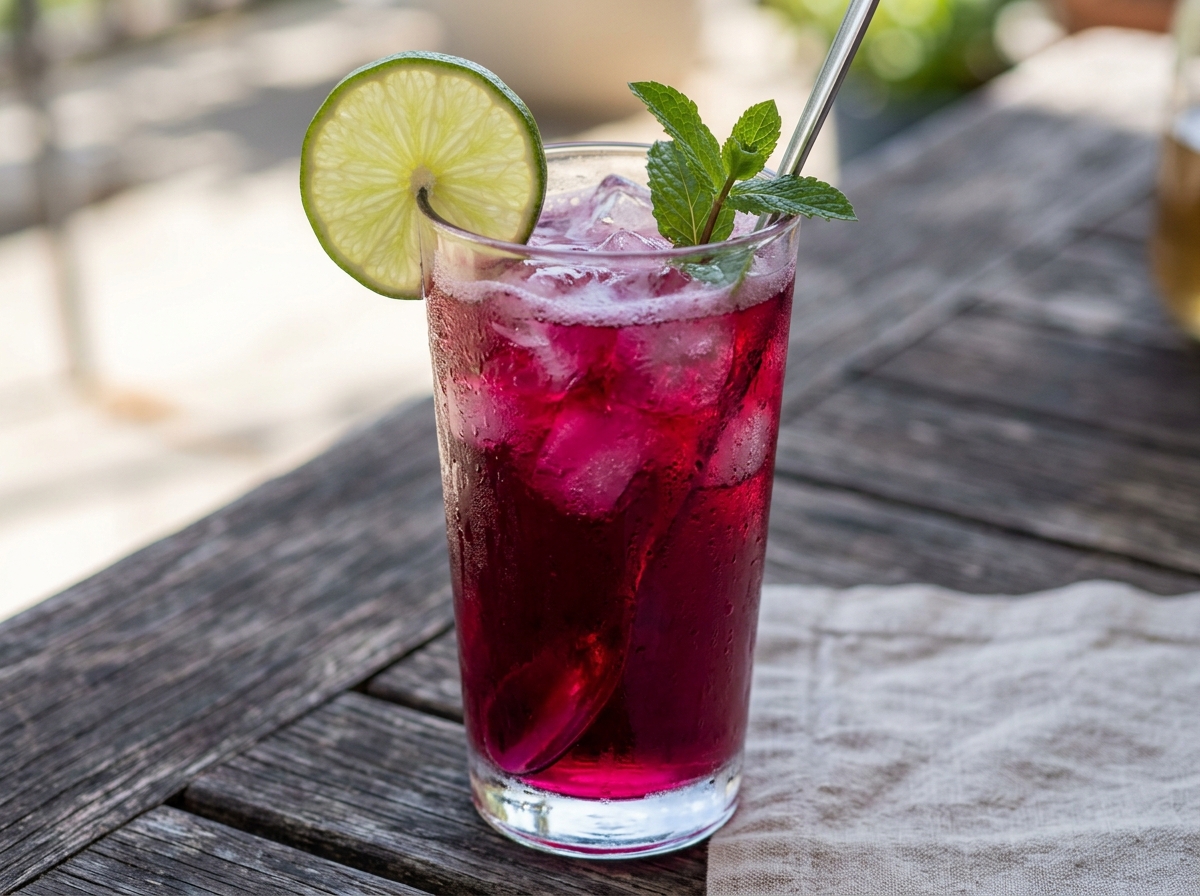
Garnish each glass with a lime wheel and a sprig of fresh mint. The contrast of the deep magenta tea, the bright green mint, and the pale green lime is visually stunning.
Serve immediately and watch as condensation forms on the outside of the glass—a sure sign of a cold, refreshing drink.
Why the Honey Temperature Window Matters for Iced Hibiscus Tea with Honey
Raw honey is not just a sweetener—it is a complex mixture of sugars, enzymes, amino acids, pollen, and trace minerals. The enzymes, particularly diastase and invertase, are what separate raw honey from pasteurized, processed honey.
These enzymes are fragile. Research shows that at temperatures above 120°F, enzyme activity begins to decline rapidly. At 140°F and above, the enzymes denature completely, and raw honey loses much of what makes it special.
By cooling the tea to 110-120°F before adding honey, you preserve these enzymes while still taking advantage of honey’s superior solubility in warm liquid. In cold liquid, honey tends to sink to the bottom and form sticky clumps that are difficult to dissolve.
In boiling liquid, it dissolves instantly but loses its functional benefits.
This is the sweet spot—literally—for making Iced Hibiscus Tea with Honey that is both delicious and nutritionally optimized.

Iced Hibiscus Tea with Honey
Ingredients
Equipment
Method
- Place the dried hibiscus flowers in a fine-mesh strainer and rinse briefly under cool running water to remove any dust or debris from processing. This ensures a clean, pure flavor.
- In a large pot, bring 6 cups of water to a rolling boil over high heat. Once boiling, immediately remove the pot from heat. Do not continue boiling.
- Add the rinsed hibiscus flowers to the hot water. Cover the pot with a lid and let steep for exactly 15 minutes. Do not return to heat. The water will transform from clear to deep wine-red as the anthocyanins extract. This timing maximizes flavor and color while avoiding bitter tannins.
- After 15 minutes, strain the tea through a fine-mesh strainer into a glass pitcher, pressing gently on the hibiscus flowers to extract all liquid. Discard the spent flowers. The tea will be deep red and very hot (180-190°F).
- Let the tea cool at room temperature for 10-15 minutes, or place the pitcher in an ice bath (larger bowl filled with ice water) and stir occasionally. You are aiming for 110-120°F (43-49°C)—warm enough to dissolve honey easily but cool enough to preserve its beneficial enzymes. The pitcher should feel comfortably warm to the touch, not hot.
- Once cooled to the proper temperature, add the raw honey to the tea. Whisk or stir vigorously until completely dissolved, about 1-2 minutes. Raw honey is thicker than processed honey, so be patient. Taste and adjust sweetness if desired.
- Stir in the fresh lime juice and lime zest (if using). Watch as the color shifts from deep red to a vibrant, electric magenta—this is the anthocyanin pH response in action. The citric acid brightens the color and balances the sweetness.
- If using fresh mint, gently tear the leaves to release their oils and stir into the tea. Let sit for 5 minutes to infuse the mint flavor.
- Refrigerate the tea for at least 2 hours until thoroughly chilled. The flavor will continue to develop and improve as it sits.
- Fill tall glasses with ice cubes—use large cubes if possible, as they melt more slowly and dilute the tea less. Pour the chilled hibiscus tea over the ice, filling glasses about three-quarters full. Garnish each glass with a lime wheel and fresh mint sprig. Serve immediately.
Notes
This is critical for preserving raw honey’s beneficial enzymes (diastase, invertase) and antioxidants. At temperatures above 120°F, enzyme activity declines rapidly. Above 140°F, enzymes denature completely. By cooling the tea to 110-120°F before adding honey, you get easy dissolution without destroying what makes raw honey special. In cold liquid, honey clumps and sinks. In boiling liquid, it dissolves but loses benefits. This is the sweet spot. The pH Color Shift Secret:
Hibiscus contains anthocyanins, which are natural pH indicators. In acidic environments, they appear bright red to magenta. In neutral/alkaline environments, they shift toward purple or blue. Adding lime juice lowers the pH and creates that stunning electric magenta color. This is chemistry you can see—and it makes the drink Instagram-worthy. Why Off-Heat Steeping:
Boiling hibiscus flowers continuously extracts bitter tannins and degrades the delicate anthocyanins and aromatic compounds. Steeping off-heat at 195-200°F for 15 minutes maximizes flavor and color while keeping the tea bright and floral, not harsh. Sweetness Adjustments:
The recipe uses ½ cup honey for 6 cups tea, which creates a moderately sweet drink. For less sweet, use ⅓ cup honey. For sweeter (more like traditional Agua de Jamaica), use ⅔ cup. Adjust to your preference. Where to Buy Hibiscus:
Look for whole dried hibiscus flowers (Flor de Jamaica) at Trader Joe’s, Whole Foods bulk section, Hispanic grocery stores, or online. Avoid pre-ground hibiscus or very old, brown flowers—they give weak flavor and color. Make It Concentrated:
For parties, make the tea more concentrated (1½ cups hibiscus to 6 cups water) and serve over more ice, allowing guests to dilute to their preference. Storage Improves Flavor:
The tea tastes even better after 12-24 hours in the fridge as the flavors meld and deepen. Mint Timing:
Add mint to the pitcher for subtle flavor, or muddle fresh mint directly in each glass for stronger mint presence. Health Benefits:
Hibiscus tea is rich in vitamin C, anthocyanins, and polyphenols. Studies suggest it may support healthy blood pressure and cholesterol levels. However, those on blood pressure medication should consult their doctor before consuming large amounts regularly. Pregnancy Caution:
Pregnant women should limit hibiscus consumption as some studies suggest it may affect hormone levels.
Chef Mansoor’s Insight
Iced Hibiscus Tea with Honey bridges two worlds that rarely meet in modern American kitchens: ancient botanical medicine and pure culinary joy.
Long before we had sports drinks and vitamin waters, people in Africa, the Caribbean, and Mexico relied on hibiscus infusions to cool the body, support cardiovascular health, and quench thirst in brutal heat. This is not a trend. This is tradition distilled into a glass. What I love most is how simple it is—just flowers, water, honey, and lime—yet how profound the chemistry becomes when you pay attention to temperature, time, and pH. It reminds me that the best recipes are not the most complicated. They are the ones that honor the ingredient’s nature and let science amplify what is already there.
— Chef Mansoor, Flavour Bazar
Nutrition Information for Iced Hibiscus Tea with Honey (Per Serving, 8 Servings)
| Nutrient | Amount |
|---|---|
| Calories | 70 kcal |
| Total Fat | 0g |
| Saturated Fat | 0g |
| Trans Fat | 0g |
| Cholesterol | 0mg |
| Sodium | 5mg |
| Total Carbohydrates | 18g |
| Dietary Fiber | 0g |
| Sugars | 17g |
| Protein | 0g |
| Vitamin C | 15% DV |
| Iron | 4% DV |
| Calcium | 1% DV |
| Antioxidants (ORAC value) | High (est. 2,500-3,000 units) |
Note: Nutrition calculated for 8-ounce serving with honey. Hibiscus tea contains no caffeine and is naturally vegan and gluten-free. Antioxidant values vary based on hibiscus quality and steep time.
Iced Hibiscus Tea with Honey is rich in vitamin C, anthocyanins, and polyphenols—all powerful antioxidants. Studies suggest that regular consumption of hibiscus tea may support healthy blood pressure levels and improve cholesterol profiles.
Health Benefits and Safety Considerations for Iced Hibiscus Tea with Honey
Hibiscus tea has been studied extensively for its cardiovascular benefits. The anthocyanins and other polyphenols in hibiscus have been shown to support healthy blood pressure levels, particularly in people with mild hypertension.
However, because hibiscus can have a mild blood pressure-lowering effect, individuals on blood pressure medication should consult their healthcare provider before consuming large amounts of Iced Hibiscus Tea with Honey regularly.
Pregnant women should also limit hibiscus consumption, as some studies suggest it may affect hormone levels.
For most people, Iced Hibiscus Tea with Honey is a safe, healthy, and hydrating beverage that can be enjoyed daily.
USDA Food Safety Note: Hibiscus tea is acidic (pH around 2.5-3.0), which inhibits bacterial growth naturally. However, once sweetened with honey and stored, it should be refrigerated and consumed within 5-7 days.
Storage Guide for Iced Hibiscus Tea with Honey
| Storage Method | Duration | Best Practices |
|---|---|---|
| Refrigerator (glass pitcher) | 5-7 days | Store covered. Flavor intensifies over first 24 hours. |
| Freezer (ice cubes) | 3 months | Pour into ice cube trays. Use hibiscus ice cubes in drinks. |
| Room temperature | Not recommended | Sweetened tea can ferment or develop off-flavors. |
Storage Tips:
Always store Iced Hibiscus Tea with Honey in a glass pitcher or bottle—never metal, which can react with the acidic tea. Keep it covered to prevent absorption of refrigerator odors.
The flavor actually improves after 12-24 hours in the fridge as the honey and citrus meld with the hibiscus.
If you want to make a large batch, you can freeze the concentrated tea (before adding honey) in ice cube trays, then thaw and sweeten as needed.
Frequently Asked Questions About Iced Hibiscus Tea with Honey
Is Iced Hibiscus Tea with Honey caffeinated?
No. Hibiscus is an herbal infusion, not true tea (Camellia sinensis), so it contains zero caffeine. This makes it perfect for evening drinking or for people avoiding caffeine.
Can I use dried hibiscus tea bags instead of whole flowers?
You can, but whole flowers give better flavor, color, and antioxidant extraction. If using tea bags, use 6-8 high-quality bags and follow the same steeping method.
What if I don’t have raw honey—can I use regular honey?
Yes, though you will lose some of the health benefits. Regular honey is pasteurized, which means the enzymes are already destroyed. You can add it at any temperature.
Can I make this without honey (sugar-free)?
Absolutely. Hibiscus tea is naturally tart, so you can enjoy it unsweetened, or use a sugar substitute like stevia, monk fruit, or agave syrup. Adjust to taste.
What is Agua de Jamaica?
Agua de Jamaica is the traditional Mexican name for hibiscus tea. It is one of the most popular aguas frescas in Mexico and Central America. This recipe is an adaptation with a focus on honey as the sweetener.
Can I make this hot instead of iced?
Yes. Follow the same steeping method, add honey once the tea cools to 110-120°F, and serve warm. Hot hibiscus tea is soothing and medicinal.
Why does my tea taste bitter?
You likely steeped it for too long or at too high a temperature. Keep steep time to 15 minutes and remove from heat before steeping.
Related Recipes You Will Love on Flavour Bazar
If you enjoyed this Iced Hibiscus Tea with Honey, explore these complementary recipes:
Blueberry Buttermilk Pancakes
More anthocyanin pigment science in breakfast form
Strawberry Shortcake: The Science of the Perfect Crumb
Learn fat-gluten interaction in biscuits
The BEST BBQ Chicken Pizza: The Science of the Smoky Slice
Dough fermentation and high-heat baking
Buttermilk Biscuits: The Science of Flaky Layers — Deep dive into lamination and cold fat technique
Watermelon Mint Cooler: The Science of Summer/Hydration
The perfect bright pairing for a rich slice
For More Healthy Recipes Visit: flavourbazar.com