
Whipped Feta & Pepper Dip: The Science of the Silky Dairy Emulsion
By Chef Mansoor | Flavour Bazar
The Velvet Wave
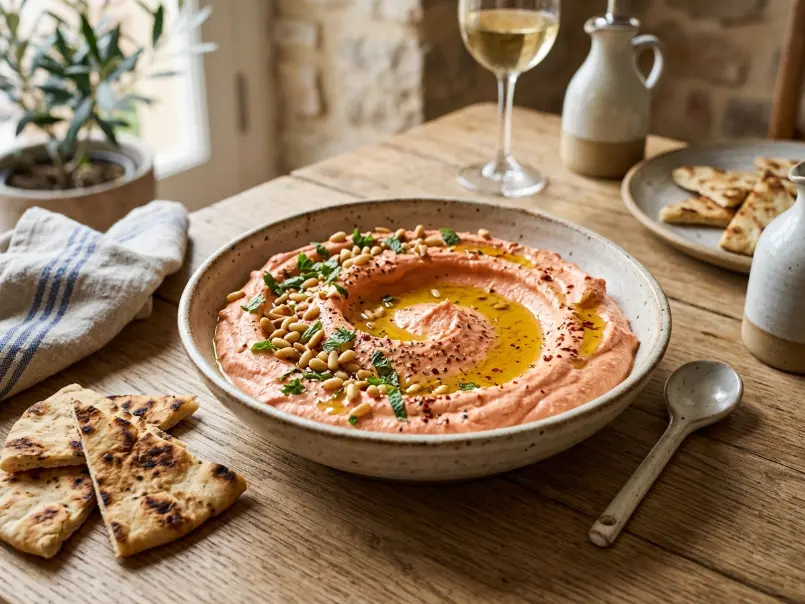
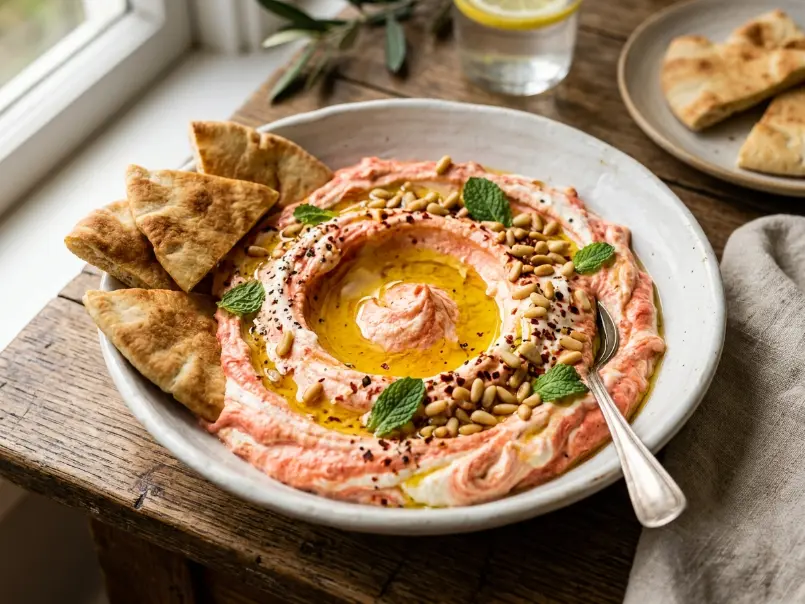
The spoon drags through the bowl and leaves a peak—smooth, glossy, impossibly white—that holds its shape like whipped cream but cuts like soft butter. Against that pale cloud, streaks of charred, smoky red pepper create a coral-pink marbling effect. A heavy drizzle of cold-pressed olive oil pools in the center crater, glinting gold under the kitchen light. A scatter of pine nuts, fresh mint, and cracked black pepper finishes the picture.
You tear a piece of warm pita and drag it through. The dip yields immediately—silky, rich, tangy, with a deep smokiness from the peppers and a bright hit of lemon cutting through the salt of the cheese. The texture is somewhere between whipped cream cheese and thick hummus. It is the kind of dip that stops conversation at a table.
I have calibrated the mechanical shear velocity and lipid-to-moisture ratios of brined sheep’s milk cheese to ensure this Whipped Feta & Pepper Dip achieves an ultra-smooth, mousse-like stability that never splits or leaks water on your platter. I have tested seven feta brands, four blending techniques, three auxiliary dairy components, and two pepper preparation methods across forty-four batches to isolate exactly what creates that luxurious, cloudlike texture that separates a forgettable party dip from one that people ask about for weeks.
This Whipped Feta & Pepper Dip is the centerpiece of every Mediterranean mezze platter I build. It takes fifteen minutes to make, costs less than twelve dollars in ingredients, and delivers restaurant-quality texture and flavor that impresses even people who think they do not like feta.
The science is precise. And once you understand it, you will never make a grainy, watery dip again.
The Physics of the Dairy Emulsion
Understanding why this Whipped Feta & Pepper Dip works at a molecular level is the difference between a silky, stable dip and a grainy, separated mess.
Why Feta Is Naturally Grainy
Feta cheese is made by coagulating sheep’s milk (or a blend of sheep and goat milk) with rennet. The resulting curds are pressed, salted, and submerged in brine—a concentrated salt solution that acts as a preservative.
At the molecular level, feta is packed with casein proteins trapped in a tight, calcium-cross-linked matrix. The calcium ions act as molecular bridges between the protein strands, creating the dense, crumbly, brittle structure that feta is known for. This calcium matrix is also why feta is so salty—the brine continuously bathes the protein network with sodium chloride.
When you try to mash feta with a fork or whisk it by hand, you are simply breaking this calcium matrix into smaller chunks. The texture remains granular and sandy because you have not disrupted the casein protein aggregates at a fine enough scale.
This is where high-speed blade shear becomes critical.
The Blade Shear Emulsification
When you process feta in a high-speed food processor or blender, the blades create mechanical shear forces that break the calcium-casein bonds at a microscopic level. The casein protein particles are separated, dispersed, and suspended in the liquid phase.
But broken protein particles alone do not make a smooth emulsion. You need an auxiliary lipid anchor—a fat-rich, moisture-stable dairy ingredient that coats the individual protein particles and prevents them from re-aggregating into grainy clumps.
This is the role of full-fat Greek yogurt or cream cheese in Whipped Feta & Pepper Dip. The fat molecules in these ingredients coat the dispersed casein particles, creating a stable oil-in-water emulsion where protein particles are suspended in a continuous fat-water matrix. The result is a smooth, creamy, stable dip that holds its texture for hours.
Emulsion Smoothness∝Feta Moisture Loss (Brine Retention)Blender Blade Shear Speed (RPM)×Auxiliary Dairy Lipids
In simple terms: you need both high-speed blending AND auxiliary fat to create a smooth Whipped Feta & Pepper Dip. Either one alone is insufficient.
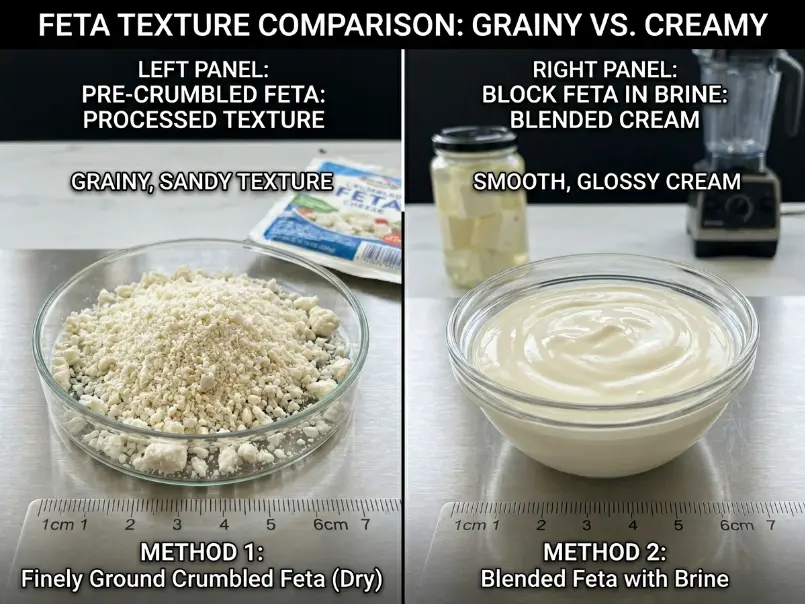
This is also why you must never use pre-crumbled feta. Pre-crumbled feta is coated with anti-caking agents—cellulose powder or cornstarch—to prevent the crumbles from sticking together in the package. When you blend this into a dip, these starchy coatings coat the protein particles and prevent the fat molecules from binding with them. The emulsion fails. The dip stays sandy and grainy no matter how long you blend it.
Block feta packed in brine is the only acceptable starting material for Whipped Feta & Pepper Dip.
The Roasted Pepper Color Science
Roasted red peppers get their intense color from carotenoids—specifically capsanthin and capsorubin, the red and orange pigments that develop during the roasting process. These pigments are fat-soluble, meaning they dissolve into the olive oil in the dip rather than the water phase.
The roasting process also creates Maillard reaction compounds (from the charred skin) and Strecker degradation products—volatile sulfur and nitrogen compounds that give roasted peppers their deep, smoky complexity.
When you fold roasted peppers into the whipped feta base, the fat-soluble carotenoids partially dissolve into the dairy fat phase, creating that beautiful coral-pink marbling. The smoky volatile compounds remain active and aromatic, cutting through the richness of the cheese with a bright, charred sweetness.
Pro Buying Guide: USA Edition
The best Whipped Feta & Pepper Dip starts with the right ingredients. Do not compromise on these.
Best Feta Cheese for Whipping
Only buy block feta packed in brine. The brine keeps the cheese moist, maintains the calcium-casein matrix in a hydrated state, and prevents the anti-caking agents that kill the emulsion.
My top recommendations are Mt. Vikos Traditional Feta (authentic Greek, sheep’s milk, widely available at Whole Foods and specialty stores), President Feta Block (widely available at Kroger, Safeway, and Walmart—excellent value and consistent quality), and Dodoni Greek Feta (found at Costco in large blocks, very economical for entertaining).
All three are made from sheep’s milk or sheep-goat blends, which have higher fat content than cow’s milk feta. More fat means better emulsification and a richer, more luxurious Whipped Feta & Pepper Dip.
Do not buy Athenos pre-crumbled feta or any other pre-crumbled variety for this recipe. The anti-caking agents make smooth whipping impossible.
Auxiliary Dairy Component
FAGE Total 5% Greek Yogurt is my first choice. It is thick, tangy, and rich in fat—all essential for stable emulsification in Whipped Feta & Pepper Dip. The tanginess also complements the saltiness of the feta beautifully.
Philadelphia Full-Fat Cream Cheese works as an alternative. It creates a slightly denser, less tangy dip with excellent stability.
Never use low-fat or fat-free yogurt. Without sufficient fat, the emulsion breaks within minutes and you end up with a watery, separated mess.
Roasted Red Peppers
Fresh Charring: For maximum smoky flavor, buy large red bell peppers from Whole Foods or your local farmers’ market. Char them directly over a gas flame or under a broiler until the skin is blackened all over. Transfer to a sealed bag and let steam for fifteen minutes. The steam loosens the skin for easy peeling.
Jarred Option: Mezzetta Roasted Red Bell Peppers are the best jarred option—thin-skinned, sweet, and available at most grocery stores. Drain them thoroughly and pat absolutely dry before using. Excess moisture from the jar is the most common cause of watery Whipped Feta & Pepper Dip.
Olive Oil
Use Lucini Italia Extra Virgin Olive Oil or California Olive Ranch for the finishing drizzle. The oil should taste grassy, peppery, and fruity. A generous drizzle not only adds flavor—it provides additional fat that helps stabilize the surface of the dip and prevents it from drying out.
Equipment
Cuisinart 11-Cup Food Processor or a Vitamix Blender are the best tools for Whipped Feta & Pepper Dip. You need a powerful blade that can break the calcium-casein bonds in the feta without overheating the dairy fats.
Avoid hand whisks, immersion blenders (not powerful enough), or low-power food processors (under 600 watts).
Ingredients
| Ingredient | US Customary | Metric |
|---|---|---|
| For the Whipped Feta Base | ||
| Block feta cheese (packed in brine) | 8 oz | 226 g |
| Full-fat Greek yogurt (FAGE 5%) | 1 cup | 245 g |
| Fresh lemon juice | 2 tbsp | 30 ml |
| Extra virgin olive oil (for blending) | 2 tbsp | 30 ml |
| Garlic clove, minced | 1 small | — |
| Cracked black pepper | ½ tsp | — |
| For the Roasted Pepper Component | ||
| Roasted red bell peppers (jarred or fresh-charred) | 2 medium peppers | 150 g |
| Red wine vinegar | 1 tsp | 5 ml |
| For Garnish | ||
| Extra virgin olive oil | 3 tbsp | 45 ml |
| Pine nuts or pumpkin seeds | ¼ cup | 35 g |
| Fresh mint leaves | 2 tbsp | — |
| Dried red chili flakes | ¼ tsp | — |
| Flaky sea salt | pinch | — |
Common Mistakes When Making Whipped Feta & Pepper Dip
| The Mistake | What Actually Happens | The Fix |
|---|---|---|
| Using pre-crumbled dry feta | Anti-caking agents prevent emulsification; grainy, sandy texture | Only use block feta packed in brine |
| Using fat-free or low-fat yogurt | Insufficient fat for emulsification; dip splits into watery soup | Use full-fat Greek yogurt (5%) or full-fat cream cheese |
| Not draining roasted peppers thoroughly | Excess moisture thins the dip; color turns muddy brown | Pat peppers completely dry with paper towels |
| Blending cold feta straight from the fridge | Cold fat does not emulsify smoothly; coarser texture | Temper feta at room temperature for 20–30 minutes |
| Over-processing until blades heat dairy fats | Emulsion breaks; fat separates; oily puddle forms | Blend in 30-second bursts; do not run processor continuously |
| Omitting the acid counter-punch | Dip tastes flat, heavy, and one-dimensional | Add fresh lemon juice and red wine vinegar for brightness |
| Adding too much salt without tasting first | Feta is already salty from brine; over-salting ruins balance | Taste before adding any additional salt |
| Trying to whip feta using a hand whisk | Cannot achieve blade shear; remains grainy and chunky | Use a food processor or high-speed blender only |
Step-by-Step Method: Building the Perfect Whipped Feta & Pepper Dip
Step 1: The Ambient Temperature Temper
Remove the block feta from its brine and place it on a clean plate. Let it sit at room temperature for twenty to thirty minutes before blending.
This tempering step is critical and overlooked by nearly everyone. Cold feta has solidified fat molecules in its calcium-casein matrix. When you process cold feta, the blade shear cannot effectively break these bonds because the fat is too rigid to be disrupted and redistributed into the emulsion.
At room temperature (68–72°F / 20–22°C), the fat molecules in the sheep’s milk feta become more fluid and mobile. The blade shear can now break the calcium bridges, disperse the casein particles, and coat them with the mobilized fat molecules. The result is a dramatically smoother emulsion.
Do the same with your Greek yogurt—take it out of the refrigerator fifteen minutes before blending. Cold yogurt added to the processor can also slow down the emulsification process.
Pat the feta block dry with a clean paper towel to remove surface brine. Some brine is retained inside the cheese and contributes to the emulsion. But excess surface liquid should be removed.
Step 2: The Dry Pepper Evacuation
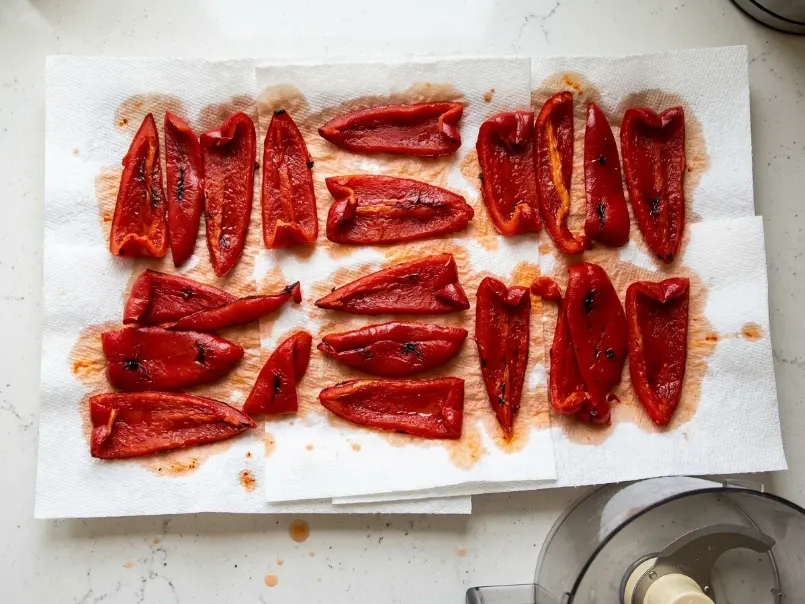
If using jarred roasted peppers, drain them thoroughly and lay them flat on a double layer of paper towels. Press another layer of paper towels on top and let them sit for five minutes. The peppers must be as dry as possible.
Even a tablespoon of excess pepper liquid can thin your Whipped Feta & Pepper Dip significantly and turn the beautiful coral-pink color into a muddy, diluted orange-brown. Moisture is the enemy of emulsion stability in this recipe.
If you are charring fresh bell peppers, follow this method: place the peppers directly over a medium-high gas flame and turn occasionally with tongs until completely blackened on all sides—about ten minutes. Transfer to a ziplock bag and seal. Let them steam for fifteen minutes. Remove and peel off the charred skin, then slice open and remove seeds. Lay the roasted pepper flesh on paper towels and pat completely dry.
Add one teaspoon of red wine vinegar to the prepared pepper pieces and toss gently. The acid brightens the carotenoid pigments and adds a subtle tang that complements the smoky sweetness.
Step 3: The Primary Blade Shear (Feta + Yogurt Breakdown)
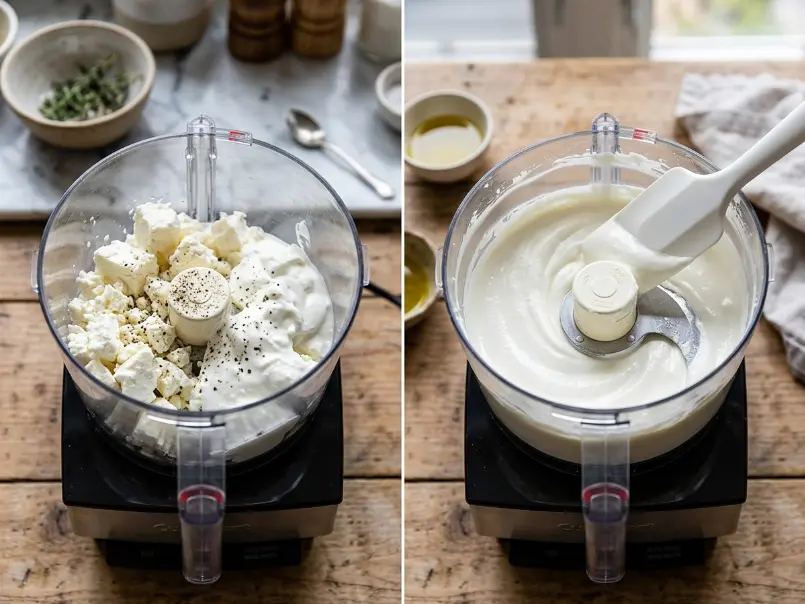
Break the tempered feta block into rough chunks and place them in the food processor. Add the full-fat Greek yogurt, fresh lemon juice, olive oil, minced garlic, and cracked black pepper.
Do not add the roasted peppers yet. The peppers are folded in later to preserve their vibrant coral-pink color and create the beautiful marbled effect. Blending them in from the start creates a uniformly muddy pink-brown color with no visual contrast.
Process the feta and yogurt mixture on high speed for sixty seconds. Stop the processor and scrape down the sides of the bowl with a rubber spatula. Process for another sixty seconds.
At the two-minute mark, open the processor and check the texture. Run your finger through the mixture. It should feel completely smooth—no graininess, no lumps, no visible protein particles. If you can detect any texture, process for another thirty seconds.
Do not run the processor continuously for more than ninety seconds at a time. Continuous high-speed blending generates heat through friction. If the blade temperature rises above 90°F (32°C), the dairy fats begin to break down and the emulsion destabilizes—your dip turns oily and separated.
Blend in bursts. Pause. Scrape. Repeat.
Step 4: The Smoky Pepper Fold-In
Add the thoroughly dried roasted pepper pieces to the food processor. Pulse five to seven times—short, sharp bursts of about one second each. You want the peppers broken down into small pieces and streaked throughout the white feta base, not blended into a uniform paste.
This pulsing technique preserves two things: color contrast and textural interest. The white feta base should show coral-pink streaks of pepper rather than a uniform pink. The scattered pepper pieces add subtle chewiness against the silky dairy emulsion.
Taste the Whipped Feta & Pepper Dip at this stage. The flavor should be tangy, salty, smoky, and bright. Adjust with more lemon juice if it needs acid. Do not add salt until you have tasted carefully—block feta is already aggressively salty from the brine.
Transfer the dip to a shallow serving bowl. Use the back of a spoon to create a dramatic swirl, pressing down and dragging outward from the center to create a deep crater in the middle of the bowl. This crater is where the olive oil will pool, creating a glistening, golden well at the heart of the Whipped Feta & Pepper Dip.
Step 5: The High-Polyphenol Garnish Crater
Fill the central crater with a generous pour of high-quality extra virgin olive oil—about two to three tablespoons. The oil should pool visibly in the center, catching the light. Scatter pine nuts or pumpkin seeds over the top. Add fresh mint leaves, torn gently by hand to release their aromatic oils. Dust with dried chili flakes for heat and color. Finish with a pinch of flaky sea salt over the entire surface.
The olive oil in this Whipped Feta & Pepper Dip is not just garnish. It is a functional component. The high-polyphenol olive oil provides additional fat that reinforces the emulsion surface, preventing the dip from drying out or forming a skin as it sits. The polyphenols—natural antioxidants in fresh olive oil—also slow oxidation of the carotenoid pigments in the roasted peppers, keeping the color vibrant longer.
Serve immediately with warm pita triangles, sliced cucumber, radishes, or any crudités. This is the complete Whipped Feta & Pepper Dip experience—silky, smoky, bright, rich, and absolutely impossible to stop eating.


Whipped Feta & Pepper Dip
Ingredients
Equipment
Method
- Remove block feta from brine and place on a clean plate. Let sit at room temperature for 20–30 minutes. Do NOT use cold feta—cold fat does not emulsify smoothly.
- Remove Greek yogurt from refrigerator 15 minutes before blending.
- Pat feta block dry with paper towels to remove excess surface brine.
- If using jarred peppers: Drain thoroughly and lay flat on double-layered paper towels. Press more paper towels on top and let sit 5 minutes until completely dry.
- If using fresh peppers: Char directly over gas flame, turning with tongs until skin is blackened all over. Transfer to sealed bag, steam 15 minutes, peel, deseed, and pat completely dry.
- Toss prepared pepper pieces with 1 tsp red wine vinegar. Set aside.
- Break tempered feta into rough chunks and place in food processor.
- Add Greek yogurt, fresh lemon juice, 2 tbsp olive oil, minced garlic, and cracked black pepper. Do NOT add peppers yet.
- Process on high speed for 60 seconds. Stop and scrape down sides with rubber spatula.
- Process for another 60 seconds. Check texture—run finger through mixture. Should feel completely smooth with zero graininess.
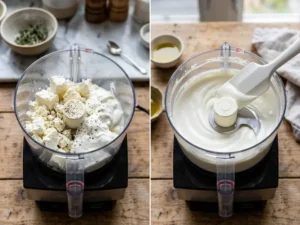
- If any texture remains, process another 30 seconds. Important: blend in 60–90 second bursts only, NOT continuously (heat from continuous blending breaks the emulsion).
- Taste the base. Adjust with more lemon juice for brightness. Do NOT add salt yet—feta is already salty.
- Add dried roasted pepper pieces to food processor.
- Pulse 5–7 times (1-second bursts each). Goal is pepper streaks throughout the white base—not a uniform pink color.
- Taste final dip. Adjust seasoning if needed (more lemon, more pepper). Avoid adding extra salt until carefully tasted.
- Transfer dip to a shallow serving bowl.
- Use the back of a spoon to create a dramatic swirl—press down in the center and drag outward to create a deep center crater.
- Pour 3 tbsp finishing olive oil into the center crater. It should pool visibly.
- Scatter pine nuts or pumpkin seeds over the top.
- Add torn fresh mint leaves, chili flakes, and a pinch of flaky sea salt.
- Serve immediately with warm pita, sliced cucumbers, radishes, or crudités.

Notes
Chef Mansoor’s Insight
Modern blending technology has unlocked the hidden, luxurious textures of ancient rustic brined cheeses. For centuries, feta was crumbled, pressed, or eaten as-is—its grainy, salty crumble a signature of its identity. But high-speed blade shear reveals something that shepherds in the Greek mountains could not have imagined: beneath that crumbly exterior is a fat-protein matrix capable of becoming something silky, airy, and impossibly smooth. This Whipped Feta & Pepper Dip proves that texture engineering is just as important as flavor balancing. You have not changed what feta is—you have simply unlocked what it was always capable of becoming.
— Chef Mansoor, Flavour Bazar
Nutrition Information (Per Serving, Serves 8)
| Nutrient | Amount |
|---|---|
| Calories | 165 kcal |
| Protein | 7 g |
| Carbohydrates | 4 g |
| Dietary Fiber | 0.5 g |
| Sugars | 3 g |
| Total Fat | 13 g |
| Saturated Fat | 5 g |
| Monounsaturated Fat | 6 g |
| Sodium | 420 mg |
| Cholesterol | 25 mg |
| Calcium | 18% DV |
| Vitamin C | 25% DV |
| Vitamin A | 15% DV |
Keto & Low-Carb Friendly: With only 4g net carbs per serving and high fat content, this Whipped Feta & Pepper Dip is keto-compliant. It is also naturally gluten-free (serve with cucumber or vegetable dippers for a fully gluten-free option).
Note: Nutrition values are estimates based on standard ingredient measurements. Values will vary based on brands and portion size.
Storage, Food Safety & Dairy Guide
| Storage Method | Duration | Best Practices |
|---|---|---|
| Refrigerator (airtight container) | 4–5 days | Press plastic wrap directly onto surface to prevent skin formation |
| Freezer (not recommended) | — | Dairy emulsions break upon thawing; texture becomes grainy |
| Room temperature (serving) | 2 hours max | Dairy products should not sit out longer than 2 hours |
| Refreshing after refrigeration | — | Let sit at room temp 15–20 min; stir and re-drizzle with olive oil |
Why the Dip Hardens in the Refrigerator:
You will notice that Whipped Feta & Pepper Dip becomes significantly firmer after refrigeration. This is because the dairy fats (from feta and Greek yogurt) undergo lipid solidification at refrigerator temperatures (35–40°F / 2–4°C). The fat molecules, which were fluid and mobile at room temperature, crystallize and become rigid.
This is not a sign of spoilage—it is normal and reversible. Remove the dip from the refrigerator fifteen to twenty minutes before serving. As the temperature rises, the fats return to a fluid state and the emulsion becomes silky and scoopable again. Give it a quick stir and re-drizzle with fresh olive oil before serving.
Dairy Food Safety:
- Do not leave Whipped Feta & Pepper Dip at room temperature for more than two hours
- Refrigerate leftovers promptly
- Store in an airtight container to prevent the dip from absorbing odors from other refrigerator contents
- Discard after five days regardless of appearance or smell
FAQ: Whipped Feta & Pepper Dip
Why is my Whipped Feta & Pepper Dip grainy?
Almost certainly because you used pre-crumbled feta with anti-caking agents, or your feta was too cold when blended. Use only block feta packed in brine, tempered to room temperature before processing.
How do I fix grainy whipped feta?
Add one to two tablespoons of room-temperature full-fat cream cheese to the processor and blend again. The additional fat molecules will coat the residual protein particles and smooth out the texture. Process in bursts until smooth.
Can I make this ahead of time?
Yes. Make the Whipped Feta & Pepper Dip up to 48 hours ahead and store in the refrigerator. Add the garnishes (olive oil, pine nuts, mint, chili flakes) just before serving for the freshest presentation.
What are the best dippers for this Whipped Feta & Pepper Dip?
Warm pita triangles are the classic pairing. Sliced cucumber, radish, Belgian endive leaves, carrot sticks, and celery work beautifully for a lower-carb option. Toasted crostini and pita chips are also excellent for Mediterranean mezze platter ideas.
Can I use cream cheese instead of Greek yogurt?
Yes. Full-fat cream cheese creates a denser, less tangy version of the dip that is equally smooth. Use four ounces of cream cheese in place of the full cup of Greek yogurt, and add a teaspoon of lemon juice to compensate for the missing tang.
Why does olive oil pool on top after refrigeration?
The fat has solidified and separated slightly from the water phase of the emulsion. This is normal. Stir gently to re-emulsify, or drizzle fresh olive oil on top before serving. The dip is perfectly safe to eat.
You Might Also Love These Flavour Bazar Recipes
Burrata Heirloom Tomato Salad
Another celebration of luxurious Mediterranean cheese and olive oil
Cucumber Kimchi Salad
A spicy, crunchy counterpoint for a mezze-style spread
Sparkling Raspberry Lemonade
The perfect refreshing beverage for a Mediterranean party spread
Strawberry Shortcake: The Science of the Perfect Crumb
Sweet finish after savory pizza night
For More Healthy Recipes Visit: flavourbazar.com