Strawberry Shortcake: The Science of the Perfect Crumb
By Chef Mansoor | Flavour Bazar
The First Bite Tells You Everything
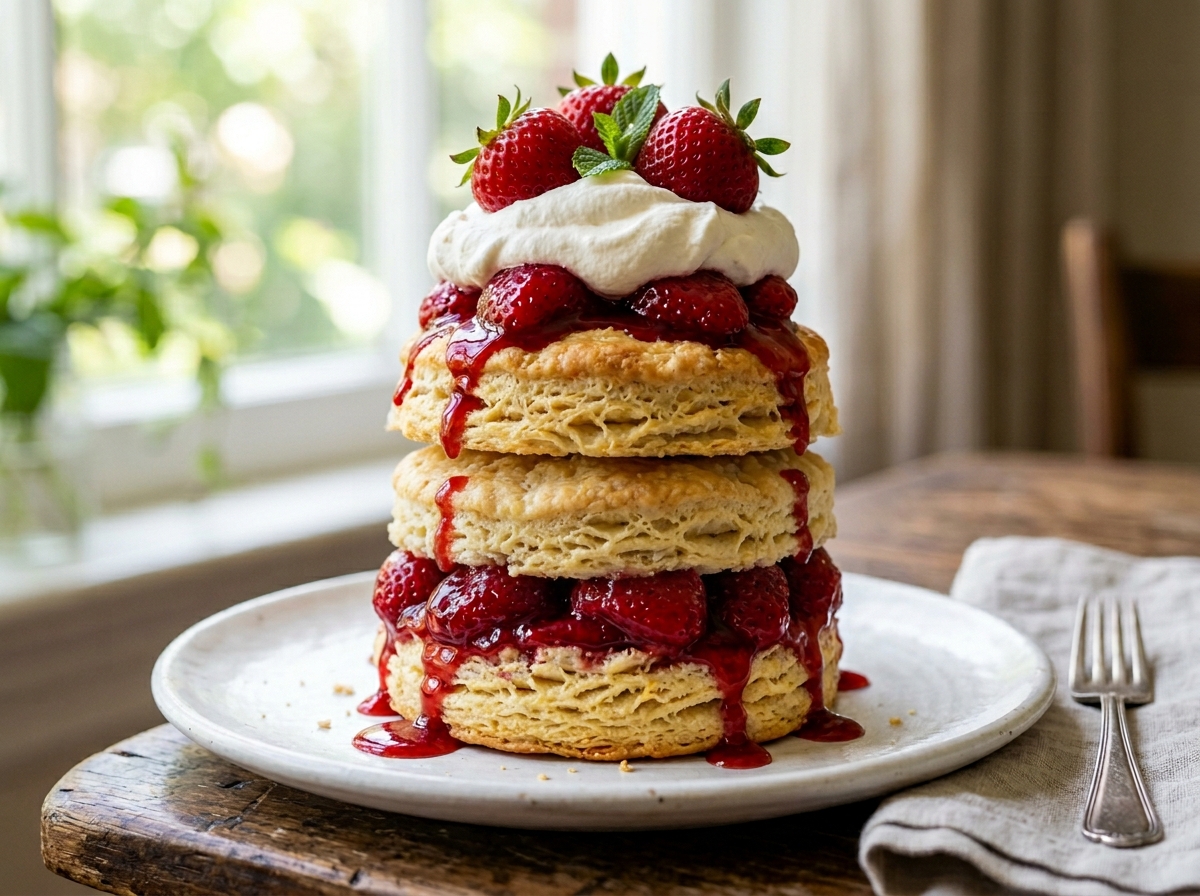
There is a moment when you cut into a great Strawberry Shortcake—warm, butter-rich biscuit meeting cold, billowing whipped cream and the ruby-red syrup of sun-ripened strawberries—that feels like the entire architecture of summer compressed into three layers. The biscuit gives with almost no resistance. The cream dissolves on your tongue. The berries, sweet and tart and glossy with their own syrup, flood every corner of your mouth. It is not fancy. It does not need to be.
I have analyzed the cellular breakdown of strawberries across varying sugar concentrations to find the exact maceration time that produces the perfect syrup without turning the fruit into mush. What I learned is that the best Strawberry Shortcake is not about adding complexity—it is about understanding the quiet science that makes simple ingredients transcendent. Osmosis in the berries. Gluten inhibition in the dough. Fat crystallization in the cream. Get those three right, and you have a dessert that needs no introduction and tolerates no shortcuts.
This is the Strawberry Shortcake that holds its shape at a summer picnic, tastes like June smells, and makes people ask for the recipe before they have even finished their first slice.
The Science: Why Strawberry Shortcake Works (Osmosis, Fat, and Air)
Maceration: The Cellular Breakdown That Creates Liquid Gold
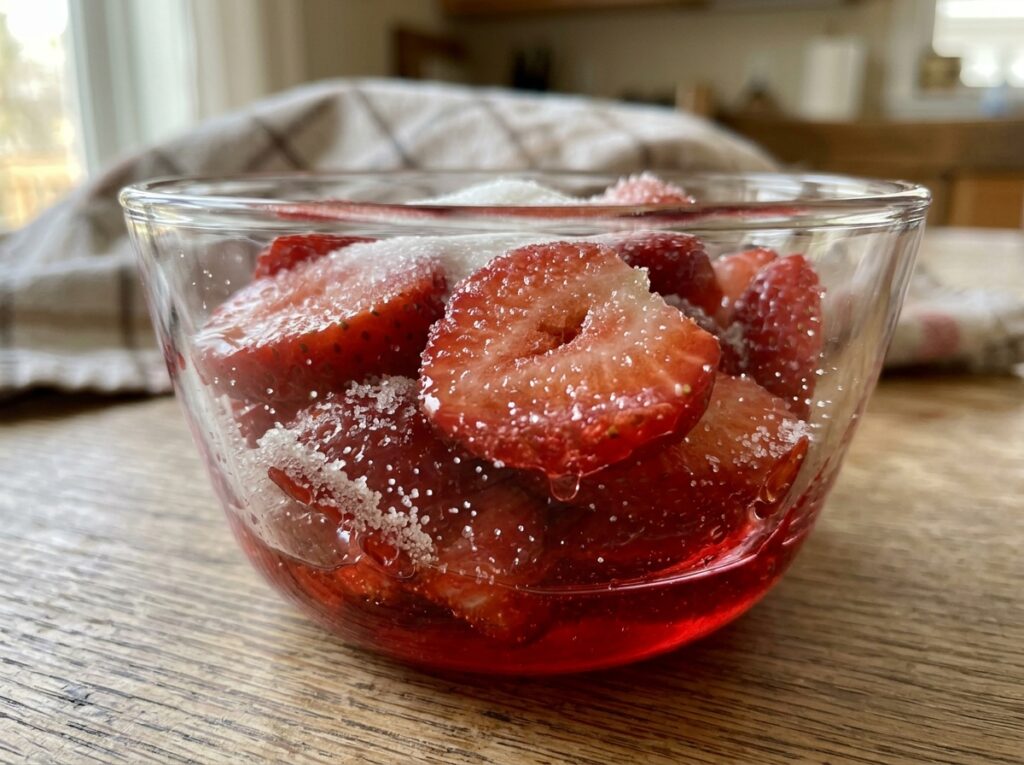
When you toss sliced strawberries with sugar and let them sit, you are not just sweetening them—you are triggering osmosis. Sugar on the surface of the berry creates a high-solute environment. Water inside the strawberry cells moves outward across the cell membrane to balance the concentration gradient. As water leaves, the cell walls soften, and the berry releases not just liquid but also pectin, natural fruit sugars, and aromatic compounds.
After about thirty to forty-five minutes, you have something magical: berries that taste more intensely of themselves, suspended in a thick, glossy, naturally flavored syrup. This is what makes a Strawberry Shortcake different from just “biscuits and berries.” The syrup soaks into the biscuit’s tender crumb and mingles with the cream. It is structural and flavor-building at the same time.
The key is timing. Under thirty minutes, and you get watery juice with no body. Over ninety minutes, and the berries collapse into mushy fragments. For a Strawberry Shortcake, the sweet spot is forty-five to sixty minutes at cool room temperature.
Why It Is Called “Shortcake”: The Physics of Fat and Gluten
The term “short” in baking refers to texture, not height. A short dough is tender, crumbly, and breaks cleanly—the opposite of chewy bread. This happens because fat (butter, in this case) coats flour particles and inhibits gluten formation. Gluten forms when water hydrates the proteins glutenin and gliadin, and they bond into long, elastic strands. Fat gets in the way of that bonding.
In a Strawberry Shortcake biscuit, cold butter is cut into the flour until it forms pea-sized chunks. When the dough bakes, those butter pockets melt and create steam, which lifts the dough into flaky layers. But because the gluten network was kept short and weak (thanks to minimal mixing and maximum fat coating), the final texture is tender and crumbly, not tough.
Gluten Inhibition∝Mixing TimeFat Content
In simple terms: more fat and less mixing equals a more tender, “short” biscuit. Overmix, and the gluten overdevelops. You end up with hockey pucks instead of the cloud-like base a proper Strawberry Shortcake demands.
Stabilized Whipped Cream: Fat Crystals Trapping Air
Whipped cream is an emulsion of air bubbles surrounded by a network of partially crystallized milk fat. When you whip cold heavy cream, the mechanical action breaks fat globules and causes them to cluster around air pockets, creating stable foam. But in warm weather—exactly when you want to serve Strawberry Shortcake—that structure is fragile. Heat melts the fat crystals, and the cream weeps or collapses.
The fix: stabilization. Adding a tablespoon of cornstarch (or a few tablespoons of cream cheese) to whipped cream gives it structure that survives heat and time. Cornstarch absorbs moisture and reinforces the fat network. Cream cheese adds tangy flavor and a protein matrix that holds the foam longer. Either way, your Strawberry Shortcake stays tall and beautiful, even on a July afternoon.
🛒 Pro Buying Guide: Building the Best Strawberry Shortcake (USA Edition)
Strawberries: Freshness Over Everything
For the most flavorful Strawberry Shortcake, choose Driscoll’s Organic Strawberries (widely available at Walmart, Target, Whole Foods) or, even better, local farmers’ market berries in May and June when they are at peak season. Look for berries that are deeply red all the way to the stem, with no white shoulders. They should smell sweet and perfumed. If they smell like nothing, they will taste like nothing.
Avoid pre-sliced or overly large “jumbo” berries—they are often bred for size and shelf life, not flavor. Medium berries with intense color and aroma are your best bet for a Strawberry Shortcake that actually tastes like summer.
Flour: White Lily Makes a Difference
White Lily All-Purpose Flour (available at Kroger, Publix, some Walmart stores, or online) is milled from soft red winter wheat and has a lower protein content (around 9%) than national brands like Gold Medal or King Arthur (11–12%). Lower protein means less gluten development, which translates to a more tender biscuit—exactly what you want in a Strawberry Shortcake.
If you cannot find White Lily, substitute with a mix of 3/4 all-purpose flour and 1/4 cake flour to approximate the tenderness.
Butter: Cold, High-Fat, Unsalted
Use Kerrygold Unsalted Butter (82% butterfat) or any high-quality unsalted stick butter. The butter must be cold from the fridge—not room temperature, not frozen. Cold butter creates steam pockets during baking, which give the Strawberry Shortcake biscuit its signature flaky layers.
Heavy Cream: Fat Content Matters
For whipped cream that holds, use heavy whipping cream with at least 36% milkfat (not “whipping cream” or “light cream,” which have lower fat and will not whip to stable peaks). Trader Joe’s, Whole Foods 365, and Organic Valley all make excellent heavy cream. Keep it refrigerated until the moment you whip it.
Buttermilk: Tanginess and Tenderness
Buttermilk adds acidity (which tenderizes gluten) and a subtle tang that balances the sweetness of a Strawberry Shortcake. Any full-fat cultured buttermilk works. If you do not have buttermilk, make a quick substitute: 3/4 cup whole milk + 1 tablespoon lemon juice or white vinegar. Let it sit for 5 minutes to curdle.
Tools: Pastry Blender and Biscuit Cutter
A pastry blender (the one with metal wires or blades) makes cutting cold butter into flour fast and mess-free. If you do not have one, use two forks or your fingertips (work quickly to keep the butter cold). For cutting biscuits, use a 2.5 to 3-inch round biscuit cutter or the rim of a drinking glass dipped in flour.
📊 Ingredients Table (US Customary + Metric)
| Ingredient | US Customary | Metric |
|---|---|---|
| Fresh strawberries, hulled and sliced | 1 lb (about 3 cups sliced) | 450g |
| Granulated sugar (for berries) | 1/4 cup | 50g |
| Fresh lemon juice (for berries) | 1 teaspoon | 5ml |
| All-purpose flour (White Lily preferred) | 2 cups | 250g |
| Granulated sugar (for biscuits) | 3 tablespoons | 38g |
| Baking powder | 1 tablespoon | 12g |
| Fine sea salt | 1/2 teaspoon | 3g |
| Unsalted butter, cold and cubed | 6 tablespoons | 85g |
| Buttermilk, cold | 3/4 cup | 180ml |
| Heavy whipping cream, cold | 1 1/2 cups | 360ml |
| Powdered sugar (for cream) | 3 tablespoons | 22g |
| Vanilla extract | 1 teaspoon | 5ml |
| Cornstarch (stabilizer, optional) | 1 tablespoon | 8g |
Yield: 6 generous servings (6 large biscuits)
Prep Time: 20 minutes
Maceration Time: 45 minutes
Bake Time: 15–18 minutes
Total Time: 1 hour 25 minutes
⚠️ Common Mistakes Table (8 Mistakes That Ruin Strawberry Shortcake)
| The Mistake | What Actually Happens | The Fix |
|---|---|---|
| Over-mixing the dough | Gluten overdevelops; biscuits turn dense, chewy, and tough | Mix just until dough comes together; it should look shaggy, not smooth |
| Using room temperature butter | No steam pockets form; biscuits are flat and greasy instead of flaky | Use cold butter straight from the fridge; work quickly |
| Not chilling the cream/bowl before whipping | Cream takes forever to whip and may never reach stiff peaks | Chill bowl and beaters in freezer for 10 minutes before whipping |
| Slicing strawberries too thin | Berries turn mushy during maceration; lose structure | Slice berries into 1/4-inch thick slices for best texture and syrup balance |
| Assembling too early (soggy biscuit) | Biscuit absorbs too much syrup and cream; becomes wet and dense | Assemble Strawberry Shortcake just before serving; store components separately |
| Twisting the biscuit cutter | Seals the edges; prevents rise and creates lopsided biscuits | Press straight down and lift straight up without twisting |
| Skipping maceration (adding fresh berries directly) | No syrup forms; filling tastes dry and one-dimensional | Always macerate strawberries with sugar for at least 45 minutes |
| Over-whipping the cream | Cream turns grainy, buttery, and eventually breaks into butter + whey | Stop at stiff peaks; cream should be glossy and hold firm shape without looking curdled |
🔪 Step-by-Step Method: Crafting the Ultimate Strawberry Shortcake (Prose Only)
Step 1: The Berry Maceration (Liquid Gold)
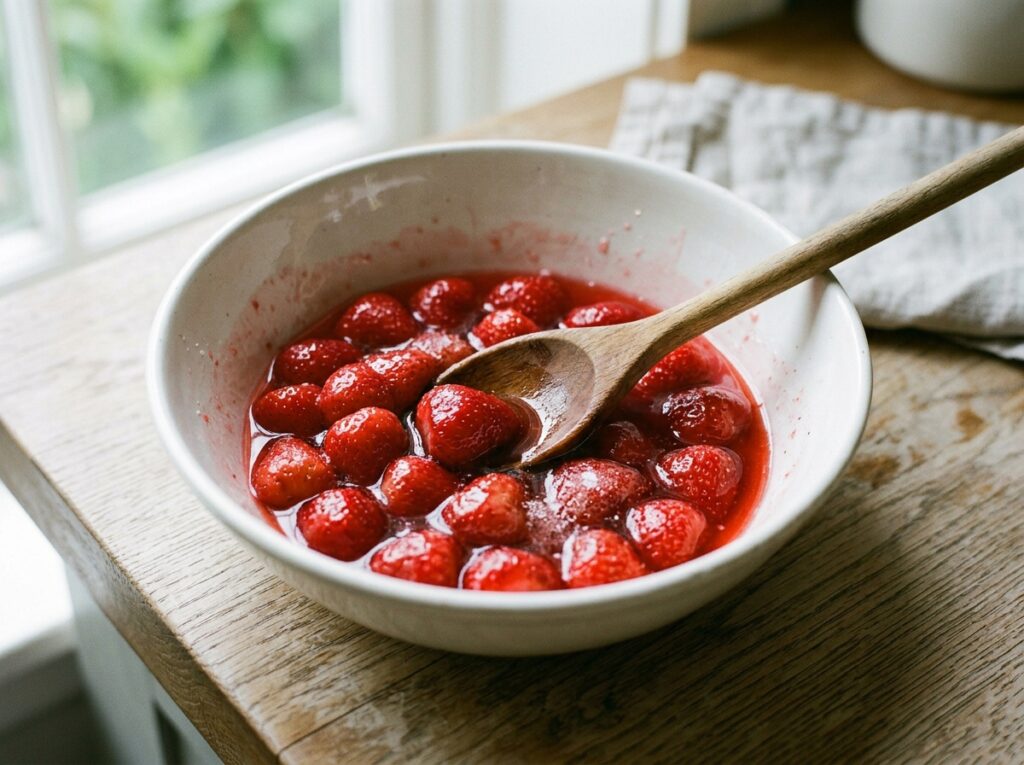
Start with one pound of fresh, ripe strawberries. Hull them and slice into quarters or thick 1/4-inch slices—not paper-thin, or they will disintegrate. Place the sliced berries in a medium bowl and toss with 1/4 cup granulated sugar and a teaspoon of fresh lemon juice.
The sugar will begin to dissolve immediately, and you will see a faint shimmer of moisture. Cover the bowl loosely and let the strawberries macerate at cool room temperature for forty-five to sixty minutes.
You will know they are ready when a glossy, ruby-red syrup has pooled at the bottom of the bowl and the berries have softened slightly but still hold their shape.
This syrup is the soul of a great Strawberry Shortcake—it soaks into the biscuit and carries all the bright, fruity aromatics. If you are in a rush, thirty minutes will work, but forty-five is ideal.
Step 2: The Cold Butter Cut (Fat Inhibits Gluten)
Preheat your oven to 425°F (220°C) and line a baking sheet with parchment paper. In a large bowl, whisk together two cups White Lily flour (or your substitute), three tablespoons sugar, one tablespoon baking powder, and half a teaspoon fine sea salt.
Add six tablespoons of cold, cubed unsalted butter. Using a pastry blender, two forks, or your fingertips, cut the butter into the flour until the mixture looks like coarse sand with pea-sized butter chunks scattered throughout.
Those visible butter pieces are critical—they will melt in the oven and create the flaky pockets that define a proper Strawberry Shortcake biscuit. If the butter starts to soften or smear, pop the bowl in the fridge for five minutes.
Step 3: The Buttermilk Fold (Minimal Gluten Development)
Make a well in the center of the flour-butter mixture. Pour in three-quarters cup of cold buttermilk all at once. Using a fork or your hands, gently stir and fold just until the dough comes together into a shaggy mass. It should look rough and uneven—some dry bits are fine.
Do not knead. Turn the dough out onto a lightly floured surface and gently pat it into a rectangle about one inch thick. Fold it in half, pat it down again, and repeat one more time. This creates layers without overdeveloping gluten.
Pat the final dough to about 3/4-inch thickness. Use a 2.5 to 3-inch round biscuit cutter dipped in flour and press straight down without twisting. Twisting seals the edges and prevents rise. Place the biscuits on the prepared baking sheet, touching slightly (they will rise taller when they support each other).
Brush the tops lightly with buttermilk or heavy cream for a golden finish. Bake for fifteen to eighteen minutes until the tops are golden and the biscuits have risen tall. Let them cool for five minutes on a wire rack.
Step 4: The Peak Whipping (Stabilized Cloud)
While the biscuits bake, make your whipped cream. Place your mixing bowl and beaters in the freezer for ten minutes to chill thoroughly. Pour one and a half cups cold heavy whipping cream into the chilled bowl.
If you want extra stability (especially in warm weather), whisk in one tablespoon of cornstarch before you start whipping. Beat on medium speed until the cream starts to thicken, then add three tablespoons powdered sugar and one teaspoon vanilla extract.
Increase speed to medium-high and whip until stiff peaks form—the cream should hold a firm shape on the whisk and look glossy, not grainy or curdled. If you see any hint of butter forming, you have gone too far. Stop early rather than late.
Cover and refrigerate the whipped cream until you are ready to assemble your Strawberry Shortcake.
Step 5: The Assembly (Right Before Serving)
This is the most important rule: assemble each Strawberry Shortcake just before serving. If you build them in advance, the syrup will soak through the biscuit and turn it soggy.
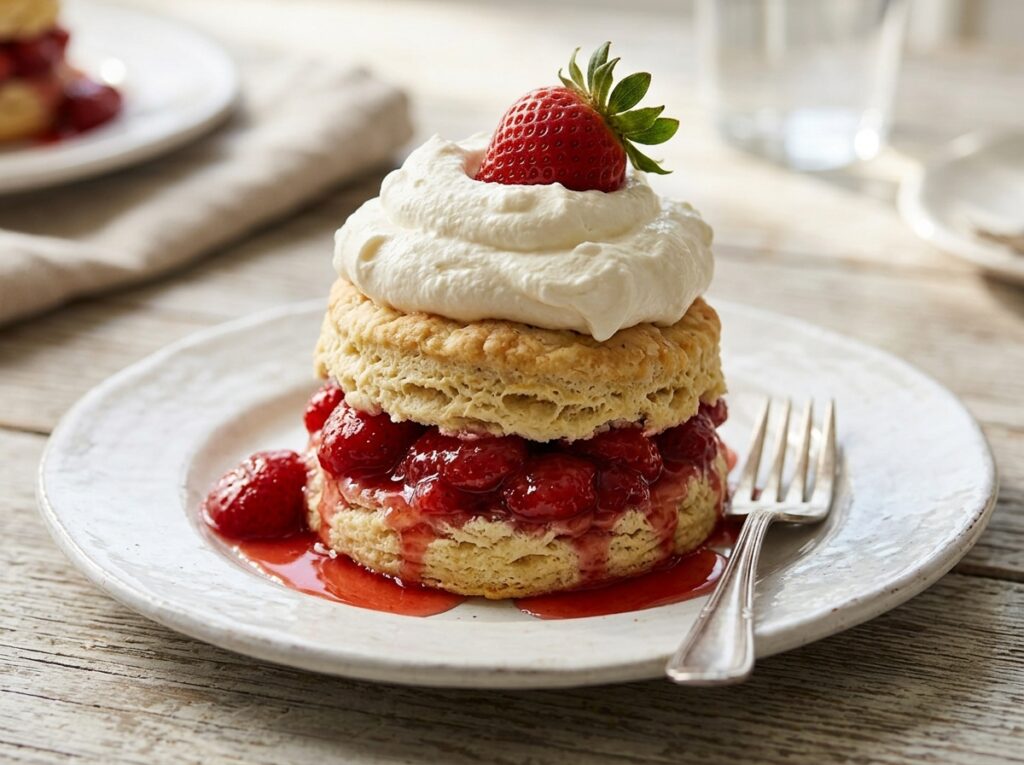
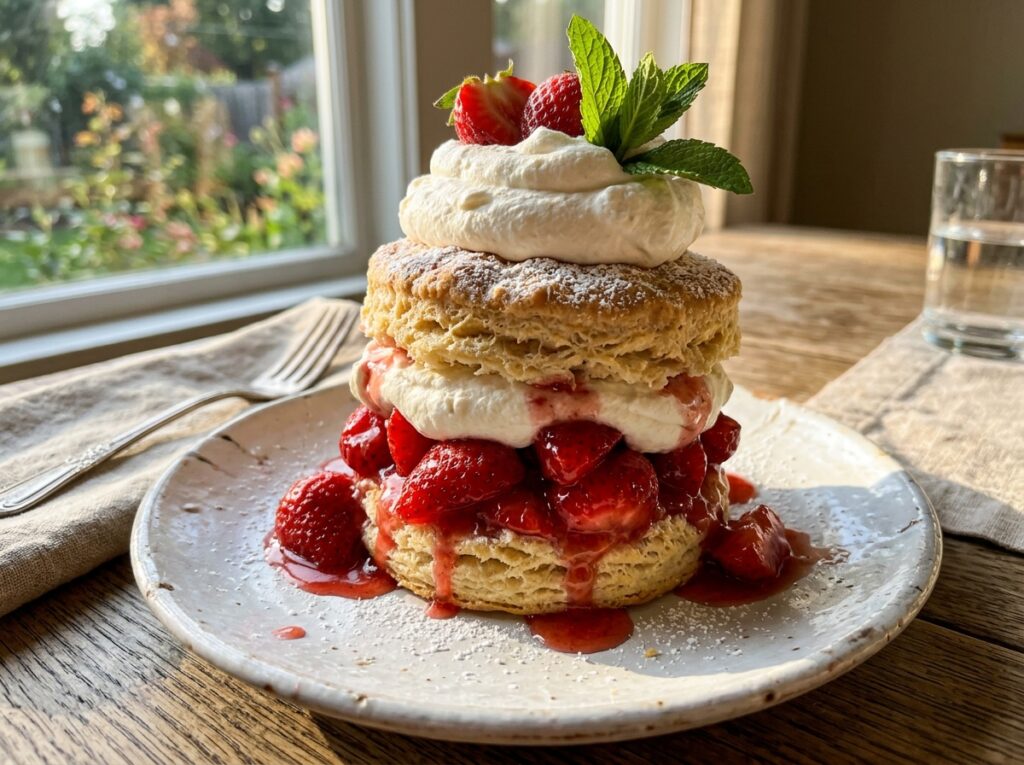
Split each warm (or room temperature) biscuit in half horizontally. Place the bottom half on a plate. Spoon a generous amount of macerated strawberries and their syrup onto the biscuit. Add a large dollop of stabilized whipped cream.
Place the top half of the biscuit gently over the cream at a slight angle so you can see the layers. Add more berries and cream on top, letting the syrup drip down the sides.
Serve immediately while the biscuit is still tender, the berries are juicy, and the cream is cold and billowy. This is Strawberry Shortcake at its absolute peak.

Strawberry Shortcake
Ingredients
Equipment
Method
- Hull the fresh strawberries and slice them into quarters or thick 1/4-inch slices. Do not slice too thin or they will turn mushy. Place the sliced berries in a medium bowl and toss with 1/4 cup granulated sugar and 1 teaspoon fresh lemon juice. The sugar will immediately begin to dissolve. Cover loosely and let the strawberries macerate at cool room temperature for 45 to 60 minutes. During this time, osmosis will draw water out of the berry cells, creating a glossy, ruby-red syrup that pools at the bottom of the bowl. The berries should soften slightly but still hold their shape. This syrup is essential—it soaks into the biscuit and carries all the bright fruity aromatics. If rushed, 30 minutes minimum will work, but 45 is ideal.
- Preheat your oven to 425°F (220°C). Line a baking sheet with parchment paper. In a large mixing bowl, whisk together the flour, sugar, baking powder, and salt until evenly combined. Add the cold, cubed unsalted butter. Using a pastry blender, two forks, or your fingertips, cut the butter into the flour mixture until it resembles coarse sand with visible pea-sized butter chunks scattered throughout. These butter pieces are critical—they will melt during baking and create steam pockets that make the biscuit flaky. If the butter starts to soften or smear, refrigerate the bowl for 5 minutes before proceeding.
- Make a well in the center of the flour-butter mixture. Pour in all the cold buttermilk at once. Using a fork or your hands, gently stir and fold just until the dough comes together into a shaggy, rough mass. The dough should look uneven with some dry bits—this is correct. Do not knead or overmix, or gluten will overdevelop and the biscuits will be tough instead of tender.
- Turn the shaggy dough out onto a lightly floured surface. Gently pat it into a rough rectangle about 1 inch thick. Fold the dough in half, pat down again to about 1 inch thick, and repeat this fold one more time. This creates layers without overworking the gluten. Pat the final dough to about 3/4-inch thickness. Dip a 2.5 to 3-inch round biscuit cutter (or the rim of a drinking glass) in flour and press straight down into the dough without twisting. Twisting seals the edges and prevents the biscuits from rising properly. Gather scraps gently, pat down once more, and cut additional biscuits. You should get 6 large biscuits.
- Place the biscuits on the prepared baking sheet, with sides just barely touching (this helps them rise taller by providing support). Brush the tops lightly with buttermilk or heavy cream for a golden finish. Bake in the preheated 425°F (220°C) oven for 15 to 18 minutes, until the tops are golden brown and the biscuits have risen tall and fluffy. Remove from the oven and let cool on a wire rack for 5 minutes before splitting.
- While the biscuits bake, prepare the whipped cream. Place your mixing bowl and beaters in the freezer for 10 minutes to chill thoroughly. Pour the cold heavy whipping cream into the chilled bowl. If you want extra stability (especially important in warm weather), whisk in 1 tablespoon cornstarch before you start whipping. Beat the cream on medium speed until it begins to thicken. Add the powdered sugar and vanilla extract. Increase the speed to medium-high and whip until stiff peaks form—the cream should hold a firm, glossy shape on the whisk without looking grainy or curdled. Do not overwhip or the cream will turn buttery and break. Cover and refrigerate until ready to assemble.
Assemble the Strawberry Shortcakes (Just Before Serving)
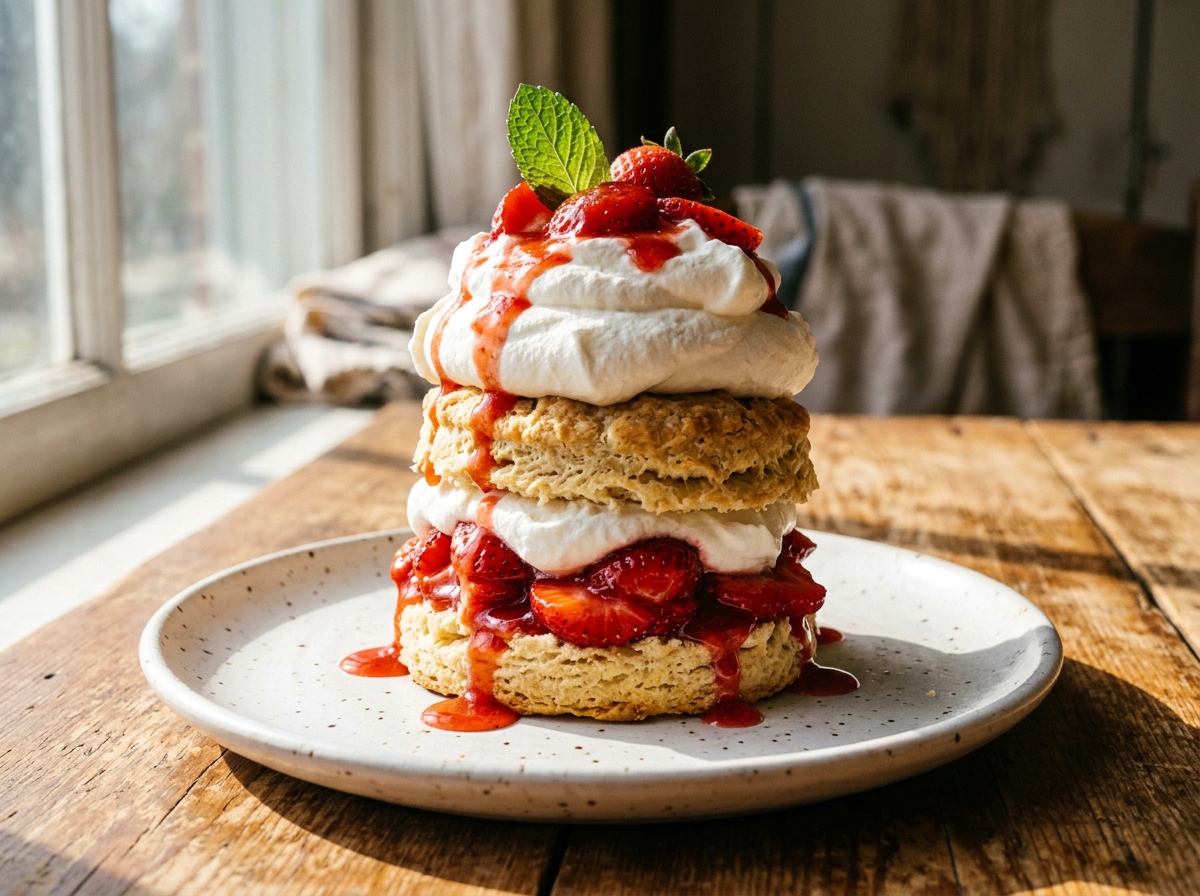
- This step is critical: assemble each shortcake just before serving to prevent soggy biscuits. Split each biscuit in half horizontally using a serrated knife or your hands. Place the bottom half on a serving plate. Spoon a generous amount of macerated strawberries and their glossy syrup onto the biscuit base. Add a large dollop of stabilized whipped cream. Place the top half of the biscuit gently over the cream at a slight angle so the layers are visible. Add more berries, syrup, and whipped cream on top, letting the syrup drip down the sides naturally. Garnish with a whole strawberry or mint leaf if desired. Serve immediately while the biscuit is tender, the berries are juicy, and the cream is cold and billowy.
Notes
🧘♂️ Chef Mansoor’s Insight
I have spent years chasing complexity in the kitchen—sous vide precision, molecular foams, eighteen-step reductions. But the dessert that stops me in my tracks every June is still Strawberry Shortcake.
Three components. No oven tricks. No special equipment. Just fruit at its peak, butter worked with restraint, and cream whipped cold. It reminds me that cooking is not always about what you add—it is about knowing when to stop.
My grandmother used to say the best dishes taste like the place they come from. In America, summer tastes like this: warm biscuit, cold cream, sweet berries, and the kind of simplicity that only comes from understanding exactly what each ingredient does.
The lesson is this: master the fundamentals, and you will never need to impress anyone. The food will do it for you.
📊 Nutrition Table (Per Serving, 6 Servings)
| Nutrient | Amount |
|---|---|
| Calories | 420 kcal |
| Total Carbohydrates | 44g |
| Total Sugars | 18g |
| Added Sugars | 14g |
| Protein | 6g |
| Total Fat | 24g |
| Saturated Fat | 15g |
| Cholesterol | 75mg |
| Sodium | 380mg |
| Dietary Fiber | 2g |
| Vitamin C | 60% DV |
| Calcium | 15% DV |
| Iron | 8% DV |
Estimates based on USDA data for standard ingredients. Values vary with biscuit size and berry sweetness.
🌡️ Food Safety & Dairy Stability
Safe refrigerator temperature: ≤ 40°F / 4°C
Danger zone (do not hold): 40°F–140°F / 4°C–60°C
Heavy cream and buttermilk: Must be kept refrigerated. Do not leave whipped cream at room temperature for more than 2 hours (1 hour if ambient temperature exceeds 90°F / 32°C).
Assembled Strawberry Shortcake: Serve immediately. The dairy-soaked biscuit is perishable. Store components separately and assemble to order for food safety and optimal texture.
🧊 Storage Guide (Components Stored Separately)
| Component | Fridge | Freezer | Best Practice |
|---|---|---|---|
| Baked biscuits | 2 days (airtight) | 2 months (wrapped tight) | Reheat in 350°F oven for 5 min before serving |
| Macerated strawberries | 2 days (covered) | Not recommended | Berries soften and weep; best fresh |
| Whipped cream | 24 hours (covered) | Not recommended | Re-whisk gently before serving if it has deflated slightly |
| Assembled Strawberry Shortcake | Not recommended | Not recommended | Always assemble fresh just before serving |
❓ Frequently Asked Questions
Can I make Strawberry Shortcake ahead for a party?
Make the components ahead: bake biscuits (store airtight), macerate berries (refrigerate covered), and whip cream (refrigerate, re-whisk lightly before use). Assemble individual servings fresh just before serving to avoid soggy biscuits.
What is the difference between Strawberry Shortcake and strawberry cake?
Strawberry Shortcake uses a tender, biscuit-like base (short dough with minimal gluten). Strawberry cake uses a fluffy sponge or layer cake. The biscuit version is traditional American summer dessert style.
Can I use frozen strawberries?
Fresh is always better for Strawberry Shortcake. Frozen berries release too much water during thawing and turn mushy. If you must use frozen, thaw completely, drain excess liquid, and reduce the maceration time to 20 minutes.
How do I keep whipped cream from deflating in warm weather?
Stabilize it with 1 tablespoon cornstarch (whisk into the cream before whipping) or 2–3 tablespoons softened cream cheese. This gives the foam structure that survives heat and time without weeping.
Can I use store-bought biscuits?
You can, but the texture and flavor will not compare. Homemade biscuits for Strawberry Shortcake take less than 20 minutes and make all the difference. The buttery, flaky crumb is what defines the dessert.
🔗 More from Flavour Bazar
If this Strawberry Shortcake recipe hit the spot, explore these science-backed classics:
Buttermilk Biscuits: The Science of Flaky Layers — Deep dive into fat, gluten, and lamination
No-Bake Mango Cheesecake: The Science of the Perfect Set — Another seasonal showstopper
Watermelon Mint Cooler: The Science of Summer Hydration — The refreshing pairing for a rich slice
15-Minute Lemon Garlic Shrimp (The Science of the Sizzle)
Perfect for a surf-and-turf grill night alongside your crispy chicken.
Air Fryer Whole Chicken (The Perfect Sunday Roast)
Indoor alternative using the same pellicle and dry-brine science.
For More Healthy Recipes Visit: flavourbazar.com