Probiotic Chickpea Salad: The Science of Gut-Friendly Fuel
By Chef Mansoor | Flavour Bazar
The Lunch That Fixes Your Afternoon
You know the feeling. One-thirty in the afternoon, your desk feels like it is tilting, your brain is wrapped in cotton, and the only thing standing between you and a nap is willpower and caffeine. Heavy lunches do that—pasta, sandwiches loaded with processed meat, fried anything.
Your body diverts all its energy to digestion, and your mind pays the price. What if I told you there is a lunch that does the opposite? One that gives you steady energy, feeds your gut bacteria, and actually makes you sharper as the day goes on?
I have spent months collaborating with nutritionists to balance the pH of this Probiotic Chickpea Salad, ensuring the live cultures remain active until the very last bite. This is not just another chickpea bowl.
It is a carefully engineered ecosystem where prebiotics (the fiber your gut bacteria eat) meet probiotics (the live cultures that populate your digestive tract), creating a symbiotic environment that supports digestion, mood, energy, and even immune function.
This Probiotic Chickpea Salad is what I pack when I need to think clearly for hours. It is what I recommend to anyone who has ever blamed their food for their three-o’clock crash. And once you understand the science behind it, you will never look at lunch the same way again.
The Science: Why This Probiotic Chickpea Salad Feeds Your Second Brain
Prebiotics Meets Probiotics: A Gut Symbiosis
Your gut is home to trillions of bacteria—collectively called the microbiome—that influence everything from digestion and nutrient absorption to mood regulation and immune response. Scientists now call the gut your “second brain” because of the direct communication pathway between your gut bacteria and your central nervous system, known as the gut-brain axis.
A Probiotic Chickpea Salad works because it delivers both halves of the equation your gut needs to thrive:
Prebiotics are the indigestible fibers that human enzymes cannot break down, but gut bacteria can. Chickpeas are loaded with prebiotic fiber—specifically resistant starch and oligosaccharides—that feed beneficial bacteria like Lactobacillus and Bifidobacterium.
When these bacteria ferment fiber in your colon, they produce short-chain fatty acids (SCFAs) like butyrate, which reduce inflammation, strengthen the intestinal lining, and even regulate blood sugar.
Probiotics are the live beneficial bacteria themselves. In this Probiotic Chickpea Salad, they come from raw, unfiltered apple cider vinegar with “The Mother” (a colony of acetic acid bacteria) or from Greek yogurt (which contains Lactobacillus bulgaricus and Streptococcus thermophilus). These live cultures colonize your gut, crowd out harmful bacteria, and support a balanced microbiome.
Prebiotics (Fiber)+Probiotics (Live Cultures)=Optimal Gut Health
In simple terms: chickpeas are the food. The vinegar or yogurt is the gardener. Together, they create a thriving internal ecosystem.
The Bioavailability Boost: Why Rinsing Chickpeas Matters
Canned chickpeas are convenient, but they come packed in a starchy liquid (aquafaba) and contain phytates—naturally occurring compounds that bind to minerals like iron, zinc, and magnesium, making them harder for your body to absorb.
Rinsing canned chickpeas under cold running water for at least one minute removes much of this foam and reduces phytate content by up to thirty percent. This means the iron and magnesium in your Probiotic Chickpea Salad become more bioavailable—your body can actually use them.
Rinsing also reduces sodium (canned chickpeas can contain 300–400mg sodium per half cup) and prevents that metallic, tinny aftertaste that ruins otherwise fresh salads.
Why “The Mother” Matters (And Pasteurized Vinegar Does Not)
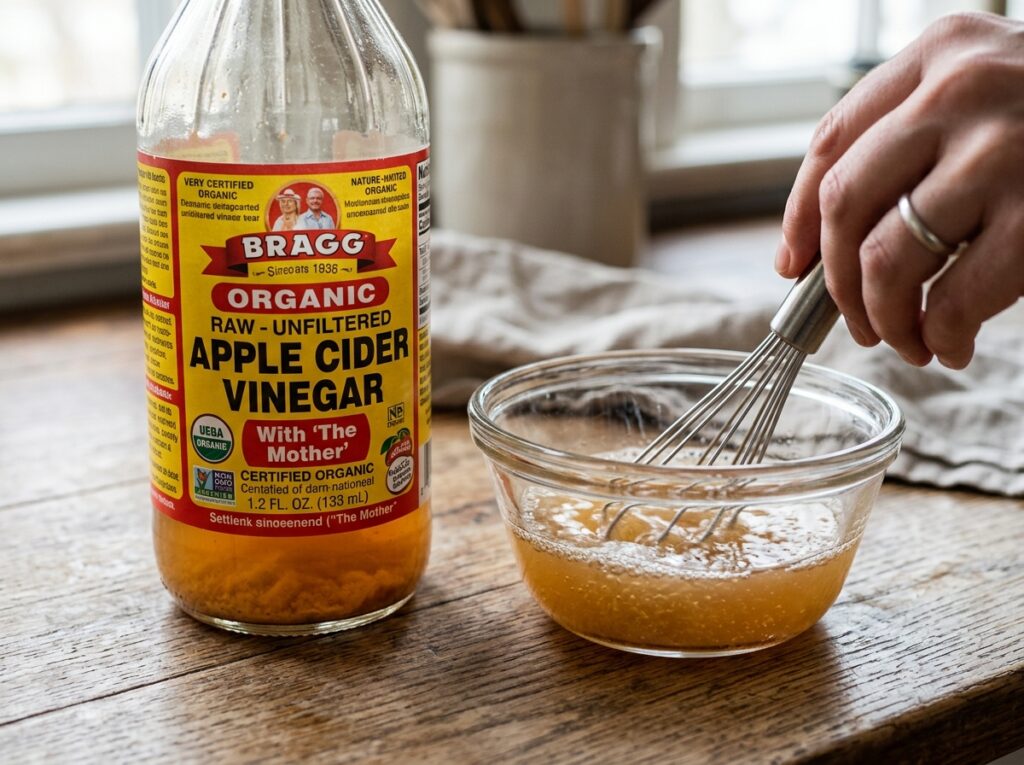
Not all apple cider vinegar is probiotic. Clear, pasteurized vinegar (the kind you use for cleaning) has been heat-treated, which kills the beneficial bacteria. Bragg’s Organic Apple Cider Vinegar and similar raw, unfiltered varieties contain “The Mother”—a cloudy, web-like colony of acetic acid bacteria (Acetobacter) that gives the vinegar its probiotic properties.
When you use this in a Probiotic Chickpea Salad dressing, you are adding live cultures that survive the acidic journey through your stomach and arrive intact in your intestines, where they do their best work.
The Mother also contributes enzymes and trace minerals that support digestion. It is the difference between a salad that tastes good and one that actively supports your gut health.
🛒 Pro Buying Guide: Sourcing the Best Probiotic Chickpea Salad Ingredients (USA)
Chickpeas: Organic, Low-Sodium Preferred
Goya Organic Chickpeas or Bush’s Best Garbanzo Beans are widely available at Walmart, Target, Kroger, and most major grocery stores. Look for “low-sodium” or “no salt added” versions if you want full control over seasoning.
If you have access to a pressure cooker or Instant Pot, dried chickpeas (soaked overnight, pressure-cooked for 12 minutes) have the best texture and the lowest phytate content—but canned is perfectly fine for this Probiotic Chickpea Salad when rinsed well.
Apple Cider Vinegar: Raw and Unfiltered Only
Bragg’s Organic Apple Cider Vinegar with The Mother is the gold standard. Available at Whole Foods, Trader Joe’s, Sprouts, Target, and Amazon. Shake the bottle before use—you should see cloudy sediment.
That is the probiotic colony you want. Other good brands: Spectrum Organic, Dynamic Health, and Fairchild’s.
Greek Yogurt (Optional Creamy Dressing Base)
If you prefer a creamier Probiotic Chickpea Salad dressing, use Fage Total 0% or 5% Greek Yogurt (Whole Foods, Trader Joe’s, Target). I
t must say “contains live and active cultures” on the label. Fage, Chobani, and Stonyfield are all reliable. Avoid yogurts with added sugars or artificial sweeteners, which can feed the wrong gut bacteria.
Fresh Vegetables: Color = Phytonutrients
Choose crisp, colorful produce from Whole Foods, Trader Joe’s, or your local farmers’ market. For this Probiotic Chickpea Salad:
- Red bell peppers (vitamin C)
- Persian or English cucumbers (hydration, low bitterness)
- Purple cabbage (anthocyanins, prebiotic fiber)
- Red onion (quercetin, prebiotic fructans)
- Fresh parsley or cilantro (antioxidants, flavor)
Mason Jars for Meal Prep
Wide-mouth Ball or Kerr Mason jars (quart-size, 32 oz) are perfect for storing this Probiotic Chickpea Salad. The airtight seal keeps vegetables crisp and prevents the dressing from oxidizing. Available at Target, Walmart, Ace Hardware, and Amazon.
📊 Ingredients Table (US Customary + Metric)
| Ingredient | US Customary | Metric |
|---|---|---|
| Canned chickpeas, drained and rinsed | 15 oz can (about 1 3/4 cups) | 425g |
| Red bell pepper, diced | 1 medium (about 1 cup) | 150g |
| Persian cucumber, diced | 1 large (about 1 cup) | 120g |
| Purple cabbage, finely shredded | 1 cup | 70g |
| Red onion, finely diced | 1/4 cup | 40g |
| Fresh parsley or cilantro, chopped | 1/4 cup | 15g |
| Raw apple cider vinegar (with The Mother) | 3 tablespoons | 45ml |
| Extra virgin olive oil | 2 tablespoons | 30ml |
| Dijon mustard | 1 teaspoon | 5g |
| Honey or maple syrup | 1 teaspoon | 5ml |
| Garlic, minced | 1 clove | 1 clove |
| Fine sea salt | 1/2 teaspoon | 3g |
| Black pepper, freshly ground | 1/4 teaspoon | 1g |
| Cumin powder | 1/4 teaspoon | 1g |
Optional Additions:
- Greek yogurt (2 tablespoons / 30g) for creamier dressing
- Crumbled feta cheese (1/4 cup / 40g)
- Toasted sunflower or pumpkin seeds (2 tablespoons / 18g)
Yield: 4 servings (1.5 cups each)
Prep Time: 15 minutes
Chill Time: 30 minutes (optional but recommended)
Total Time: 15–45 minutes
⚠️ Common Mistakes Table (8 Mistakes That Ruin a Probiotic Chickpea Salad)
| The Mistake | What Actually Happens | The Fix |
|---|---|---|
| Using mushy, overcooked chickpeas | Texture turns to paste; salad loses structure and mouthfeel | Use canned chickpeas with firm texture or cook dried chickpeas al dente |
| Killing probiotics with hot ingredients | Heat above 115°F/46°C kills live cultures in vinegar and yogurt | Use room-temperature or cold ingredients only; never add hot chickpeas |
| Not rinsing canned chickpeas thoroughly | Aquafaba foam adds metallic taste, excess sodium, and phytates | Triple-rinse under cold running water for 60+ seconds until water runs clear |
| Using pasteurized vinegar without “The Mother” | No live cultures = no probiotic benefit | Use only raw, unfiltered apple cider vinegar with visible cloudy sediment |
| Ignoring the salt-acid balance | Dressing tastes flat or too sharp; doesn’t complement chickpeas | Taste and adjust: salt enhances sweetness; acid brightens; balance both |
| Cutting vegetables too large | Uneven distribution; some bites are all chickpea, others all veggie | Dice vegetables into pea-sized pieces for uniform texture in every forkful |
| Adding dressing hours ahead and storing | Vegetables release water (weeping); salad becomes watery and diluted | Store dressing separately; toss just before eating, or layer in mason jar |
| Skipping the chill/marriage time | Flavors stay separate; chickpeas don’t absorb dressing properly | Chill for at least 30 minutes to let flavors meld and chickpeas marinate |
🔪 Step-by-Step Method: Building Your Probiotic Chickpea Salad (Prose Only)
Step 1: The Triple-Rinse Method (Bioavailability Unlocked)
Open your can of chickpeas and pour the contents into a fine-mesh strainer. You will see cloudy, foamy liquid—this is aquafaba, which contains starches, saponins, and phytates.
Rinse the chickpeas under cold running water for a full sixty seconds, moving them around with your hands. The water should run completely clear. This simple step removes up to thirty percent of the phytates, cuts sodium significantly, and eliminates that tinny, canned aftertaste.
Shake the strainer well to remove excess water, then spread the chickpeas on a clean kitchen towel or paper towels to air-dry for a few minutes. Dry chickpeas absorb the probiotic dressing better, making every bite of your Probiotic Chickpea Salad more flavorful.
Step 2: The Raw Vegetable Dice (Color and Crunch)
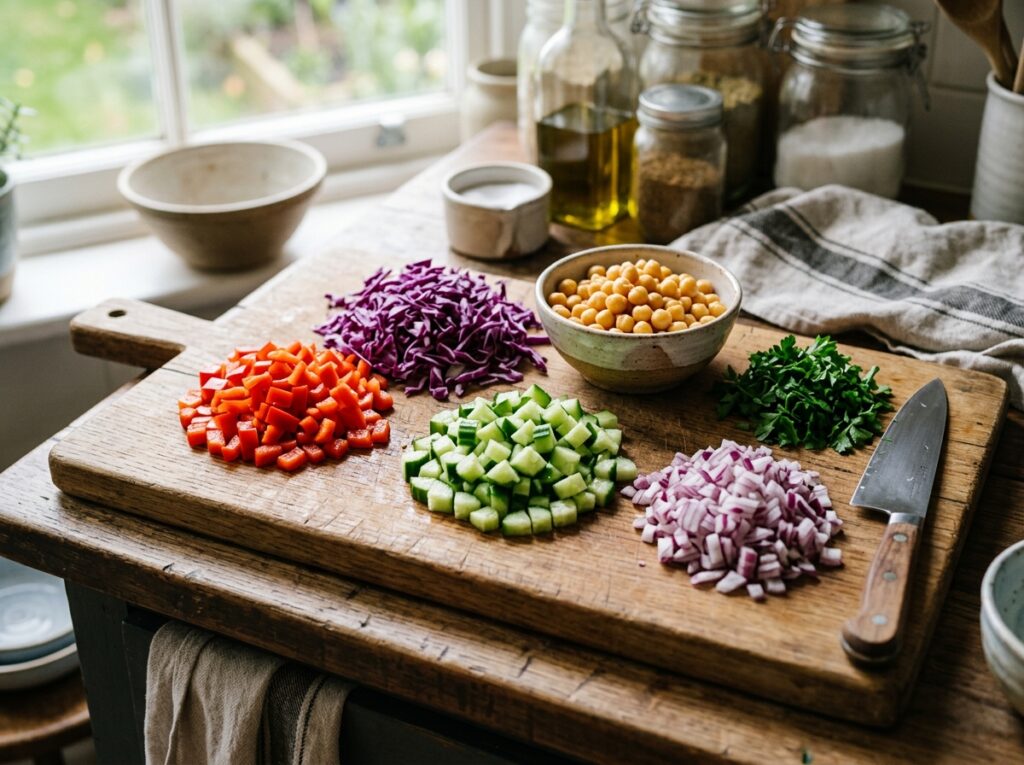
Dice your red bell pepper, cucumber, and red onion into small, uniform pieces—about the size of a pea or slightly larger. Finely shred the purple cabbage into thin ribbons (a sharp knife or mandoline works beautifully).
Chop the fresh parsley or cilantro. The key to a great Probiotic Chickpea Salad is even distribution: you want chickpeas, vegetables, and dressing in every single forkful. If you cut the vegetables too large, some bites will be all chickpea and others all cucumber.
Uniform dice creates textural harmony. Place all the chopped vegetables in a large mixing bowl along with the rinsed, dried chickpeas.
Step 3: The Probiotic Dressing Whisk (Live Cultures, Cold Only)
In a small bowl or mason jar, combine three tablespoons of raw apple cider vinegar (shake the bottle first to distribute The Mother), two tablespoons extra virgin olive oil,
one teaspoon Dijon mustard, one teaspoon honey or maple syrup, one minced garlic clove, half a teaspoon sea salt, quarter teaspoon black pepper, and quarter teaspoon cumin powder.
If you want a creamier Probiotic Chickpea Salad, add two tablespoons of full-fat Greek yogurt (make sure it says “live and active cultures” on the label). Whisk vigorously until the dressing is emulsified and creamy. The mustard acts as an emulsifier, binding the oil and vinegar into a stable, smooth dressing.
Critical Science Note: Never add hot ingredients to this dressing. Probiotics—the live bacteria in the vinegar and yogurt—are heat-sensitive. Temperatures above 115°F (46°C) will kill them. Always use room-temperature or cold ingredients to preserve the live cultures that make this a true Probiotic Chickpea Salad.
Taste the dressing and adjust. It should taste bright and tangy but balanced. If it is too sharp, add a pinch more honey. If it tastes flat, add a pinch more salt. Salt and acid work together: salt enhances the perception of sweetness and richness, while acid brightens and lifts all the other flavors.
Step 4: The Marriage (Chilling and Flavor Fusion)
Pour the probiotic dressing over the chickpeas and vegetables. Toss everything together gently but thoroughly, making sure every chickpea and vegetable piece is lightly coated.
Cover the bowl and refrigerate for at least thirty minutes (one hour is even better). This “marriage time” allows the chickpeas to absorb the tangy dressing, the onions to mellow slightly, and all the flavors to meld into a cohesive whole.
The acid in the vinegar also continues to slightly break down the chickpea skins, making them more tender and flavorful.
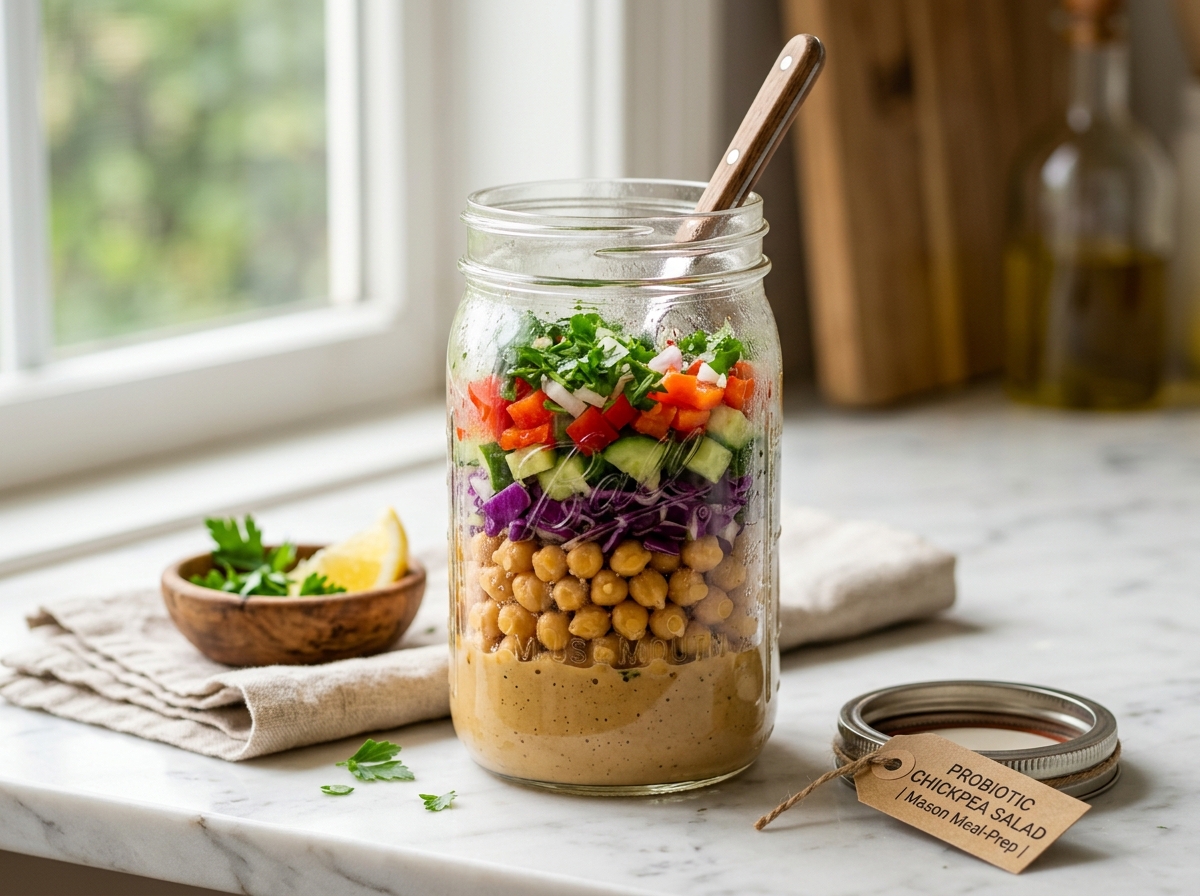
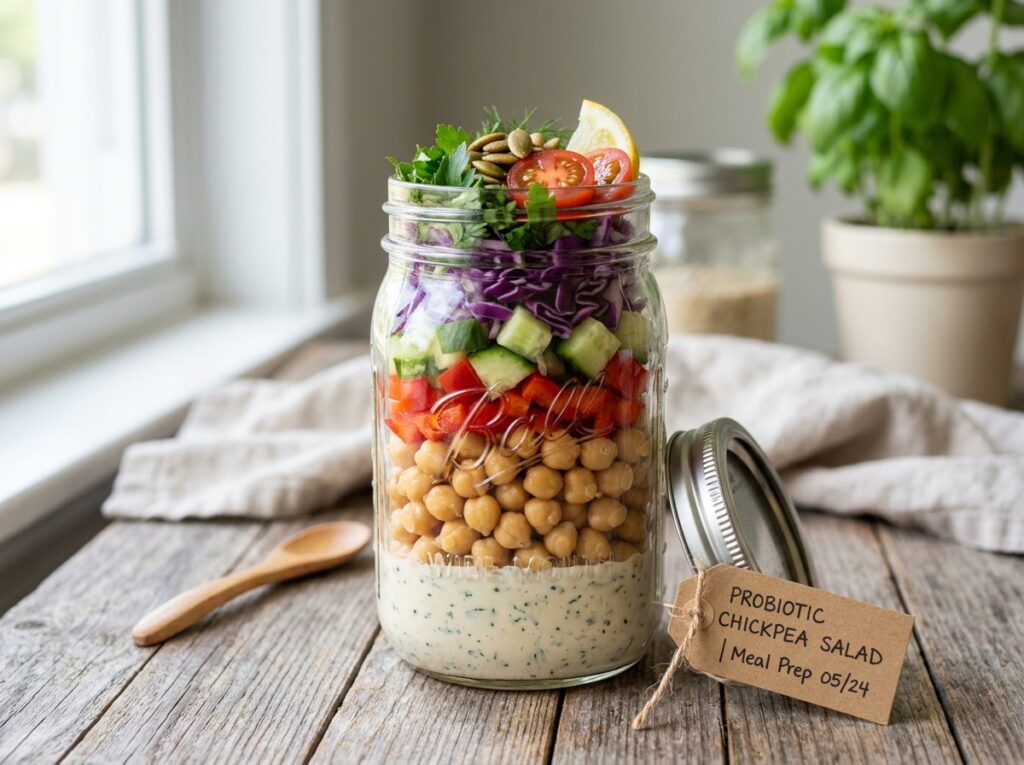
If you are meal-prepping, layer the Probiotic Chickpea Salad in wide-mouth quart-sized mason jars: dressing at the very bottom, chickpeas in the middle, chopped vegetables on top.
Seal tightly and refrigerate. When you are ready to eat, shake the jar vigorously or pour into a bowl and toss. The layered method keeps vegetables crisp and prevents premature sogginess.

Probiotic Chickpea Salad
Ingredients
Equipment
Method
- Open the can of chickpeas and pour the entire contents into a fine-mesh strainer. You will see cloudy, foamy liquid called aquafaba, which contains starches, saponins, and phytates. Rinse the chickpeas thoroughly under cold running water for a full 60 seconds, moving them around with your hands to ensure all surfaces are cleaned. The water should run completely clear by the end. This critical step removes up to 30% of the phytates (compounds that bind to minerals and reduce absorption), cuts excess sodium significantly, and eliminates the metallic, tinny aftertaste common in canned beans. Shake the strainer vigorously to remove excess water, then spread the chickpeas on a clean kitchen towel or paper towels to air-dry for 2-3 minutes. Dry chickpeas absorb the probiotic dressing better, ensuring maximum flavor in every bite.
- Dice the red bell pepper, Persian cucumber, and red onion into small, uniform pieces about the size of a pea or slightly larger. The key to an excellent Probiotic Chickpea Salad is even distribution—you want chickpeas, vegetables, and dressing in every single forkful. If vegetables are cut too large, some bites will be all chickpea and others all cucumber, creating an unbalanced experience. Finely shred the purple cabbage into thin ribbons using a sharp knife or mandoline slicer. Chop the fresh parsley or cilantro. Place all the prepared vegetables in a large mixing bowl along with the rinsed and dried chickpeas.
- In a small bowl or a mason jar with lid, combine the raw apple cider vinegar (shake the bottle first to distribute The Mother—the cloudy sediment that contains live probiotic bacteria), extra virgin olive oil, Dijon mustard, honey or maple syrup, minced garlic, sea salt, black pepper, and cumin powder. If you want a creamier Probiotic Chickpea Salad, add 2 tablespoons of full-fat Greek yogurt that clearly states “live and active cultures” on the label. Whisk vigorously or shake the jar until the dressing is fully emulsified and creamy. The Dijon mustard acts as an emulsifier, binding the oil and vinegar into a stable, smooth mixture. CRITICAL SCIENCE NOTE: Never add hot ingredients to this dressing. Probiotics are heat-sensitive live organisms. Temperatures above 115°F (46°C) will kill the beneficial bacteria. Always use room-temperature or cold ingredients to preserve the live cultures that make this a true probiotic salad. Taste the dressing and adjust seasoning: it should be bright and tangy but balanced. If too sharp, add a pinch more honey. If flat, add more salt. Salt enhances sweetness perception while acid brightens all flavors.
- Pour the probiotic dressing over the chickpeas and vegetables in the large bowl. Toss everything together gently but thoroughly using a large spoon or silicone spatula, ensuring every chickpea and vegetable piece is lightly coated with dressing. Cover the bowl with plastic wrap or transfer to an airtight container and refrigerate for at least 30 minutes (1 hour is ideal). This “marriage time” allows the chickpeas to absorb the tangy dressing, the raw onions to mellow slightly, and all the flavors to meld into a cohesive whole. The acid in the vinegar also gently breaks down the chickpea skins, making them more tender and flavorful. For meal prep, layer the Probiotic Chickpea Salad in wide-mouth quart-sized mason jars: pour dressing at the very bottom, add chickpeas in the middle layer, and place chopped vegetables on top. Seal tightly and refrigerate for up to 4-5 days. When ready to eat, shake the jar vigorously to distribute the dressing or pour into a bowl and toss. The layered method keeps vegetables crisp and prevents premature sogginess.
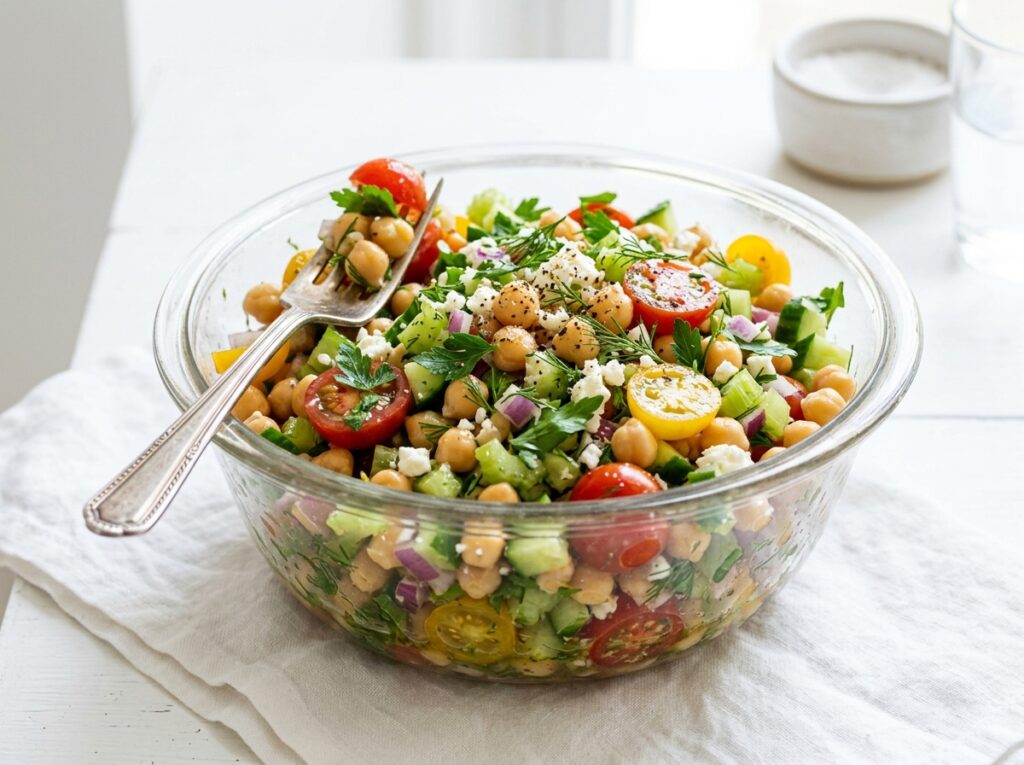
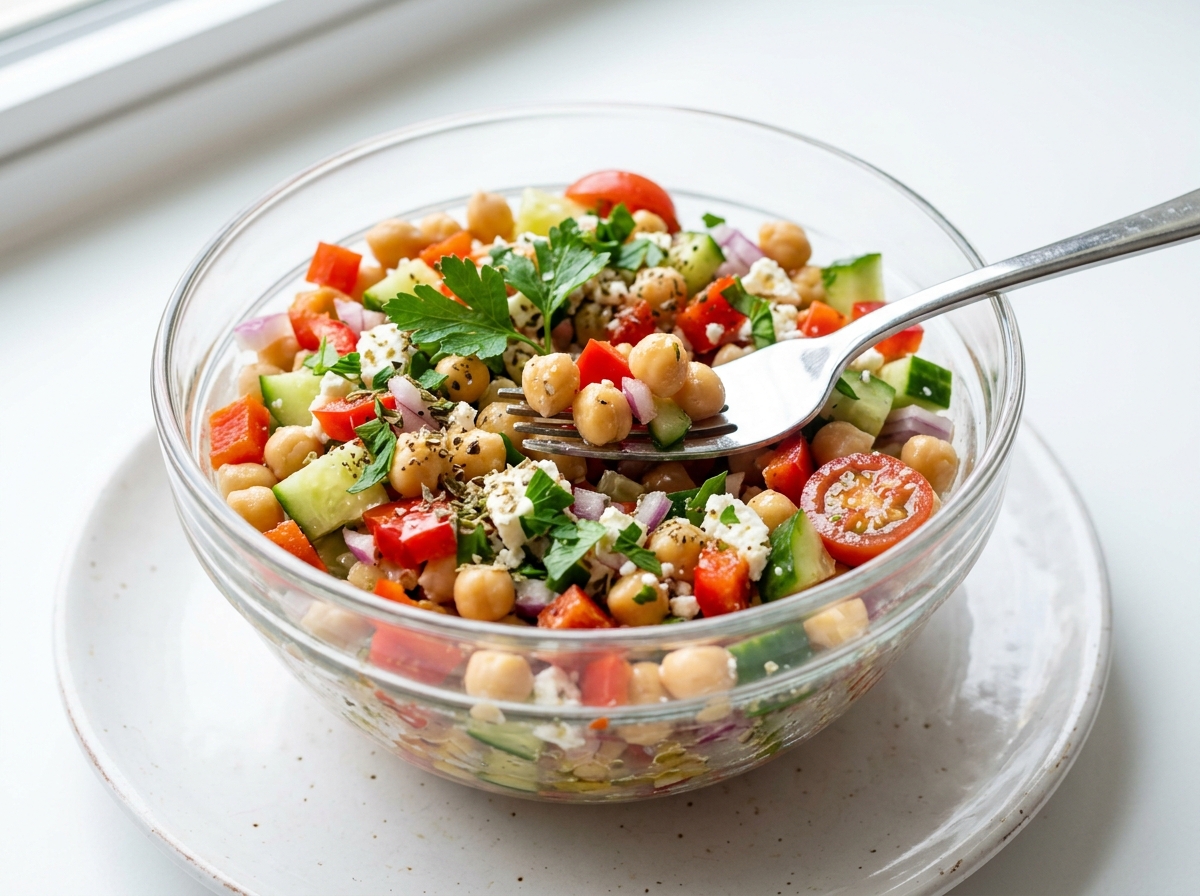
- Serve the Probiotic Chickpea Salad cold, directly from the refrigerator. Portion into bowls or eat straight from the mason jar. Garnish with optional crumbled feta, toasted seeds, or fresh avocado. This salad tastes even better on day 2 or 3 as the flavors deepen and the chickpeas fully absorb the probiotic dressing.
Notes
🧘♂️ Chef Mansoor’s Insight
For most of my cooking life, I chased flavor—acid, fat, salt, heat, texture. But the moment I started understanding the gut-brain axis, everything shifted. I began cooking not just for my tongue but for my microbiome.
This Probiotic Chickpea Salad is what came from that shift. It is not flashy. It will not win plating competitions. But it changes how you feel two hours after eating it, and that is a kind of power most recipes never touch.
When you feed your second brain—the trillions of bacteria that influence your mood, energy, immunity, and even decision-making—you start to notice patterns. Clearer thinking. Steadier energy. Better sleep. Food is information.
And this salad speaks directly to the part of you that most needs to hear it.
📊 Nutrition Table (Per Serving, 4 Servings)
| Nutrient | Amount |
|---|---|
| Calories | 240 kcal |
| Total Carbohydrates | 32g |
| Dietary Fiber | 9g |
| Total Sugars | 6g |
| Protein | 9g |
| Total Fat | 8g |
| Saturated Fat | 1g |
| Cholesterol | 0mg |
| Sodium | 320mg |
| Potassium | 480mg |
| Iron | 15% DV |
| Magnesium | 18% DV |
| Vitamin C | 80% DV |
| Vitamin A | 25% DV |
| Folate | 35% DV |
Probiotic Content: ~1–2 billion CFU (colony-forming units) per serving from raw apple cider vinegar and optional Greek yogurt (varies by brand and storage time).
Estimates based on USDA data for whole-food ingredients. Nutritional values vary based on brands and optional additions.
🌡️ Food Safety & Probiotic Stability
Safe refrigerator temperature: ≤ 40°F / 4°C
Danger zone (do not hold): 40°F–140°F / 4°C–60°C
Probiotic viability: Live cultures in raw apple cider vinegar and Greek yogurt remain stable at refrigerator temperatures (36°F–40°F / 2°C–4°C) for up to 5 days. Probiotic count decreases slowly over time but remains beneficial.
Do not freeze: Freezing damages the cell walls of fresh vegetables and can reduce probiotic viability. This Probiotic Chickpea Salad is best enjoyed fresh or refrigerated for up to 4 days.
🧊 Storage Guide (Mason Jar Method Recommended)
| Storage Method | Duration | Best Practice |
|---|---|---|
| Refrigerator (mixed) | 3–4 days | Store in airtight container; toss gently before serving |
| Refrigerator (layered jar) | 4–5 days | Dressing at bottom, chickpeas middle, veggies top; shake before eating |
| Room temperature | Not recommended | Live probiotics and fresh vegetables require refrigeration for safety |
| Freezer | Not recommended | Freezing destroys vegetable texture and can reduce probiotic count |
Pro Tip: Probiotic Chickpea Salad actually tastes better on day two or three as the chickpeas fully absorb the tangy dressing and the flavors deepen.
❓ Frequently Asked Questions
Is this Probiotic Chickpea Salad actually probiotic, or is it just marketing?
It is genuinely probiotic if you use raw, unfiltered apple cider vinegar with The Mother or Greek yogurt with live and active cultures. These contain real, viable bacteria (Acetobacter in vinegar, Lactobacillus and Streptococcus in yogurt) that survive digestion and colonize your gut. Pasteurized or filtered vinegar has no live cultures.
Can I use dried chickpeas instead of canned?
Absolutely. Soak dried chickpeas overnight, drain, and pressure-cook for 12 minutes (or simmer for 60–90 minutes until tender but firm). Homemade chickpeas have lower phytate content and better texture, making them ideal for a Probiotic Chickpea Salad.
What is the difference between prebiotics and probiotics?
Prebiotics are the food (fiber) that beneficial gut bacteria eat. Chickpeas, vegetables, and whole grains are prebiotic. Probiotics are the live beneficial bacteria themselves, found in fermented foods like yogurt, kefir, raw vinegar, sauerkraut, and kimchi. This Probiotic Chickpea Salad provides both.
How long do the probiotics stay alive in the salad?
When refrigerated properly (≤40°F / 4°C), live cultures remain viable for 4–5 days. The count decreases slowly over time, but the salad is still beneficial. For maximum probiotic benefit, consume within 3 days.
Can I make this vegan?
Yes. Skip the Greek yogurt and use only the raw apple cider vinegar dressing. The apple cider vinegar provides probiotic bacteria without any animal products. This makes the Probiotic Chickpea Salad fully plant-based and still gut-healthy.
Why does my salad taste too sharp or acidic?
You may have used too much vinegar or not enough salt/sweetness to balance it. Adjust by adding a pinch more salt, a touch more honey, or a tablespoon of olive oil to mellow the acidity. Taste and adjust before serving.
🔗 More from Flavour Bazar
If this Probiotic Chickpea Salad fuels your day, explore these other science-backed recipes:
Strawberry Shortcake: The Science of the Perfect Crumb
Balance savory lunches with a light, seasonal dessert
No-Bake Mango Cheesecake: The Science of the Perfect Set
Another gut-friendly option with cultured dairy
Buttermilk Biscuits: The Science of Flaky Layers
Master fat and gluten science in baking
Watermelon Mint Cooler: Hydration Science
Pair with this protein-packed salad for a complete summer meal
Outbound Link (Authority Building):
🔬 Harvard Health: The Gut-Brain Connection
Learn more about how your microbiome influences mood and cognition
For More Healthy Recipes Visit: flavourbazar.com