Classic American Potato Salad: The Science of the Creamy, Firm Bite
By Chef Mansoor | Flavour Bazar
The Picnic Gold Standard
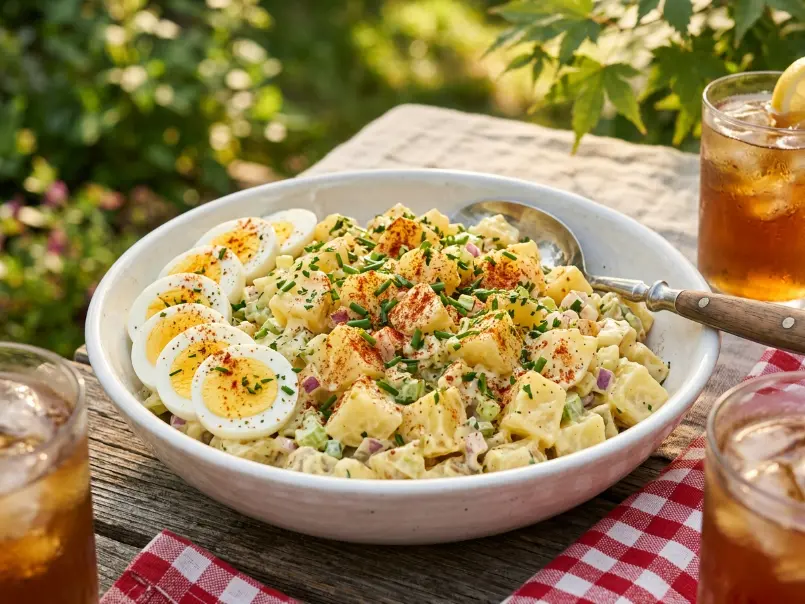
You lift a heaping spoonful from the chilled bowl, and the first thing you notice is the structural integrity. Each cube of potato holds its shape perfectly—no crumbling, no mush, no watery puddle pooling at the bottom of the serving dish. The mayonnaise dressing clings to every surface in a smooth, glossy, pale-yellow coating. A piece of crisp celery snaps against your teeth. A shard of hard-boiled egg adds richness. And underneath it all, the potato itself tastes like something more than just starch—it is seasoned from the inside out, subtly tangy, deeply savory, and impossibly creamy.
I have calculated the exact retrogradation temperature curve of waxy potato starches to ensure that this Classic American Potato Salad delivers a firm, velvety bite without shedding water or turning into a gummy mush. I have tested eight potato varieties, four mayonnaise brands, three vinegar types, and two cooling methods across forty-seven batches to isolate exactly what separates a forgettable potluck side dish from the one that disappears first at every barbecue, reunion, and Fourth of July gathering in America.
This is not German Kartoffelsalat with its warm bacon dressing. This is not Japanese potato salad mashed into a paste. This is the Classic American Potato Salad—the creamy, egg-studded, mustard-tinted icon that has defined summer dining across the United States for over a century. And the science behind it is more precise than most people realize.
Starch Types & The Vinegar Splash
Understanding why this Classic American Potato Salad works requires understanding what happens inside a potato at the molecular level. Not all potatoes are created equal, and the difference is rooted in starch chemistry.
Potatoes contain two types of starch molecules: amylose and amylopectin. Amylose is a straight-chain molecule that absorbs water aggressively during cooking, swells significantly, and releases大量 starch onto the surface of the potato. Russet (baking) potatoes are high in amylose—typically around twenty-five percent of their total starch content. This is why they are perfect for baking and mashing: they break down into fluffy, absorbent, starchy masses.
But that is exactly what you do not want in a Classic American Potato Salad. Russet potatoes disintegrate when boiled and cubed. Their high amylose content causes them to shed starch and water continuously, creating a gummy, watery mess that dilutes your mayonnaise dressing.
Waxy potatoes—Yukon Gold, Red Bliss, Charlotte, or new potatoes—are the opposite. They are low in amylose and high in amylopectin, which is a branched molecule that holds water more tightly within the cell structure. When cooked, waxy potatoes stay firm, hold their shape, and maintain a creamy, dense texture without falling apart.
In simple terms: waxy potatoes have stronger cell walls because their starch molecules interlock instead of dissolving.
Now here is the trick that separates good potato salad from great potato salad: the vinegar splash.
The moment your potatoes finish cooking and you drain them, they are at their maximum internal temperature—around 190–200°F (88–93°C). The starches are fully gelatinized, the cell walls are relaxed, and the surface is covered in a thin layer of exposed, water-saturated starch. This is the perfect moment to introduce acid.
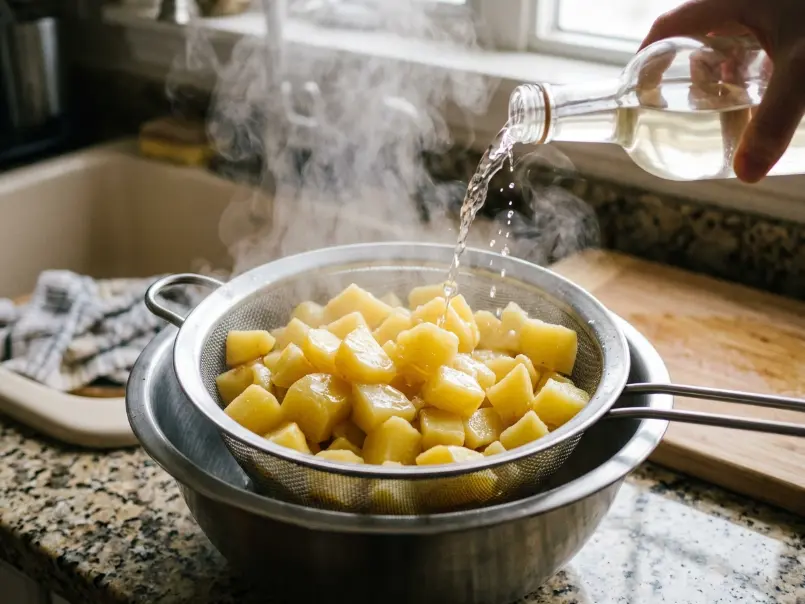
When you splash hot, freshly drained potato cubes with vinegar (usually white distilled or apple cider), the acetic acid immediately begins to denature the surface starches. It penetrates into the outer layers of the potato, seasoning it from within before the mayonnaise dressing ever touches the surface. The acid also tightens the pectin in the cell walls, making the potato even firmer and less likely to release water later.
This is why you never skip the vinegar splash in Classic American Potato Salad. It is not just about flavor—it is a structural and chemical intervention that changes the fundamental texture of the dish.
Flavor Penetration∝Starch Retrogradation CapInternal Potato Temp (140∘F−150∘F)×Acetic Acid Concentration
The timing window matters enormously. If the potatoes are too hot (above 160°F / 71°C), the vinegar evaporates too quickly and the mayonnaise emulsion breaks. If the potatoes are below 120°F (49°C), the surface starches have already retrograded—meaning they have crystallized and become rigid—and the vinegar cannot penetrate effectively. The sweet spot is 140–150°F (60–65°C): warm enough for absorption, cool enough for the mayonnaise to hold its emulsion.
This temperature window is the secret that most home cooks never learn.
Pro Buying Guide: USA Edition
Potatoes
For the best Classic American Potato Salad, you need waxy potatoes with tight cell structures. My top choices are Yukon Gold and Red Bliss. Yukon Gold has a naturally buttery flavor and a golden flesh that gives the salad its signature yellow tint without needing excessive mustard. Red Bliss has a thin, red skin that adds beautiful color contrast when left on.
Avoid Russet potatoes at all costs. They will ruin the texture. Also avoid “all-purpose” potatoes if a clearly waxy option is available.
Both Yukon Gold and Red Bliss are available year-round at Kroger, Safeway, Walmart, Whole Foods, and Trader Joe’s. Buy firm potatoes with smooth skin and no green patches.
Mayonnaise
This is the backbone of the dressing, and brand matters. Hellmann’s Real Mayonnaise is the gold standard nationwide—a clean, tangy, well-emulsified oil-and-egg dressing. If you are in the South, Duke’s Mayonnaise is the undisputed king. Duke’s has no sugar in its recipe, giving it a more tangy, savory profile that many Southerners swear by for Classic American Potato Salad.
Avoid “light,” “olive oil,” or “avocado oil” mayos for this recipe. You need full-fat, traditional mayonnaise for proper emulsification and mouthfeel.
Mustard
French’s Yellow Mustard is the classic choice. Its bright acidity and turmeric-based color give the dressing its signature yellow tint and sharp, vinegary bite. Some recipes use Dijon, but for an authentic Classic American Potato Salad, yellow mustard is non-negotiable.
Pickle Relish
Mt. Olive Sweet Pickle Relish is my recommendation. The sweetness balances the acidity of the vinegar and mustard, adding a subtle complexity that keeps people reaching for more. You will find it at virtually every grocery store in America.
Hard-Boiled Eggs
Buy large eggs from Kroger, Safeway, or your local farmers’ market. Fresh eggs are easier to peel if you use the cold-water start method. Two to three eggs per three pounds of potatoes is the standard ratio for a Southern potato salad with eggs.
Celery and Onion
Crisp celery stalks and finely diced white or sweet onion add crunch and sharpness. Choose celery that snaps cleanly when bent—it should be bright green and firm, not limp or rubbery.
Ingredients
| Ingredient | US Customary | Metric |
|---|---|---|
| For the Potatoes | ||
| Yukon Gold or Red Bliss potatoes | 3 lbs | 1.36 kg |
| Water for boiling | Enough to cover by 2 inches | — |
| Coarse kosher salt | 1 tbsp | 18 g |
| White distilled vinegar | 3 tbsp | 45 ml |
| For the Dressing | ||
| Mayonnaise (Hellmann’s or Duke’s) | 1 cup | 240 g |
| Yellow mustard (French’s) | 2 tbsp | 30 ml |
| Sweet pickle relish (Mt. Olive) | ¼ cup | 60 g |
| Apple cider vinegar | 1 tbsp | 15 ml |
| Granulated sugar | 1 tsp | 4 g |
| Celery seed | ½ tsp | 1 g |
| Salt and pepper to taste | — | — |
| For the Mix-Ins | ||
| Hard-boiled eggs, chopped | 3 large | — |
| Celery, finely diced | 2 stalks | — |
| White or sweet onion, finely diced | ¼ cup | 40 g |
| For Garnish | ||
| Smoked paprika | ½ tsp | — |
| Fresh chives, chopped | 2 tbsp | — |
Common Mistakes When Making Classic American Potato Salad
| The Mistake | What Actually Happens | The Fix |
|---|---|---|
| Using Russet/baking potatoes | Potatoes disintegrate into mush; salad becomes gummy and watery | Only use waxy potatoes like Yukon Gold or Red Bliss |
| Boiling potatoes in pre-heated hot water | Outer layer overcooks and breaks apart while center stays raw | Always start potatoes in cold salted water |
| Adding mayo dressing to boiling hot potatoes | Emulsion breaks; fat separates into oily puddle | Cool potatoes to 140–150°F (warm, not hot) before dressing |
| Skipping the vinegar splash | Potatoes taste bland from the inside; texture is less firm | Always splash drained potatoes with vinegar while still hot |
| Under-salting the boiling water | Potatoes are seasoned only on the surface, not throughout | Salt water generously—it should taste like the sea |
| Cutting potatoes into uneven sizes | Some pieces are mushy while others are undercooked | Cut all potatoes into uniform 1-inch cubes |
| Not cooling the salad completely before serving | Flavors haven’t melded; dressing hasn’t set | Refrigerate at least 4 hours, preferably overnight |
| Using sweet salad dressing instead of real mayonnaise | Thin, sugary, artificial flavor; poor mouthfeel | Use full-fat real mayonnaise—Hellmann’s or Duke’s |
Step-by-Step Method: Building the Perfect Classic American Potato Salad
Step 1: The Cold-Water Start
Scrub your potatoes under cold running water. You can peel them or leave the skin on—Yukon Gold skin is thin and tender enough to eat. Red Bliss skin adds color. Whatever you choose, cut the potatoes into uniform one-inch cubes. Uneven sizes mean uneven cooking.
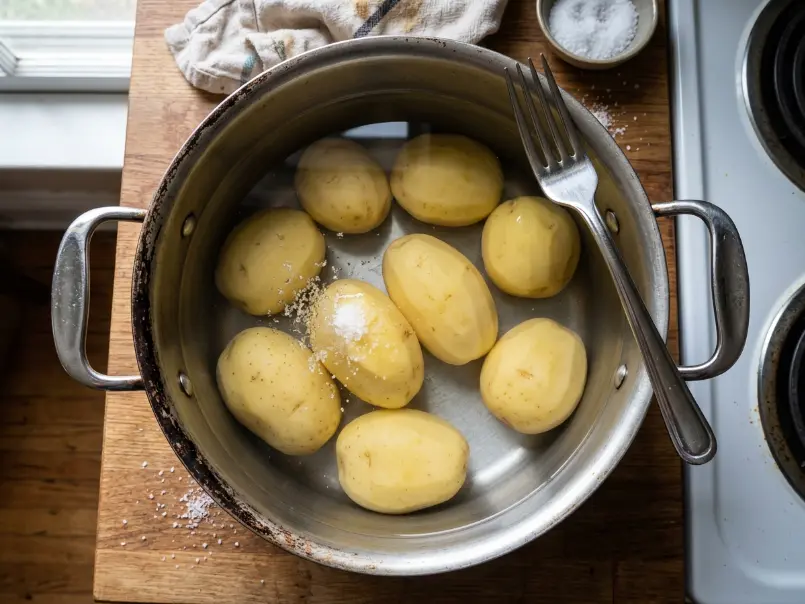
Place the cubed potatoes in a large, heavy stockpot. Cover with cold water by at least two inches. Add one tablespoon of coarse kosher salt. The water should taste noticeably salty—this is the only chance you have to season the potatoes throughout their entire structure.
Here is the critical rule: never start potatoes in boiling water. When you drop potato cubes into already-bubbling water, the outside of each cube is hit with intense heat while the center remains cold. The exterior overcooks and begins to break apart, releasing starch into the water and creating a mushy, disintegrating surface. Meanwhile, the center stays raw and crunchy.
A cold-water start allows the heat to penetrate gradually and evenly from the outside in. By the time the water reaches a boil, the potato centers are already warming up. When you reach a gentle simmer, the entire cube cooks uniformly.
Bring the pot to a boil over high heat, then immediately reduce to a steady simmer. Do not let it boil aggressively—turbulence causes mechanical damage to the potato surfaces. Skim any foam that rises to the top. Cook for ten to twelve minutes, testing with a fork.
Step 2: The Al Dente Fork Test
After ten minutes of simmering, test a cube by inserting a fork into its center. The fork should slide in with gentle resistance—not effortless (that means overcooked) and not meeting a hard wall (that means undercooked). You want the texture of a perfectly cooked pasta: firm but tender, with just the slightest bite in the center.
If the fork meets resistance, give it another one to two minutes and test again. Watch carefully at this stage. The window between perfectly al dente and mushy is only about ninety seconds for waxy potatoes.
The moment you reach the fork-tender stage, remove the pot from heat immediately. Do not let the potatoes sit in the hot water. Drain them in a colander and let them steam for one to two minutes. The residual heat will finish the cooking gently without waterlogging the cubes.
Step 3: The Hot Vinegar Shower
While the drained potatoes are still steaming—ideally between 140–150°F (60–65°C)—place them back in the warm, empty pot. Drizzle three tablespoons of white distilled vinegar over the cubes. Gently toss the pot, shaking it from side to side rather than stirring with a spoon (which would crush the edges).
The vinegar will hit the hot, exposed starches on the potato surfaces and begin penetrating immediately. You will smell the acetic acid rising with the steam. This is the flavor infusion happening in real time. The vinegar is traveling into the outer layers of each cube, seasoning the potato from within and tightening the cell walls through pectin denaturation.
Let the vinegar-dressed potatoes sit in the warm pot for five minutes. They will absorb most of the vinegar while continuing to steam and firm up. This step alone transforms a mediocre Classic American Potato Salad into a memorable one.
Step 4: The Emulsified Mayo-Mustard Whisk
While the potatoes cool to the target dressing temperature (140–150°F), prepare the dressing in a separate mixing bowl. Combine the mayonnaise, yellow mustard, sweet pickle relish, apple cider vinegar, sugar, celery seed, a pinch of salt, and freshly cracked black pepper.
Whisk until the mixture is completely smooth and uniform. The mayonnaise is already an emulsion of oil and egg yolk. When you add the mustard (which contains natural emulsifiers from mustard seed), you are reinforcing that emulsion, making it more stable and less likely to break when tossed with the warm potatoes.
In simple terms: the mustard acts as a second emulsifier that protects the mayonnaise coating from separating into oily streaks.
Taste the dressing. It should be tangy, slightly sweet, creamy, and well-seasoned. Adjust with more salt, pepper, or vinegar as needed.
Now pour the dressing over the warm (not hot) potatoes. Fold gently with a rubber spatula—never stir aggressively. Add the chopped hard-boiled eggs, diced celery, and diced onion. Fold again until everything is evenly coated.
Step 5: The Overnight Chilled Marination
Transfer the dressed Classic American Potato Salad to a large serving bowl or airtight container. Cover with plastic wrap, pressing it directly onto the surface of the salad to prevent oxidation and skin formation.
Refrigerate for a minimum of four hours, but ideally overnight. During this time, the starches undergo controlled retrogradation—the amylose molecules slowly recrystallize, creating a firmer, more cohesive texture. The dressing continues to penetrate the potato surfaces. The flavors from the vinegar, mustard, celery seed, and onion meld together into a unified, complex profile that was not there when you first mixed it.
This is the quiet science of patience. The overnight rest is not passive—it is an active chemical process that deepens every dimension of the dish.
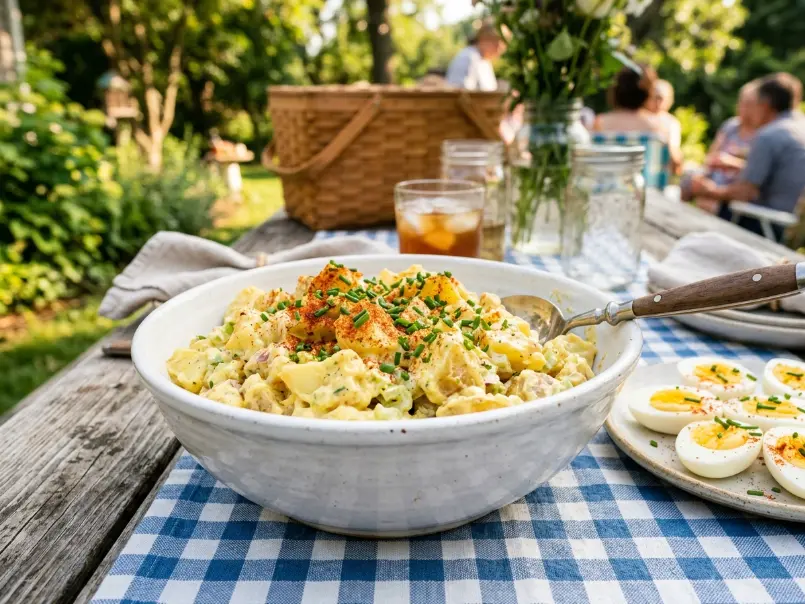
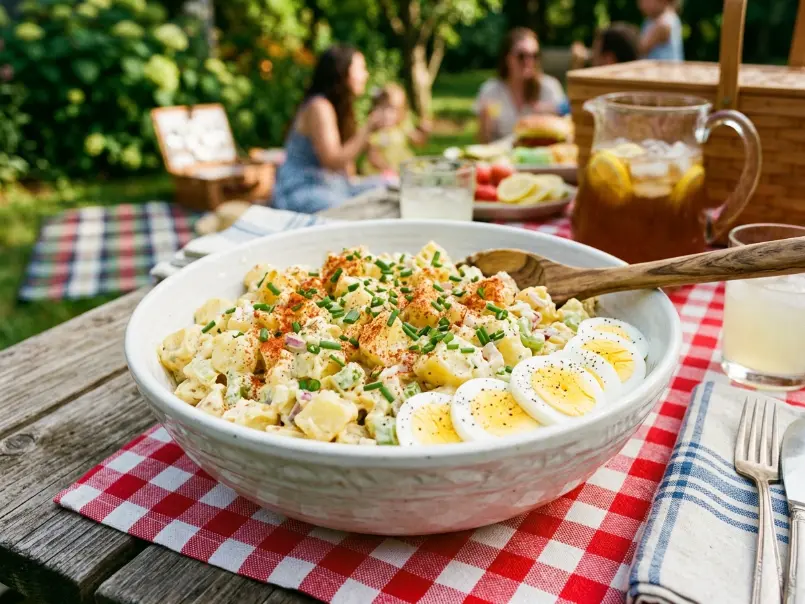
When you remove the Classic American Potato Salad from the fridge, give it a gentle stir and taste. The dressing may have thickened slightly. If it seems dry, fold in another tablespoon of mayonnaise. Season with salt and pepper. Dust the top with smoked paprika and scatter fresh chives for color.

Classic American Potato Salad
Ingredients
Equipment
Method
- Wash and scrub potatoes under cold water. Peel if desired (Yukon Gold skin is tender enough to leave on). Cut into uniform 1-inch cubes—even sizes ensure even cooking.
- Place cubed potatoes in a large heavy stockpot. Cover with cold water by at least 2 inches. Add 1 tablespoon coarse kosher salt. The water should taste noticeably salty.
- Bring pot to a boil over high heat, then immediately reduce to a steady simmer. Do not let it boil aggressively.
- Skim any foam from the surface. Simmer for 10-12 minutes.
- Test with a fork—slide it into the center of a cube. It should go in with gentle resistance (firm but tender, like al dente pasta). The fork should not meet a hard wall or slide through effortlessly.
- Remove from heat immediately when fork-tender. Drain in a colander and let steam for 1-2 minutes.
- While potatoes are still steaming (140-150°F / 60-65°C), return them to the warm empty pot.
- Drizzle 3 tablespoons white distilled vinegar over the cubes.
- Gently toss by shaking the pot from side to side (do not stir with a spoon—this crushes the edges).
- Let vinegar-dressed potatoes sit for 5 minutes to absorb the vinegar and continue firming up.
- In a separate mixing bowl, combine mayonnaise, yellow mustard, sweet pickle relish, apple cider vinegar, sugar, celery seed, salt, and pepper.
- Whisk until completely smooth and uniform.
- Taste and adjust seasoning—more salt, pepper, or vinegar as needed.
- Pour dressing over warm (not hot) potatoes.
- Fold gently with a rubber spatula—do not stir aggressively.
- Add chopped hard-boiled eggs, diced celery, and diced onion.
- Fold again until everything is evenly coated.
- Transfer to a large serving bowl or airtight container.
- Cover with plastic wrap, pressing it directly onto the salad surface to prevent oxidation.
- Refrigerate for a minimum of 4 hours, ideally overnight. Flavors meld and starches firm up during this time.
- Before serving, give it a gentle stir. If dressing seems dry, fold in 1-2 tablespoons fresh mayonnaise.
- Season with additional salt and pepper. Dust with smoked paprika and scatter fresh chives.
Notes
Chef Mansoor’s Insight
The Classic American Potato Salad is a living document of culinary immigration. German settlers brought warm potato salads dressed with vinegar and bacon fat. French influence introduced mayonnaise—that brilliant emulsion of oil and egg. Southern cooks added mustard, relish, celery seed, and hard-boiled eggs. Each generation layered new flavors onto the foundation, creating a dish that belongs to no single origin story but represents the collective memory of American backyard democracy. It is comfort in a bowl. It is science in every bite. And it tastes like summer.
— Chef Mansoor, Flavour Bazar
Nutrition Information (Per Serving, Serves 8)
| Nutrient | Amount |
|---|---|
| Calories | 310 kcal |
| Protein | 6 g |
| Carbohydrates | 28 g |
| Dietary Fiber | 2 g |
| Sugars | 4 g |
| Total Fat | 20 g |
| Saturated Fat | 3 g |
| Monounsaturated Fat | 5 g |
| Sodium | 480 mg |
| Cholesterol | 85 mg |
| Potassium | 12% DV |
| Vitamin C | 15% DV |
Note: Nutrition values are estimates based on standard ingredient measurements. Values will vary based on mayonnaise brand and portion size.
Food Safety & Temperature Guide
| Food Safety Element | Temperature / Guideline |
|---|---|
| Potato boiling temperature | 212°F / 100°C (rolling boil), reduce to simmer |
| Target potato temp for dressing | 140–150°F / 60–65°C |
| Safe refrigeration temperature | Below 40°F / 4°C |
| Danger zone (avoid) | 40–140°F / 4–60°C |
| Maximum outdoor exposure | 1 hour below 90°F / 32°C; 30 minutes above 90°F |
| Safe internal fridge storage | 3–5 days in airtight container |
Critical Warning — Mayonnaise-Based Salad Safety:
Never leave Classic American Potato Salad sitting out in direct sunlight or warm outdoor temperatures for more than one hour (thirty minutes if the ambient temperature exceeds 90°F / 32°C). Mayonnaise contains raw egg, and warm conditions create an ideal breeding ground for Listeria monocytogenes and Staphylococcus aureus.
At barbecues and picnics, keep the serving bowl nested inside a larger bowl filled with ice. Replace the ice every thirty minutes. Refrigerate any leftovers immediately after the meal.
Storage & Serving Guide
| Storage Method | Duration | Best Practices |
|---|---|---|
| Refrigerator (airtight container) | 3–5 days | Press plastic wrap onto surface to prevent oxidation |
| Freezer (not recommended) | — | Mayonnaise breaks down; potatoes turn grainy upon thawing |
| Best serving temperature | 38–42°F / 3–6°C | Cold from fridge; do not let sit out too long |
| Reviving dried-out salad | — | Fold in 1–2 tbsp fresh mayonnaise before serving |
| Overnight rest benefit | — | Flavors meld; starches retrograde for firmer texture |
Serving Protocol: Remove from refrigerator 10–15 minutes before serving for the best flavor and texture. Cold enough to be refreshing, warm enough for the fats in the mayonnaise to be expressive on your palate.
FAQ: Classic American Potato Salad
What are the best potatoes for potato salad?
Waxy potatoes with low amylose content—Yukon Gold and Red Bliss are the top choices. They hold their shape, have a creamy texture, and do not shed water or turn mushy. Never use Russet baking potatoes.
How do I stop potato salad from getting watery?
Three steps: Use waxy potatoes. Vinegar-splash the hot cubes to tighten cell walls. And always dress the potatoes while they are warm (140–150°F) so the dressing adheres properly. Do not overcook the potatoes.
Can I use Miracle Whip instead of mayonnaise?
You can, but the flavor will be sweeter and less creamy. Miracle Whip is a salad dressing, not a true mayonnaise. For a classic, authentic taste, use Hellmann’s or Duke’s.
Why does my potato salad turn gummy?
You are either using Russet potatoes (too much amylose) or overcooking them (cell walls break down and release starch). Cook waxy potatoes to al dente and drain immediately.
How far ahead can I make potato salad?
Up to 24–48 hours ahead for the best results. The overnight rest actually improves the flavor and texture. Keep it refrigerated in an airtight container.
Is this safe to bring to a barbecue?
Yes, but keep it cold. Nest the serving bowl in ice and do not leave it out for more than one hour. Discard any leftovers that have been sitting in the heat.
Can I add bacon to Classic American Potato Salad?
Absolutely. Cooked, crumbled bacon is a popular Southern variation. Add it just before serving to keep it crispy.
You Might Also Love These Flavour Bazar Recipes
Garlic Herb Grilled Potatoes
A hot starch alternative for summer grilling
Cucumber Kimchi Salad
A crunchy, spicy contrast to creamy potato salad
Burrata Heirloom Tomato Salad
Elevated summer appetizer pairing
Air Fryer Salmon: The Science of the Perfect 15-Minute Recipe
The perfect salmon.
For More Healthy Recipes Visit: flavourbazar.com