Burrata Heirloom Tomato Salad: The Science of Summer Lipids and Lycopene
By Chef Mansoor | Flavour Bazar
The Velvet-Acid Balance
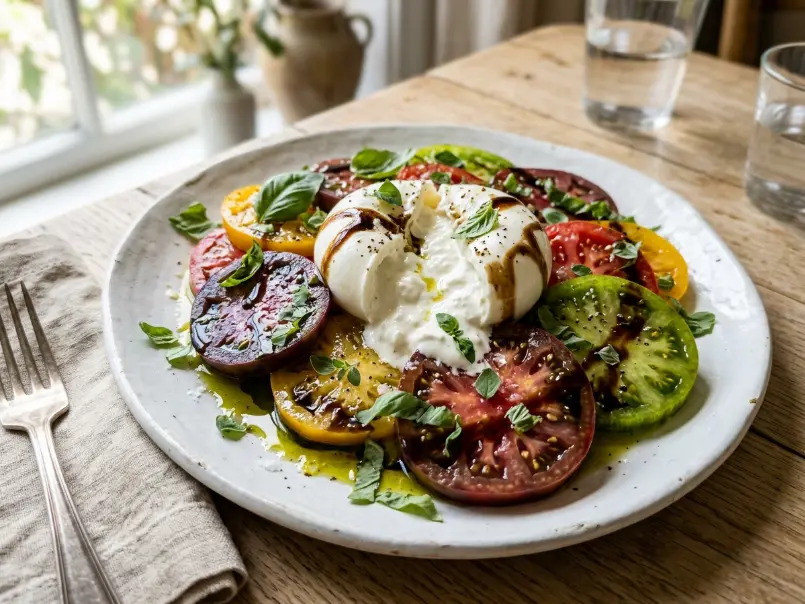
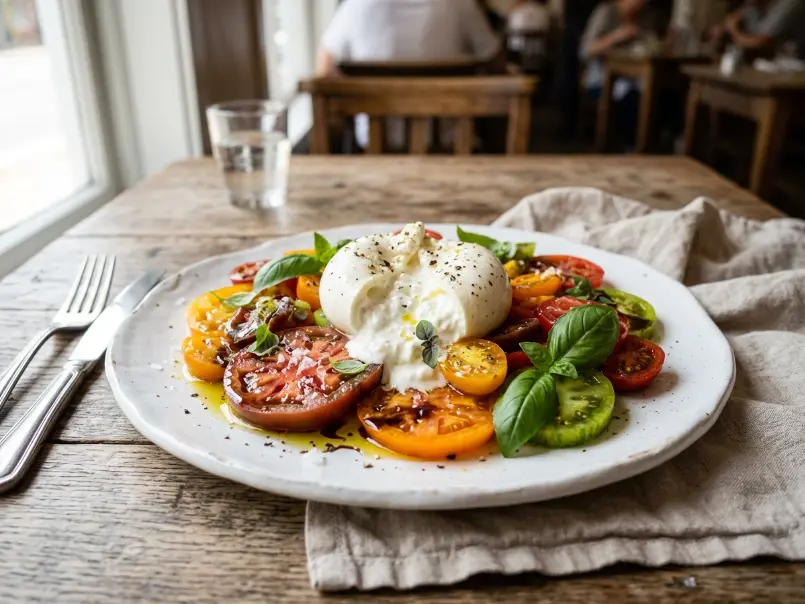
You slice into the taut, white ball of burrata with the side of your fork, and the world slows down. The outer shell yields, and a river of rich, silky stracciatella cream spills out onto the plate—coating the deep grooves of a ruby-red Cherokee Purple tomato, mingling with golden olive oil, and pooling around emerald basil leaves. The contrast is immediate: the heavy, lactic sweetness of fresh cream against the bright, acidic snap of sun-ripened tomato.
I have studied the temperature-dependent release of (Z)-3-hexenal volatile compounds in tomatoes to ensure this Burrata Heirloom Tomato Salad hits your palate with maximum sweet-tart clarity, perfectly cut by the heavy milk lipids of the cheese. I have tested twelve heirloom tomato varieties, four burrata producers, and three olive oil grades to isolate exactly what separates a forgettable caprese from a restaurant-quality experience that people remember for weeks.
This is not a recipe you meal-prep on Sunday. This is not a dish you pull from the fridge and serve cold. This is a celebration of peak-season ingredients at their precise temperature and textural peak—a moment of edible luxury that demands to be assembled, plated, and eaten within minutes.
The science behind this Burrata Heirloom Tomato Salad is deceptively simple: salt the tomatoes to concentrate their flavor. Bring the cheese to room temperature so its fats can coat your tongue. Use oil to unlock fat-soluble nutrients. And get out of the way.
The Synergy of Fat, Salt, and Acid
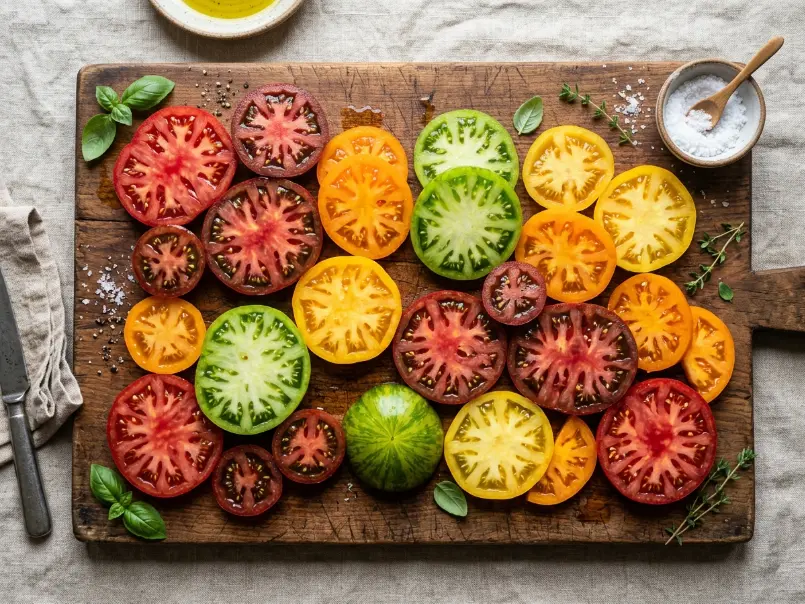
Let’s start with the tomatoes. Heirloom varieties—Cherokee Purple, Brandywine, Green Zebra—are genetically distinct from the uniform, thick-skinned hybrids you find in most supermarkets. They were bred for flavor, not for shipping durability. Their cell walls are thinner. Their sugar content is higher. And most importantly, they produce a broader spectrum of volatile aromatic compounds—the molecules that make a tomato smell and taste like summer.
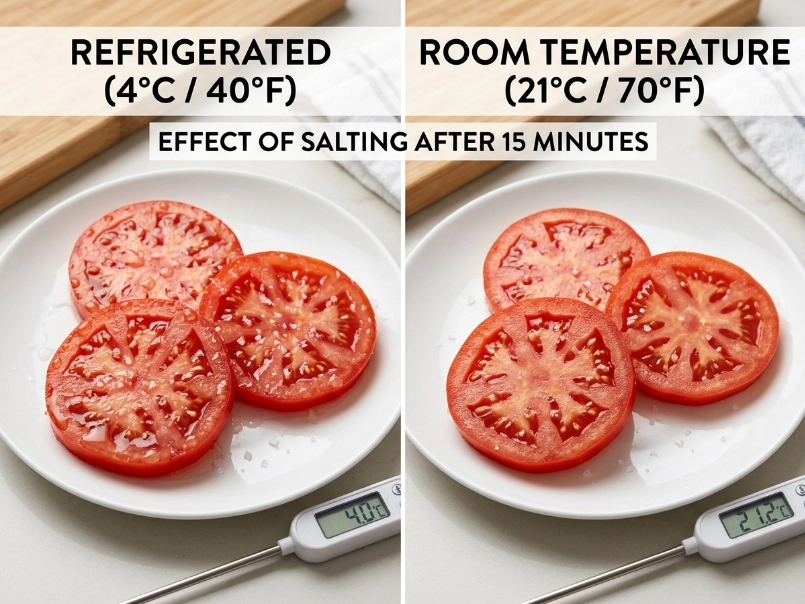
The key volatile in tomatoes is (Z)-3-hexenal, often described as “green” or “grassy.” This compound is released when tomato cells are damaged—by slicing, chewing, or salting. But here is the catch: volatile compounds are temperature-dependent. At refrigerator temperatures (35–40°F / 2–4°C), these molecules slow down and lose their ability to reach your olfactory receptors. The tomato tastes flat, watery, and dull.
At room temperature (68–72°F / 20–22°C), the volatiles are active, mobile, and expressive. The tomato tastes alive.
Now add salt. When you sprinkle coarse sea salt on tomato slices and let them rest, you create a hypertonic environment. Water inside the tomato cells moves outward through osmosis, leaving behind concentrated sugars, acids, and glutamates—natural umami compounds that make the tomato taste richer and more savory.
This is osmotic tomato priming, and it is the difference between a good Burrata Heirloom Tomato Salad and a transcendent one.
Flavor Intensity∝Lipid Viscosity (Chilled Fats)Tomato Temperature (70∘F)×Osmotic Salt Dehydration
Now let’s talk about burrata. Fresh burrata is made from mozzarella curd filled with stracciatella—shredded mozzarella soaked in heavy cream. The outer shell is firm and mild. The inner cream is rich, sweet, and full of butterfat.
But butterfat solidifies when cold. At refrigerator temperatures, the lipids in burrata become viscous and waxy. They coat your mouth in a thick, cloying layer that blocks flavor molecules from reaching your taste receptors. The cheese tastes one-dimensional—just “creamy” without the delicate milky sweetness that defines high-quality burrata.
When you serve burrata at room temperature, the fats are liquid and flowing. They spread across your tongue in a thin, even layer, carrying the subtle lactic flavors with them. The texture transforms from dense and heavy to silky and luxurious.
This is why the temperature rule is everything in a Burrata Heirloom Tomato Salad. Cold ingredients kill the experience.
Finally, let’s address the olive oil. Tomatoes are rich in lycopene, a powerful antioxidant and the pigment that gives them their red color. But lycopene is fat-soluble, meaning your body cannot absorb it without the presence of dietary fats. Studies show that consuming tomatoes with extra virgin olive oil can triple lycopene absorption compared to eating them plain.
In simple terms: the olive oil does not just add flavor. It unlocks the nutrition hidden in the tomato.
Pro Buying Guide: USA Edition
This is a dish where ingredient quality matters more than technique. You cannot fake fresh burrata or a perfectly ripe heirloom tomato. Here is exactly what to buy.
Heirloom Tomatoes
The best heirloom tomatoes for salad are deeply ribbed, irregularly shaped, and intensely colored. Look for Cherokee Purple (dark, smoky, sweet), Brandywine (large, pink, rich), or Green Zebra (tart, bright, striped green and yellow). Avoid perfectly round, uniform tomatoes—they are hybrids bred for shelf life, not flavor.
Shop at farmers’ markets if possible. In urban areas, Whole Foods and Trader Joe’s stock seasonal heirlooms from June through September. The tomatoes should feel heavy for their size, with taut skin that gives slightly under pressure. If they are rock-hard, they were picked too early. If they are squishy, they are past their peak.
Never refrigerate heirloom tomatoes. Store them stem-side down on your counter, away from direct sunlight. Use them within two to three days of purchase.
Burrata Cheese
Authentic Italian burrata is sold in tubs of water or whey to keep it moist. Look for brands like BelGioioso, Lioni, or imported Apulian burrata from Southern Italy. The cheese should be snow-white with no yellowing or sour smell. The package should feel plump and taut.
Avoid “burrata-style” cheese or anything sold shrink-wrapped without liquid. These are usually lower-quality mozzarella with minimal cream filling.
Burrata is highly perishable. Use it within one to two days of opening. And remember: never serve burrata cold. Pull it from the fridge at least one hour before plating. Room temperature burrata is an entirely different ingredient.
Extra Virgin Olive Oil
This is not the time for bargain oil. You need a first-press, cold-extracted extra virgin olive oil with high polyphenol content. I recommend Lucini Italia, Partanna, or California Olive Ranch. The oil should taste grassy, slightly peppery, and fruity—not neutral or bland.
Drizzle generously. The oil is not a garnish. It is a structural component of the dish.
Aged Balsamic Vinegar of Modena
Here is where most people go wrong. Thin, watery balsamic vinegar will pool at the bottom of the plate and turn your Burrata Heirloom Tomato Salad into a brown puddle. You need aged balsamic glaze—thick, syrupy, and sweet—or a true 12-year aged balsamic vinegar of Modena that has the viscosity of maple syrup.
Look for brands like Napa Valley Naturals Grand Reserve or Due Vittorie Oro Gold. A small drizzle is all you need. The glaze should sit on top of the tomatoes, not run off.
If you can only find thin vinegar, skip it entirely. The salad is better with just olive oil, salt, and basil than with cheap balsamic drowning the flavors.
Fresh Basil
Use Genovese basil—large, sweet, fragrant leaves. Not Thai basil, not dried basil, not basil paste. Fresh, whole leaves torn by hand at the last second.
Ingredients
| Ingredient | US Customary | Metric |
|---|---|---|
| For the Salad | ||
| Large heirloom tomatoes (mixed colors) | 2–3 tomatoes | 450–550 g |
| Fresh burrata cheese | 2 balls | 8 oz / 226 g |
| Fresh Genovese basil leaves | 1 cup, loosely packed | 20 g |
| For Seasoning & Dressing | ||
| Coarse sea salt for salting tomatoes | 1 tsp | 6 g |
| Extra virgin olive oil (high quality) | 3 tbsp | 45 ml |
| Aged balsamic vinegar or glaze | 1–2 tsp | 5–10 ml |
| Flaky sea salt (Maldon or Jacobsen) | ½ tsp | 2 g |
| Freshly cracked black pepper | ¼ tsp | — |
Common Mistakes When Making Burrata Heirloom Tomato Salad
| The Mistake | What Actually Happens | The Fix |
|---|---|---|
| Serving refrigerator-cold tomatoes and burrata | Butterfats solidify; volatile compounds stay dormant; flavors taste flat and waxy | Bring both to room temperature 1 hour before serving |
| Using regular beefsteak tomatoes instead of heirlooms | Bland, watery flavor; thick skin; low aromatic compounds | Only use genetically diverse heirloom varieties |
| Drowning the salad in thin white vinegar | Entire plate turns into acidic brown soup; flavors muddied | Use aged balsamic glaze sparingly, or skip vinegar entirely |
| Salting the cheese instead of the tomatoes | Burrata becomes overly salty; tomato flavor stays diluted | Only salt the tomatoes during osmotic rest |
| Slicing tomatoes too thin | Slices fall apart; lose structural integrity; become mushy | Cut tomatoes into thick, ½-inch slabs |
| Using stale, dried basil | No aromatic oils; dusty, bitter flavor | Only use fresh basil, torn just before serving |
| Not draining the burrata water before plating | Packing liquid dilutes the dressing and makes plate watery | Gently lift burrata from tub and pat dry |
| Assembling the salad hours in advance | Tomatoes release water; salad turns into soggy soup | Assemble immediately before serving only |
Step-by-Step Method: Building the Perfect Burrata Heirloom Tomato Salad
Step 1: The Ambient Temperature Temper
This step happens one hour before you plan to serve. Remove your burrata from the refrigerator and let it sit on the counter, still in its liquid, at room temperature. Do the same with your tomatoes if they have been refrigerated (though they should not have been).
Cold burrata is not burrata. It is just expensive mozzarella. At room temperature, the cream inside becomes pourable, silky, and fragrant. The outer shell softens just enough to yield under gentle pressure.
One hour is the minimum. Ninety minutes is even better. The internal temperature of the cheese should reach 68–70°F (20–21°C) for optimal fat fluidity and flavor release.
This is the single most important step in making a great Burrata Heirloom Tomato Salad, and it requires no skill—just patience.
Step 2: The Transverse Tomato Carve
Wash your tomatoes gently under cool water and pat them dry with a clean towel. Remove the stem core with a paring knife—cut a shallow cone around the stem and lift it out.
Now slice each tomato transversely (across the equator, not pole to pole) into thick slabs, about half an inch each. The goal is structural integrity. Thin slices fall apart. Thick slabs hold their shape, showcase the interior seed chambers, and create beautiful visual contrast with the burrata.
Arrange the tomato slices on a large plate or cutting board in a single layer. Do not stack them. You want every surface exposed to air.
Step 3: The Osmotic Salt Cry
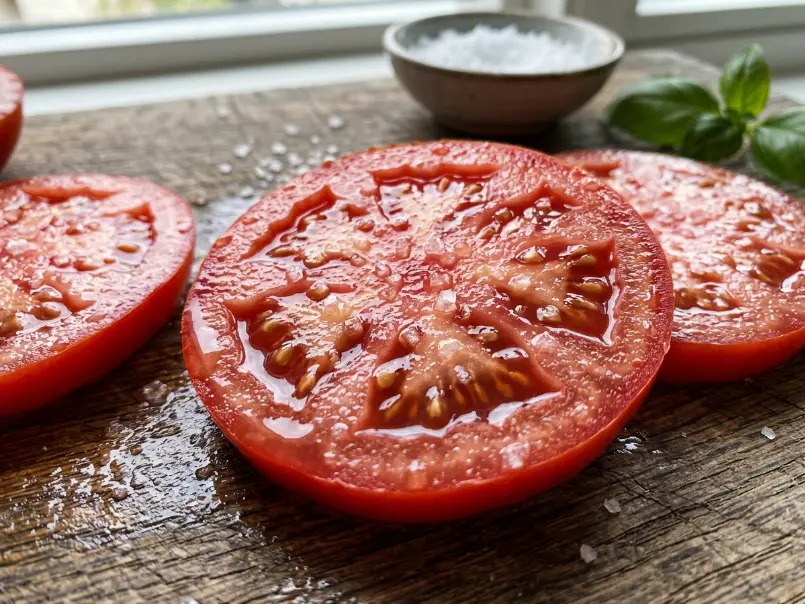
Sprinkle one teaspoon of coarse sea salt evenly across the tomato slices. Use your fingers to distribute it lightly over every piece. The salt crystals should sit on the surface, not dissolve immediately.
Let the tomatoes rest for ten to fifteen minutes. You will see tiny beads of water forming on the surface. This is osmosis in action—the salt is pulling water out of the tomato cells, concentrating the sugars, acids, and umami compounds left behind.
Do not skip this step. It is the difference between a watery, diluted Burrata Heirloom Tomato Salad and one with intense, focused tomato flavor.
After fifteen minutes, you can gently blot the tomatoes with a paper towel to remove excess surface water, but do not rinse them. The residual salt is part of the seasoning.
Step 4: The Stracciatella Center Burst
Remove your burrata from its liquid. Gently lift each ball with a slotted spoon and place it on a folded paper towel for a few seconds to drain. Pat the exterior dry—you do not want packing liquid diluting your olive oil.
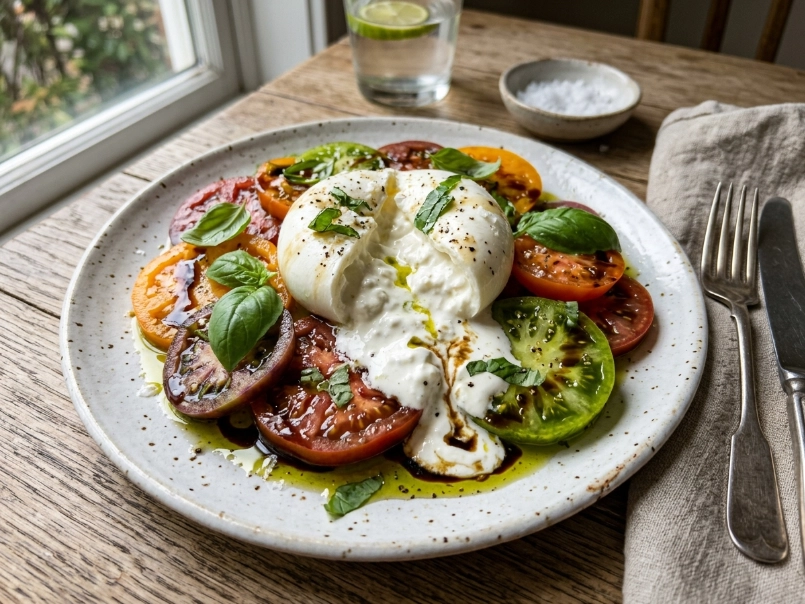
Now arrange your salted tomato slices on a wide, shallow serving platter. Overlap them slightly, alternating colors for visual impact. Place the burrata balls directly in the center of the tomato arrangement.
Here comes the best part. Use the side of a fork or a sharp knife to gently tear the burrata open. Do not slice it cleanly. Tear it so the stracciatella cream oozes out in thick, irregular ribbons. Let it spill over the tomatoes naturally.
This is the visual and textural centerpiece of the dish. The creamy white interior against the vibrant reds, purples, and greens. The rich, lactic sweetness mingling with the bright acid of the tomatoes.
Do not overthink the presentation. Rustic and natural always looks better than fussy and geometric.
Step 5: The High-Polyphenol Oil Drizzle
Drizzle the extra virgin olive oil generously over the entire plate—tomatoes, burrata, everything. Use at least three tablespoons. The oil should pool slightly around the tomatoes and coat the burrata cream in a glossy sheen.
Now add the aged balsamic glaze. Use a light hand—one to two teaspoons maximum. Drizzle it in thin lines across the top so it sits on the surface rather than soaking in. The glaze should add sweetness and acidity without overwhelming the dish.
Tear the fresh basil leaves by hand and scatter them over the salad. Finish with a pinch of flaky sea salt (Maldon or Jacobsen) and a few cracks of black pepper.
Serve immediately. Do not refrigerate. Do not let it sit. This Burrata Heirloom Tomato Salad is meant to be eaten within minutes of assembly, while the burrata cream is still flowing and the tomatoes are still at their aromatic peak.
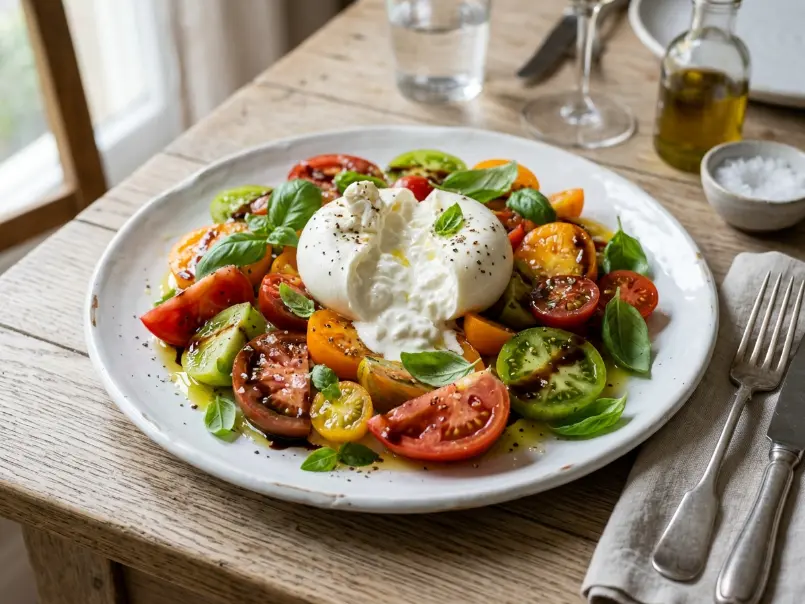

Burrata Heirloom Tomato Salad
Ingredients
Equipment
Method
- Remove burrata from refrigerator and let sit at room temperature in its liquid for 60-90 minutes before serving. This allows the butterfats to become liquid and silky instead of solid and waxy.
- If tomatoes have been refrigerated (they shouldn’t be), bring them to room temperature as well. Room temperature is essential for maximum flavor and aroma release.
- Wash heirloom tomatoes gently under cool water and pat dry.
- Remove stem cores with a paring knife—cut a shallow cone around each stem and lift out.
- Slice tomatoes transversely (across the equator) into thick slabs, about ½-inch each. Thick slices maintain structural integrity.
- Arrange tomato slices in a single layer on a large plate or cutting board.
- Sprinkle 1 teaspoon coarse sea salt evenly across all tomato slices.
- Let rest for 10-15 minutes. You’ll see water beads forming on the surface as osmosis draws moisture out and concentrates the tomato’s natural sugars and umami.
- After 15 minutes, gently blot surface moisture with paper towel. Do NOT rinse—the residual salt is part of the seasoning.
- Arrange salted tomato slices on a wide, shallow serving platter, overlapping slightly and alternating colors for visual impact.
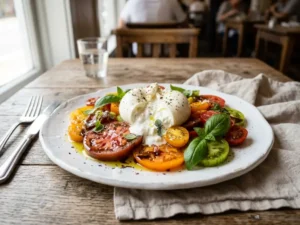
- Remove burrata from liquid using a slotted spoon. Gently pat dry with paper towel to remove packing liquid.
- Place burrata balls directly in the center of the tomato arrangement.
- Use the side of a fork or sharp knife to gently tear the burrata open (don’t slice cleanly—tear it for rustic effect).
- Let the creamy stracciatella center ooze out naturally over the tomatoes. This is the visual and textural centerpiece.
- Drizzle 3 tablespoons extra virgin olive oil generously over the entire plate—tomatoes and burrata.
- Add 1-2 teaspoons aged balsamic glaze in thin drizzle lines. Use a light hand—it should sit on top, not pool.
- Tear fresh basil leaves by hand and scatter over the salad.
- Finish with flaky sea salt and freshly cracked black pepper.
- Serve immediately while burrata cream is flowing and tomatoes are at aromatic peak.
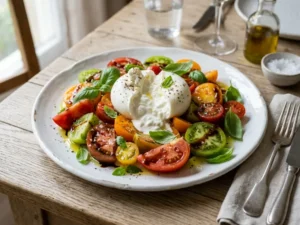
- Do not refrigerate or let sit—this salad must be eaten fresh within minutes of assembly.
Notes
Chef Mansoor’s Insight
The evolution from classic caprese to this modern Burrata Heirloom Tomato Salad proves a simple truth: when ingredients are genetically diverse, seasonally perfect, and handled with respect, the chef’s job is to get out of nature’s way. Heirloom tomatoes carry centuries of selective breeding for flavor. Burrata is the result of Italian cheesemakers perfecting cream and curd. Olive oil is pressed from fruit at its peak ripeness. Our role is not to transform these ingredients—it is to present them at the right temperature, the right texture, and the right moment. Simplicity is not laziness. It is confidence.
— Chef Mansoor, Flavour Bazar
Nutrition Information (Per Serving, Serves 2)
| Nutrient | Amount |
|---|---|
| Calories | 340 kcal |
| Protein | 14 g |
| Carbohydrates | 12 g |
| Dietary Fiber | 2 g |
| Sugars | 8 g |
| Total Fat | 26 g |
| Saturated Fat | 10 g |
| Monounsaturated Fat | 12 g |
| Sodium | 620 mg |
| Cholesterol | 45 mg |
| Vitamin A | 30% DV |
| Vitamin C | 40% DV |
| Calcium | 25% DV |
Low-Carb & Keto-Friendly: With only 12g carbs per serving and high healthy fats, this Burrata Heirloom Tomato Salad fits easily into low-carb and keto diets. Rich in lycopene, vitamin C, and monounsaturated fats from olive oil.
Note: Nutrition values are estimates based on standard ingredient measurements. Values will vary based on tomato size and cheese brand.
Food Safety & Storage Limitations
| Food Safety Element | Temperature / Guideline |
|---|---|
| Burrata serving temperature | 68–72°F / 20–22°C (room temperature) |
| Tomato serving temperature | 68–72°F / 20–22°C (room temperature) |
| Safe refrigeration for leftovers | Below 40°F / 4°C |
| Maximum leftover storage | Not recommended—best fresh only |
| Danger zone (avoid) | 40–140°F / 4–60°C |
| Unpasteurized cheese risk | Pregnant women, immunocompromised should avoid |
Why This Salad Cannot Be Meal-Prepped:
This is not a make-ahead dish. Once assembled, the tomatoes continue to release water, the burrata cream thins out, and the basil wilts. Within two hours, the plate turns into a watery, diluted mess.
If you must prep components ahead:
- Salt the tomatoes up to 30 minutes before serving
- Keep burrata at room temperature for 1 hour before serving
- Tear basil and assemble only at the last moment
Leftover Burrata Heirloom Tomato Salad is a contradiction. Eat it fresh or do not make it at all.
Unpasteurized Cheese Note: Most artisanal burrata is made from unpasteurized milk. Pregnant women, young children, elderly individuals, and those with compromised immune systems should avoid unpasteurized soft cheeses or choose pasteurized burrata alternatives.
Storage & Serving Guide
| Component | Storage Method | Duration | Notes |
|---|---|---|---|
| Whole heirloom tomatoes | Counter, stem-down | 2–3 days | Never refrigerate; kills flavor and texture |
| Unopened burrata | Refrigerator | Per package date | Keep in original liquid |
| Opened burrata | Refrigerator in water | 1–2 days | Use quickly; quality degrades fast |
| Assembled salad | Not recommended | Serve immediately | Cannot be stored; becomes watery within hours |
| Leftover components | Separate containers | 1 day max | Re-salt tomatoes before re-serving |
FAQ: Burrata Heirloom Tomato Salad
Can I use regular mozzarella instead of burrata?
You can, but you will lose the defining characteristic of this dish—the creamy stracciatella center. Fresh mozzarella is firmer and less luxurious. If you must substitute, use the highest quality fresh mozzarella you can find and serve it at room temperature.
What if I can only find regular tomatoes, not heirlooms?
The dish will still work, but the flavor will be less complex. Choose the ripest, most fragrant tomatoes available. Vine-ripened or campari tomatoes are better than standard beefsteak varieties. And always, always serve them at room temperature.
Can I make this salad ahead for a dinner party?
You can prep components separately. Slice and salt the tomatoes up to 30 minutes ahead. Bring the burrata to room temperature an hour ahead. But do not assemble until the moment before serving. The dish loses its magic fast.
What is the difference between balsamic vinegar and balsamic glaze?
Balsamic glaze is balsamic vinegar that has been reduced with sugar until thick and syrupy. Aged balsamic vinegar (12+ years) is naturally thick without added sugar. Both work for this Burrata Heirloom Tomato Salad. Thin, cheap balsamic vinegar does not—it turns the plate into a brown puddle.
Is this salad keto-friendly?
Yes. With 12g net carbs per serving and high healthy fats from burrata and olive oil, this fits easily into low-carb and ketogenic diets. It is also rich in fat-soluble nutrients like lycopene.
How do I know if my burrata has gone bad?
Fresh burrata smells clean and milky. If it smells sour, ammonia-like, or yeasty, discard it. The exterior should be white, not yellowed. The cream should be thick and sweet, not thin and watery.
You Might Also Love These Flavour Bazar Recipes
Creamy Avocado Pasta Sauce
Another celebration of healthy lipids and fat-soluble nutrients
Cold Peanut Noodle Salad
Perfect summer pairing with contrasting Asian flavors
Cucumber Kimchi Salad
A spicy, crunchy banchan to serve alongside rich burrata
Air Fryer Salmon: The Science of the Perfect 15-Minute Recipe
The perfect salmon.
For More Healthy Recipes Visit: flavourbazar.com